
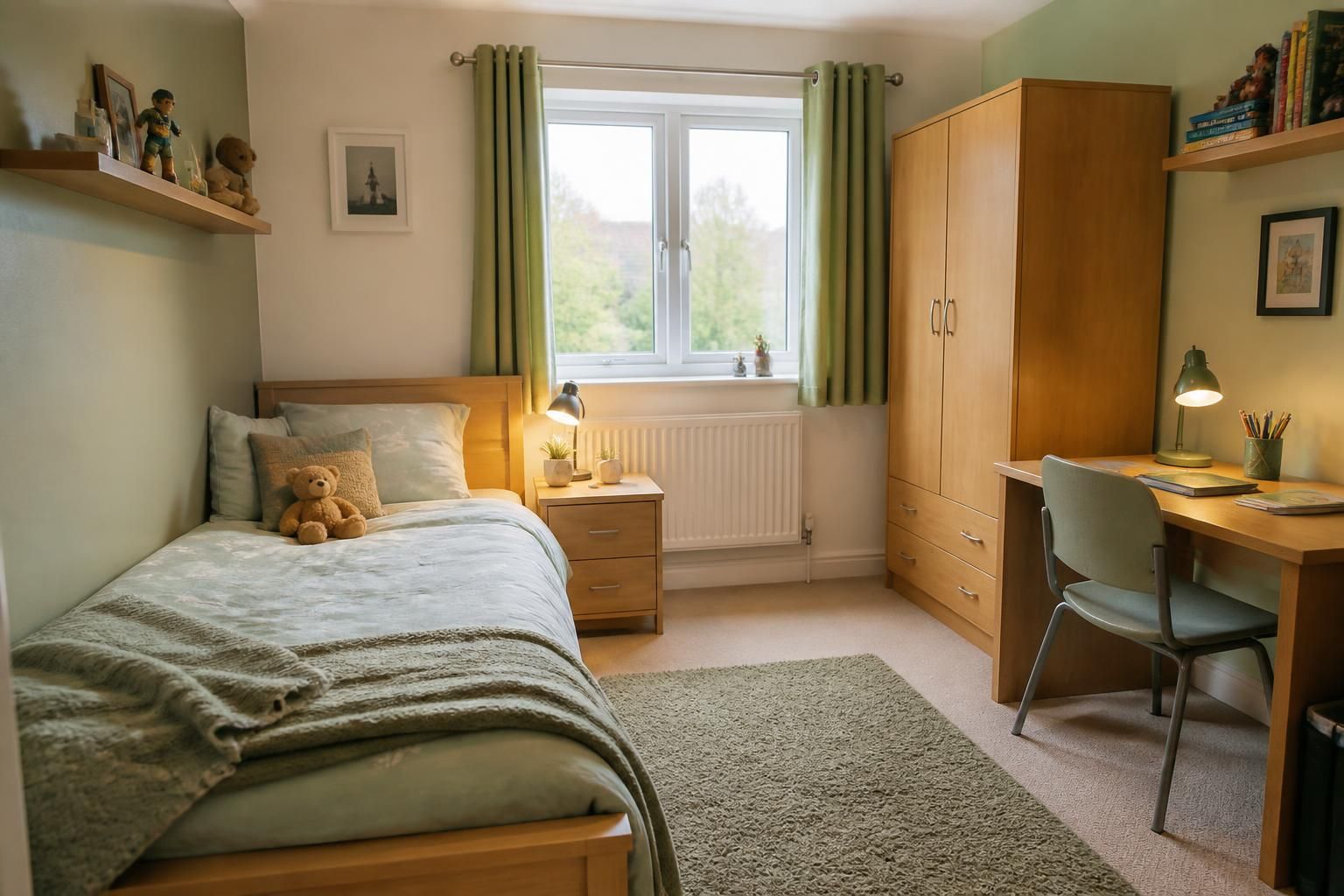
Do I need a spare bedroom to become a foster carer?
Usually, yes: foster children generally need their own suitable bedroom rather than sharing with the foster carers or the foster carer’s children. Exceptions can apply, particularly for some sibling placements, but your fostering service will assess whether your accommodation is appropriate for the children you may care for.
Partnering with an
Ofsted Outstanding Provider
The key requirement is that a fostered child has a suitable, private sleeping space within your home. Your bedroom does not need to be empty permanently, but the room intended for fostering must be available when a child is placed with you and meet the fostering service’s safety and suitability checks.
A suitable bedroom will usually need to be:
- Large enough for the child’s bed, clothing, belongings and day-to-day activities
- A private room rather than a living room, dining room or other shared space
- Warm, adequately lit and properly ventilated
- Furnished safely, with appropriate storage and a suitable bed
- Included in the home’s fire-safety and risk assessments
- Accessible in a way that is appropriate for the child’s age and needs
The room does not have to be in a house that you own. People living in rented accommodation may be able to foster, provided the property is suitable and any necessary permission is obtained from the landlord. If you live in a flat, maisonette or another type of property, the fostering service will consider the full layout and safety of the home rather than applying a simple ownership requirement.
The number and type of bedrooms can affect the placements you are able to accept. During the assessment, the fostering service will look at who already lives in your household, the ages of your children, the number of children you hope to foster and whether the available sleeping arrangements are appropriate for those needs. This means a home may be suitable for one type of placement but not another, such as a larger sibling group or children who require particular arrangements.
Bedrooms used by your own children are also considered as part of the household assessment. You should not assume that a room can be shared simply because there is physical space. The service will consider privacy, safeguarding, age, relationships within the household and the individual circumstances of any children involved before recommending an arrangement.
Sleeping arrangements may need to change as a child grows or as their needs become clearer. For example, a room that is appropriate for a younger child may not be suitable for an older child or teenager. Placement decisions should therefore be based on the child’s welfare and the information available about their needs, not just on the number of rooms in the property.
Your home will normally be assessed as part of the fostering application process. A supervising social worker or another suitably qualified professional will discuss the accommodation with you, inspect relevant areas and identify any improvements needed. This can include checking fire precautions, locks, windows, heating, furniture and general household safety. You may be given practical actions to complete before approval or before a particular placement is considered.
If you do not currently have a spare bedroom, speak to a fostering service before making major changes to your home. They can explain whether your proposed arrangements could be considered and what standards the room would need to meet. A sofa bed in a communal area or a temporary arrangement will not normally provide the privacy and stability expected for fostering, although the final decision depends on the child’s circumstances and the service’s assessment.
Become a Foster Family can explain how accommodation is considered during assessment and what may be required in your circumstances. Its teams support applicants across the West Midlands, including Birmingham, Worcestershire, Staffordshire, Dudley, Sandwell, Herefordshire, Telford, Wolverhampton, Shropshire, Walsall, Warwickshire, Stoke, Solihull, Coventry and Gloucestershire. You can discuss your home and possible placement options with the team before deciding whether to proceed.
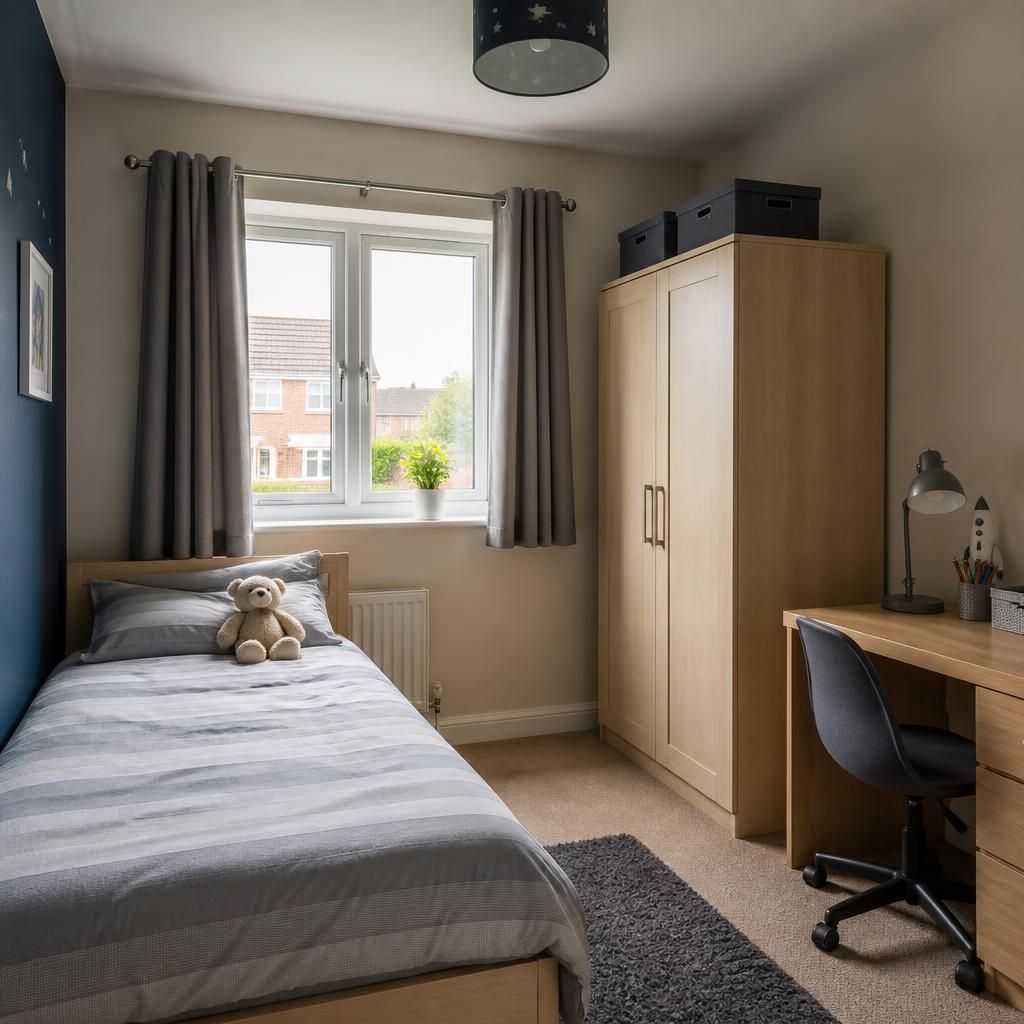
A spare bedroom is not simply an empty room; it needs to provide a child with a stable, personal space that can be adapted to their age, circumstances and belongings. Before applying, consider how the room could work for a child who may arrive with little notice and have different routines from other members of the household.
Practical preparation may include:
- using flexible furniture and storage that can suit different ages
- leaving enough space for personal items, clothing and activities
- choosing furnishings that are safe, durable and easy to maintain
- allowing the child some choice over suitable decorations or personal touches
- planning how privacy will be respected when family members need to enter the room
The room should feel like part of the home rather than a temporary sleeping arrangement. Its suitability will be considered alongside the wider household and the needs of any child being considered for placement, so you do not need to create a fully finished room before speaking to a fostering service.
Discuss your spare bedroom with our fostering team
If you are unsure whether your current accommodation could meet fostering requirements, speak to our fostering team about your circumstances. They can help you understand the next steps before you make any changes to your home.