Look at your home practically
Foster home requirements consider how available space, privacy, safety and household routines may affect a child’s care. Guidance can help you review your home realistically before deciding whether to apply.


Foster home requirements explain the space, safety and household checks involved before approval, whether you are exploring mainstream fostering or kinship care. Comparing these routes with informed local guidance helps you understand which option fits your circumstances and next steps.
Partnering with an
Ofsted Outstanding Provider
From your initial enquiry through assessment preparation, our regional teams provide practical guidance on documents, household discussions and next steps. You can build understanding gradually, with consistent support from people familiar with local fostering expectations and processes.
Foster home requirements consider how available space, privacy, safety and household routines may affect a child’s care. Guidance can help you review your home realistically before deciding whether to apply.
The assessment involves looking at your home and family circumstances in context. Understanding what information may be discussed helps you prepare carefully without making assumptions about the outcome.
Fostering affects the whole household, so it is important to consider how family members, existing children and pets may fit into the arrangement. Clear conversations can identify questions to raise during assessment.
Our teams support people across Birmingham, Worcestershire, Staffordshire, Dudley, Sandwell, Herefordshire, Telford, Wolverhampton, Shropshire, Walsall, Warwickshire, Stoke, Solihull, Coventry and Gloucestershire. Offices in Droitwich and Stoke are supported by staff located throughout the region.
Foster home requirements are the practical standards a household must meet so a child has a safe, suitable and private place to live. You will usually need an appropriately sized bedroom for the child, with enough room for sleeping, storing belongings and personal space. The home does not need to be large or owned by you, but it should be well maintained and suitable for the age and needs of the child placed with you.
Safety is assessed throughout the property and garden. This can include arrangements for smoke and carbon monoxide alarms, secure storage of medicines and hazardous substances, safe stairways and windows, and suitable supervision around water, pets and vehicles. Dogs and other animals do not automatically prevent fostering, although their behaviour, care arrangements and any risks to a child will need to be considered as part of the assessment.
If you rent your home, you will normally need your landlord’s permission to foster. Everyone living in the household will be included in discussions about how fostering may affect routines, privacy and safeguarding. Home study requirements also consider whether the environment can meet a particular child’s needs; kinship foster care requirements may be considered in the context of an existing family relationship, while the same focus on safety and suitability still applies.
Foster home requirements should be considered alongside the support available before and after approval. Information clarifies expectations, training develops practical skills, and financial guidance explains fostering-related allowances and costs.
Placement support helps prepare for a child’s arrival, while ongoing advice addresses changing needs across the household and changing daily routines.
Information helps you understand how bedroom space, home safety, landlord consent and household checks apply to your circumstances.
Training develops the knowledge and skills needed to provide a safe, structured home for a child or young person.
Advice explains fostering-related allowances, household costs and the financial points to consider before applying.
Support helps you prepare your home and household routines for a child’s arrival and consider how their needs may affect the placement.
The assessment and preparation process considers how fostering may affect each member of your household, including privacy, routines and safeguarding.
Continued guidance helps you respond to changing needs, practical questions and new routines as your fostering experience develops.
Household changes should be disclosed during assessment and afterwards, because a new resident, renovation, move or altered sleeping arrangement may affect suitability and require reassessment before new placements are considered.
Evidence may include tenancy or ownership documents, alarm and safety records, household details, pet information, and photographs or assessor notes showing that identified risks are managed appropriately within the home.
Usually, foster children need their own bedroom, although siblings may sometimes share where assessed as safe and appropriate. Decisions carefully consider age, gender, relationships, privacy, and the child’s individual needs.
Accessibility is assessed against the child’s needs, considering entrances, stairs, bathrooms, sleeping arrangements and emergency access. Reasonable adaptations may be discussed, alongside supervision or equipment required to support safe routines.
A garden is not usually essential, but it can support outdoor play and routines. Assessors consider boundaries, gates, equipment, maintenance and hazards, alongside how children will be supervised safely outside.
The checklist below explains how individual home requirements affect day-to-day fostering. Each point links a practical feature to its purpose, helping you prepare questions for your assessment and discuss suitable adjustments before welcoming a child.
Assessors consider whether the proposed bedroom arrangements are appropriate for the child’s age, gender, relationship to other children and individual needs. This helps protect privacy and provides a settled base for sleep and personal routines.
The layout should allow the child to move around the home safely and use important areas without unnecessary difficulty. Considering entrances, stairs and facilities early helps identify adaptations or placement considerations where mobility needs are involved.
Children need reliable access to clean, usable washing and toilet facilities. Assessing the bathroom arrangements helps support dignity, independence and predictable daily routines.
Some placements involve private conversations with social workers, family members or other professionals. Identifying a suitable area for these discussions helps protect confidentiality and keeps important meetings separate from everyday household activity.
A child may arrive with equipment linked to health, education or daily care needs. Checking that the home can accommodate these items helps ensure the placement is practical rather than requiring rushed changes after approval.
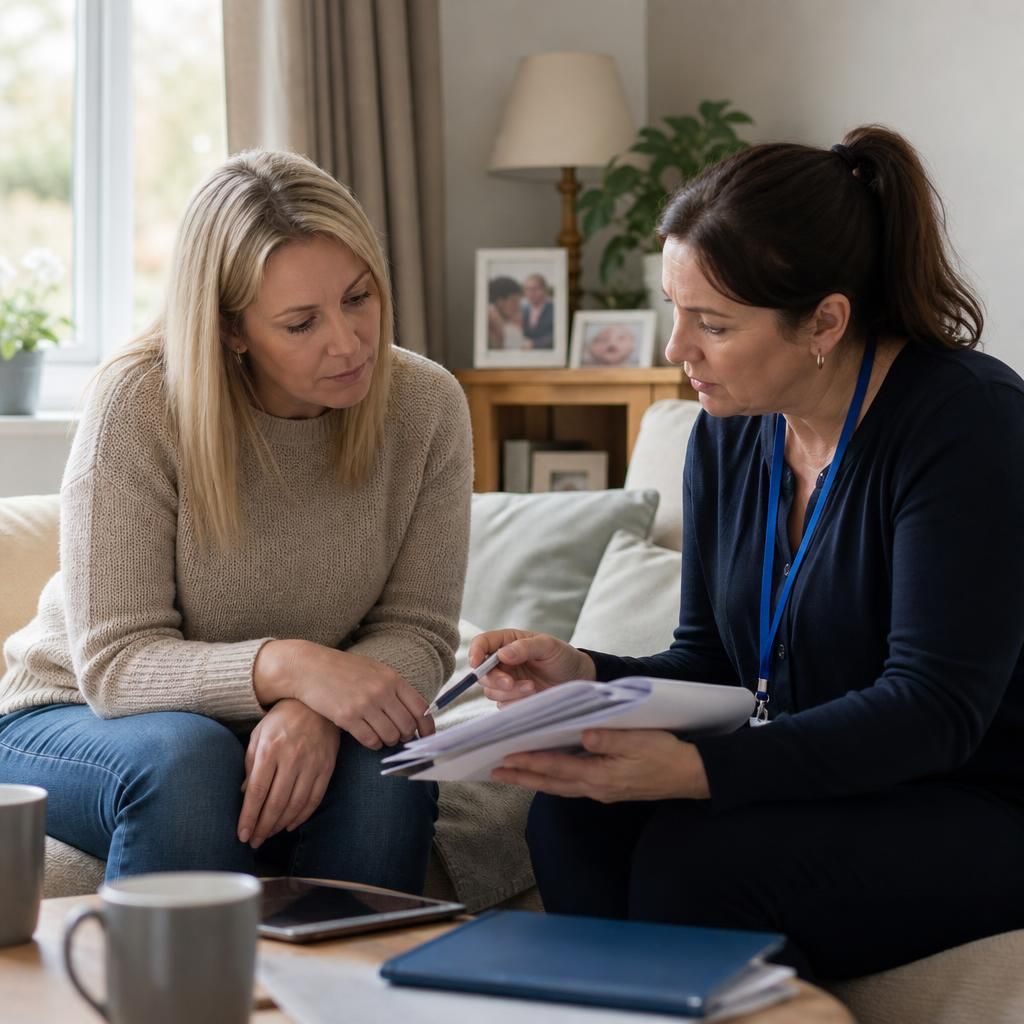
Foster home requirements continue after approval; they are not solely a one-off checklist for the initial assessment. A home may need review if a child’s needs change, another child joins the household, or family circumstances alter.
Keep your supervising social worker informed about changes that could affect privacy, routines or practical care. This allows the fostering arrangement to be considered again, rather than assuming that an earlier assessment covers every future situation.
You do not need to predict every possible change before applying. During assessment, ask how reviews work, what information should be reported and whether proposed adjustments need agreement. Clear records and early discussion help show that the home remains suitable as circumstances develop.
Most homes can be considered if they provide suitable private space, meet safety standards, and support a child’s needs; ownership, property size and pets do not automatically exclude you alone.
A separate bathroom is not usually a standard requirement. Assessment considers privacy, safe access, household arrangements and the child’s individual needs, including whether sharing facilities is appropriate for their age.
Yes, dogs do not automatically prevent fostering. Their temperament, training, health, behaviour around children, supervision arrangements and any safeguarding risks will be assessed before approval and throughout the placement process.
Yes. Fire safety forms part of the assessment, including working smoke alarms, clear escape routes, secure exits and household evacuation arrangements appropriate to the child’s age, needs and circumstances.
Yes, medicines should be stored securely so children cannot access them. Assessors may consider locked storage, safe handling arrangements, and how prescriptions are administered, recorded and monitored within the household.
If you are unsure whether your household meets the requirements, speak with our team informally. You can ask questions about the assessment, discuss your circumstances and understand your options before deciding whether to take the next step.