
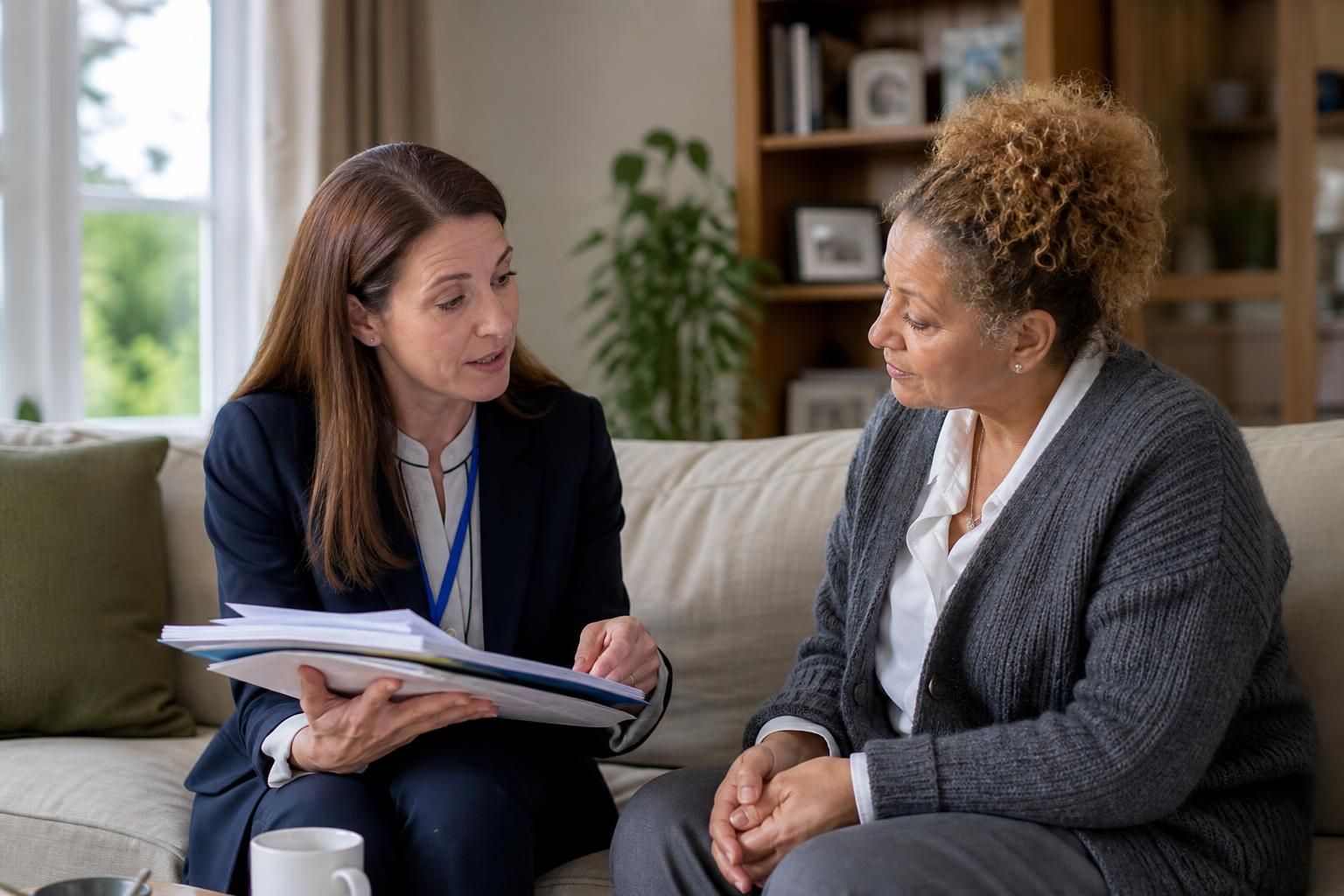
What assessment is needed to become a kinship carer?
The assessment needed depends on the type of kinship arrangement: a local authority may complete a viability assessment and, where the child is looked after, a connected-person fostering assessment. This typically considers your identity, household, home, health, relationships, safeguarding checks, references and ability to meet the child’s needs, with additional assessment requirements for a special guardianship or child arrangements order.
Partnering with an
Ofsted Outstanding Provider
A kinship carer assessment is a structured process used to establish whether a proposed arrangement is safe, suitable and in the child’s best interests. The exact assessment depends on the child’s legal status and the arrangement being considered, so the process for an informal family arrangement is different from the process for becoming an approved connected-person foster carer or applying for a court order.
The first step is to clarify the proposed arrangement. The child’s social worker or the relevant local authority should explain whether the child is looked after, whether approval as a foster carer is required, and whether the family is considering a special guardianship order or child arrangements order. This distinction matters because each route has different decision-making, evidence and support arrangements.
A viability assessment may be completed at an early stage. This is an initial assessment of whether it is reasonable to consider the proposed kinship arrangement in more detail. It may involve conversations with you and other adults in the household, checks against relevant records, consideration of any immediate safeguarding concerns and an early discussion about the child’s circumstances. It is not the same as the full assessment required for fostering approval or a court report.
The viability assessment may also consider practical questions such as:
- how the proposed arrangement would affect the child’s day-to-day life;
- how contact with the child’s parents might be managed;
- whether other children or adults in the household understand the likely changes;
- what support is available from relatives, friends and professionals; and
- whether any urgent help or additional assessment is needed before the child moves in.
A full connected-person fostering assessment is more detailed. If the child is looked after and fostering approval is being considered, a social worker will usually gather information over several meetings and prepare an assessment for the fostering service. You should expect detailed discussions about your experience, daily routines, approach to caring for children, ability to work with professionals, and understanding of the child’s history and possible needs.
The assessment will usually explore how you would provide safe care while maintaining the child’s relationships, identity, culture and important family connections. It may also consider safer caring arrangements, contact plans, education, health appointments, transport, household routines and how decisions would be made with the child’s social care team. The assessor may speak with people who know you and may visit your home as part of gathering evidence.
The child’s views are relevant wherever they can be established. Depending on the child’s age and understanding, the social worker may seek their wishes and feelings about where they live, who cares for them, contact with parents and other significant relationships. These views are considered alongside the child’s safety, welfare and longer-term needs; they do not place responsibility for the decision on the child.
Assessment for a special guardianship order or child arrangements order follows a court-focused route. In these circumstances, the local authority or another authorised professional prepares a report for the court. The report normally considers the child’s needs, the proposed care arrangements, family relationships, contact, the views of relevant people and the support that may be required. The court makes the final decision, rather than the fostering service.
You may be asked to provide documents or information during the process, and other household members may be involved in discussions. It is important to be open about matters that could affect the assessment. An issue does not automatically mean that you cannot care for the child, but the assessor needs accurate information to understand any risks, identify safeguards and decide what support would be appropriate.
Training and preparation may form part of the assessment. Prospective connected-person foster carers may be expected to complete preparation training and show that they understand safeguarding, trauma, attachment, behaviour, recording information, confidentiality and working with the child’s parents and professionals. The precise training depends on the fostering service and the child’s circumstances.
At the end of the process, the assessor records the evidence and makes a recommendation or submits a report to the appropriate decision-maker. Possible outcomes include approval, a recommendation to proceed with a different legal arrangement, a request for further information or a decision that the proposed arrangement is not suitable. If concerns arise, ask for them to be explained clearly and find out whether additional support, a review or independent advice is available.
Before an assessment begins, prepare by writing down your questions, discussing the proposed changes with everyone in your household and thinking carefully about contact, boundaries and practical support. Your child’s social worker should be able to explain which assessment applies, who will complete it, what information is needed and how you will be told about the decision.

A kinship carer assessment is based on your circumstances and the child’s needs at the time of the proposed arrangement. If either changes while the assessment is in progress, the social worker may need to update the assessment before a recommendation or court report is completed.
Tell the assessing professional if there is a significant change, such as:
- someone joining or leaving your household;
- a change in your health, employment or accommodation;
- a change to the child’s care, education, health or contact arrangements; or
- new information about family relationships or safeguarding concerns.
This does not automatically prevent you from becoming a kinship carer. It allows the assessor to consider whether the proposed arrangements remain safe and workable, and whether extra safeguards or support are needed. Ask the social worker to explain how any change will be recorded and whether it affects the assessment route or decision-making process.
Discuss your kinship carer assessment
If you are unsure which assessment applies to your circumstances, speak to our team for guidance on the next steps and questions to raise with the child’s social worker.