
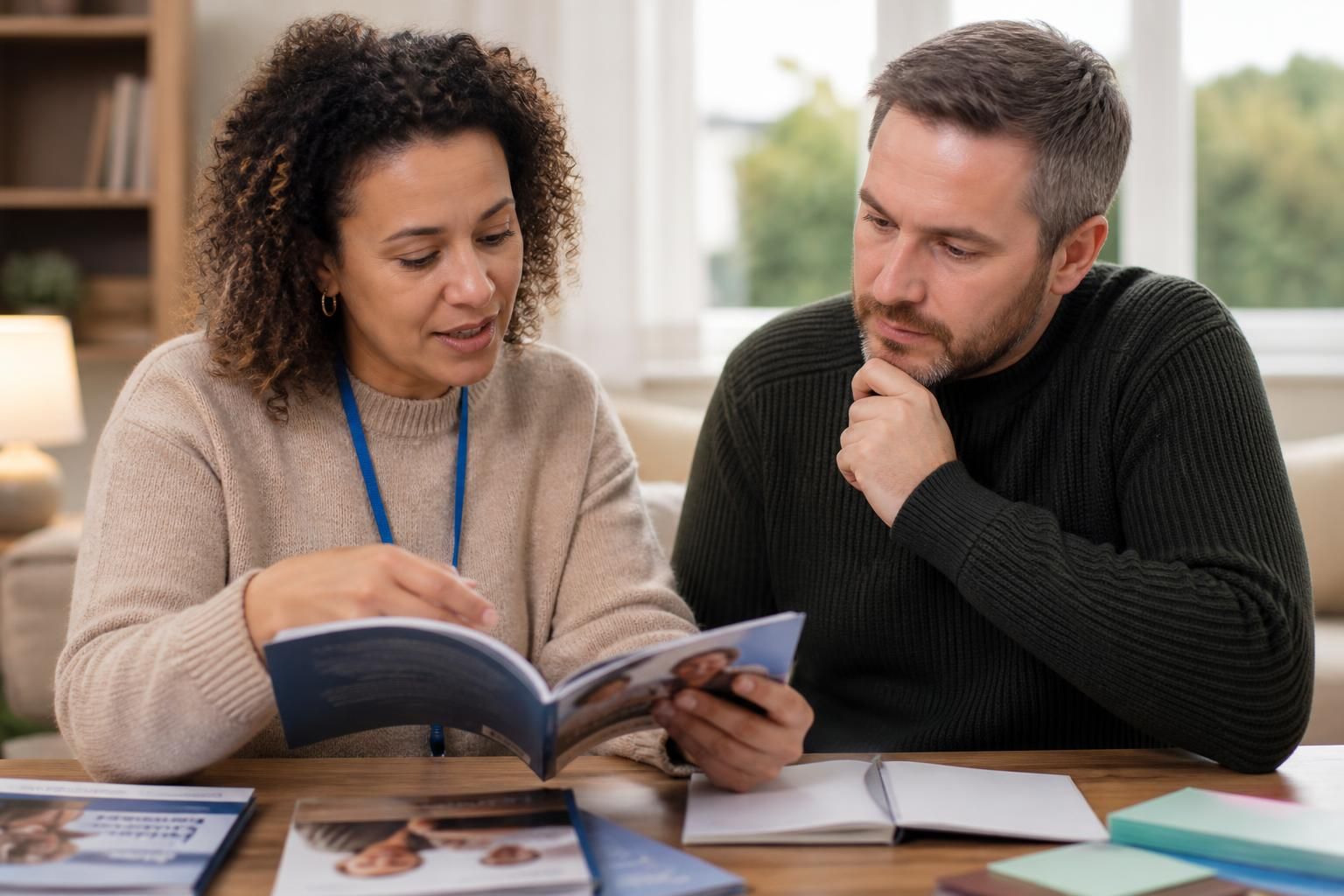
What training does a foster family receive before welcoming a child?
Before welcoming a child, a prospective foster family completes preparation training covering safeguarding, child development, trauma, attachment, behaviour and the practical responsibilities of fostering. This training forms part of the assessment process and helps each family understand the role, consider how fostering will affect their household and identify the support they may need.
Partnering with an
Ofsted Outstanding Provider
Training for foster families is a staged process that begins before approval and continues throughout a carer’s fostering career. It combines structured learning with assessment, practical preparation and ongoing development, so applicants can understand the responsibilities involved and build the skills needed to care safely for a child or young person.
Before an application is approved, prospective carers usually complete a formal preparation course. This gives applicants an opportunity to examine what fostering involves in everyday life, ask questions and consider whether their circumstances are suitable. It also helps the fostering team understand the strengths, experience and development needs of each applicant.
Preparation commonly includes:
- the role and responsibilities of a foster carer;
- how children may be affected by neglect, abuse, separation and disrupted relationships;
- attachment, identity and the impact of trauma on behaviour and development;
- safeguarding duties, safer caring and recognising possible risks;
- working with social workers, schools, health professionals and a child’s wider network;
- recording information, sharing concerns and maintaining appropriate confidentiality;
- supporting contact with birth family members where this forms part of a child’s plan;
- how fostering may affect household routines, relationships, privacy and existing children; and
- the legal, regulatory and professional expectations placed on foster carers.
The training is not intended to test whether someone already knows everything about childcare. It is designed to encourage discussion and reflection. Applicants may be asked to consider how they would respond to situations such as a child refusing boundaries, becoming distressed after contact, making an allegation or struggling to settle at school. These discussions help families identify practical strategies and recognise when to seek advice rather than trying to manage a difficult situation alone.
First-aid and health-related learning may also form part of a foster carer’s preparation or induction. The precise requirements depend on the fostering arrangement, the agency’s procedures and the needs of children likely to be placed. Additional training may be necessary where a child has particular medical, developmental or communication needs.
Training is connected to the assessment process. Applicants are expected to participate, reflect on the subjects covered and consider how the learning applies to their own household. The assessing social worker may explore previous experience, attitudes to working with professionals, approaches to boundaries and the family’s ability to respond to change. Completing preparation training does not by itself guarantee approval; the full assessment considers the household’s circumstances and capacity to foster.
After approval, training continues rather than ending when the first placement begins. Foster carers generally complete an induction and maintain a personal development plan. Further learning can cover subjects such as managing behaviour, therapeutic approaches, online safety, missing episodes, first aid, safer caring, equality and diversity, or supporting teenagers preparing for adulthood. Training is often selected according to the children in placement and the carer’s developing experience.
Some learning may be completed as a group, while other activities can involve guided reading, online modules, workshops, supervision or discussion with the fostering team. Foster carers may also learn from reviews of their practice, placement meetings and advice from professionals involved in a child’s care. Keeping training records is an important part of demonstrating that required learning has been completed and identifying future development needs.
A good preparation programme should leave applicants with a realistic understanding of both the practical demands and the professional responsibilities of fostering. Before applying, it is sensible to ask the fostering organisation:
- what preparation training is included and when it takes place;
- whether everyone in the household is expected to participate in some sessions;
- how training fits alongside the assessment timetable;
- which courses are required after approval;
- how training is adapted for a specific child’s needs; and
- what support is available when a carer wants help applying the learning to a placement.
Become A Foster Family provides information, guidance, training and ongoing assistance to people considering fostering. Its teams support applicants through the preparation and assessment stages, then help foster families continue developing their knowledge as their circumstances and placements change. This allows training to be treated as a continuing part of safe, informed fostering rather than a one-off course.

A practical outcome of pre-approval training is a clear safer-caring plan for the household. This sets out how everyday situations will be managed, including privacy in bedrooms and bathrooms, supervision, transport, visitors, photographs and social media, use of technology, pets and who may provide childcare. Agreeing these boundaries in advance helps everyone understand what is appropriate before a child arrives.
The plan should be realistic for the household rather than treated as a fixed set of rules. Foster carers may need to review it with their supervising social worker when circumstances change or a child’s needs become clearer. Training helps families recognise where a routine could create confusion or risk, and decide when to seek professional guidance.
Ask about training before you apply
Contact Become A Foster Family to discuss the preparation training involved and ask questions about starting your fostering application.