

What Records Must Foster Parents Keep?
Foster parents must keep accurate, up-to-date records about each child’s care, including daily observations, significant events, incidents, medication, appointments, education and contact with family members or professionals. Records should be factual, dated, securely stored and shared with the fostering service and social workers when required.
Partnering with an
Ofsted Outstanding Provider
Foster parents are expected to maintain a clear, contemporaneous record of the child’s day-to-day care and any matter that affects their safety, welfare, development or placement. These records form part of the evidence used by the fostering service, social workers and other professionals to review the child’s needs and make informed decisions.
What should be recorded?
- Daily care and observations: Note relevant changes in mood, presentation, behaviour, routines, sleep, eating, relationships and emotional wellbeing. Record what you observed rather than making assumptions about the reason for it.
- Significant events: Make a dated entry for events that may affect the child’s welfare or placement, including missing-from-home episodes, serious disagreements, disclosures, injuries, damage, police involvement or changes in circumstances.
- Health matters: Keep information about appointments, symptoms, treatment, prescribed medication, missed doses, first aid and advice received from health professionals. Medication records should normally show what was given, when, the dose and any relevant outcome, using the system required by the fostering service.
- Education: Record important meetings, discussions with school staff, attendance concerns, achievements, homework arrangements and any support the child needs. Routine school information may be held by the school, but significant educational matters should be passed to the child’s social worker and recorded according to local procedures.
- Family time and relationships: Record arrangements for contact, whether it took place, who attended, how the child responded and any concerns or changes agreed by professionals. Keep descriptions neutral and avoid criticising family members.
- Professional communication: Record relevant conversations with the child’s social worker, supervising social worker, school, health professionals, advocate or other authorised people. Include the date, who was involved, the main information shared and any action agreed.
- Money and belongings: Follow the fostering service’s procedure for pocket money, personal spending, savings, clothing, travel costs and property. Keep receipts or other evidence where required, particularly for agreed expenditure or items bought for the child.
How should an entry be written? A useful entry allows someone who was not present to understand what happened. Include the date and time, the people involved, the setting, what was seen or heard, what action was taken and what happened afterwards. Where possible, use the child’s exact words for important comments and place them in quotation marks. Distinguish clearly between a direct observation and information reported by someone else.
For example, “At 7.30 pm, Jay remained in his bedroom and did not come down for dinner. He said, ‘I do not want to talk.’ I offered food and told him I was available to listen. He ate a sandwich at 8.15 pm and appeared calmer” is more useful than “Jay was difficult and upset”. The first entry is specific, while the second includes an interpretation without explaining the underlying facts.
Records should be made as soon as practicable after an event, while details are fresh. If an entry is added later, identify when it was written and make clear when the event occurred. Do not alter an existing entry in a way that hides the original information. If a paper record needs correcting, follow the service’s process rather than using correction fluid or removing the original wording. For electronic systems, use the amendment function or ask the fostering service how to correct an error.
What must be recorded after an incident or safeguarding concern?
Follow the fostering service’s reporting procedure immediately when there is a safeguarding concern, allegation, serious incident, injury, missing episode or other event requiring urgent action. Recording the matter must not delay contacting the appropriate person or emergency service. The written account should set out the facts, the child’s words where relevant, any immediate action, who was informed and the instructions received. Do not investigate an allegation yourself, ask leading questions or include speculation about who may be responsible.
Some incidents require a separate form as well as an entry in the day-to-day record. A fostering service may also require notification to the child’s social worker, supervising social worker, manager, placing authority or another organisation. The service’s procedures take priority because reporting requirements can vary according to the child’s circumstances and the nature of the event.
How should records be stored and shared?
- Use the secure recording system, approved app, locked file or other method specified by the fostering service.
- Keep paper notes away from visitors, other children and anyone who is not authorised to see them.
- Do not discuss a child’s information on social media or send it through personal messaging accounts unless the service has specifically approved that method.
- Check email addresses and recipients carefully before sending confidential information.
- Do not leave records in a car, shared room or other place where they could be lost or viewed.
- Do not destroy, delete or retain copies outside the agreed process. Ask the fostering service how records should be kept, transferred or disposed of.
Foster carers should only share information with people who have a legitimate role in the child’s care, and only to the extent needed for that role. Confidentiality does not prevent appropriate safeguarding information being passed on. If unsure whether information should be shared, contact the supervising social worker or follow the service’s information-sharing guidance rather than making an informal decision.
Are foster carers expected to keep personal diaries? A personal diary is not a substitute for the official foster care record. Private reflections may be useful for preparing for supervision, but they should not contain unnecessary details about the child or be stored outside the agreed safeguards. Important information must be transferred to the official system promptly, using factual and professional language.
The fostering service should explain which records it expects, provide templates or access to its recording system, and clarify how long information must be retained. Requirements may differ between services and placements, so foster carers should use their agency’s policy rather than relying on a generic notebook or online template. Records may be reviewed during supervision, placement reviews, complaints procedures, safeguarding enquiries or inspections.
Good recording is accurate, proportionate and respectful. It should preserve the child’s voice, show how decisions were reached and provide a reliable account of care without labelling or judging the child. When in doubt, record the relevant facts, seek advice from the supervising social worker and ensure any required concern is reported through the correct channel.
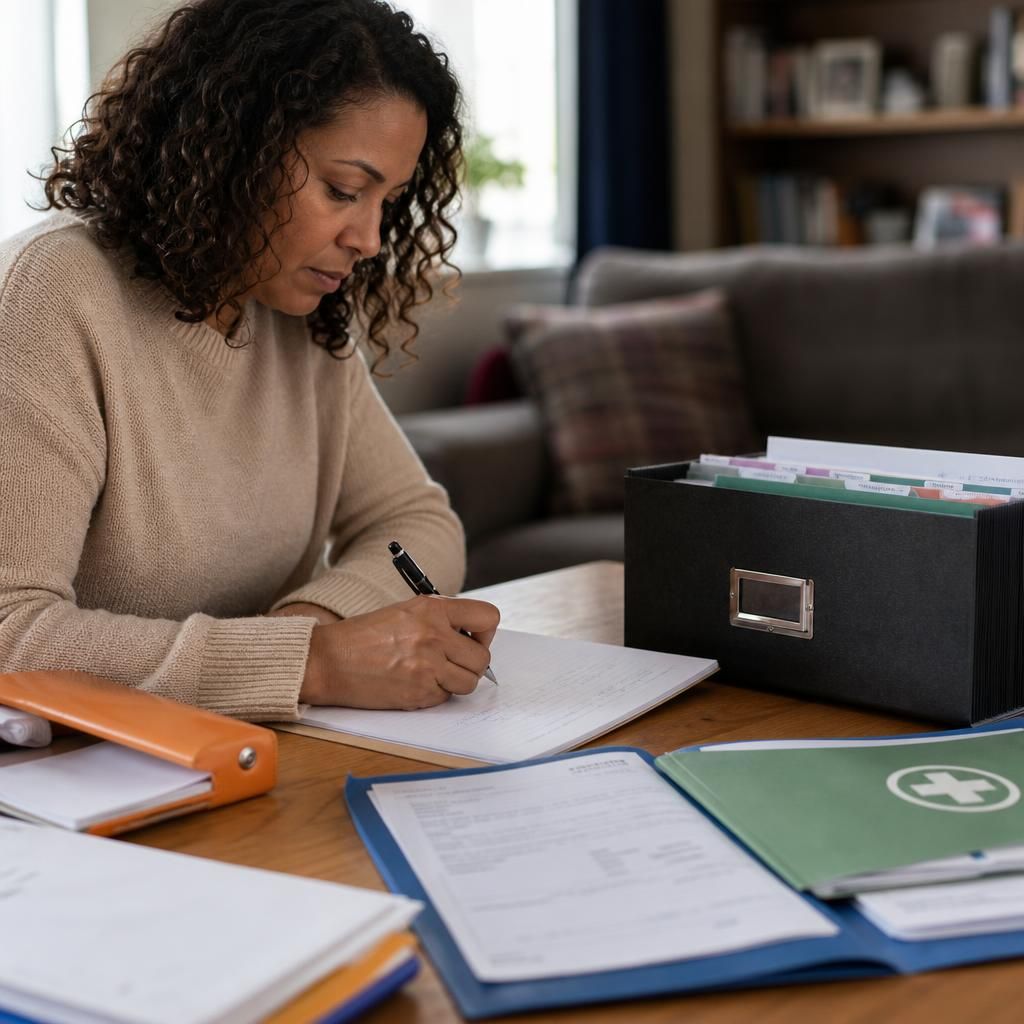
Keep each child’s record separate. Where siblings or more than one child live in the same foster home, create a distinct record for each child. An event involving several children may need to be recorded in each file, but write only the information relevant to that child and avoid copying unnecessary personal details about siblings or others.
- Use the child’s name or approved identifier consistently.
- Record how the event affected that particular child, including their words, presentation and any support provided.
- Cross-reference related information only where the fostering service’s system allows it and the link is necessary.
- Ask the supervising social worker how to record information that concerns more than one child.
This approach gives professionals a clear account of each child’s circumstances and helps prevent confidential information being confused between records.
Speak to Us About Foster Carer Record-Keeping
Speak to our fostering team to discuss any questions you have about becoming a foster carer and the support available throughout the assessment and approval process.