
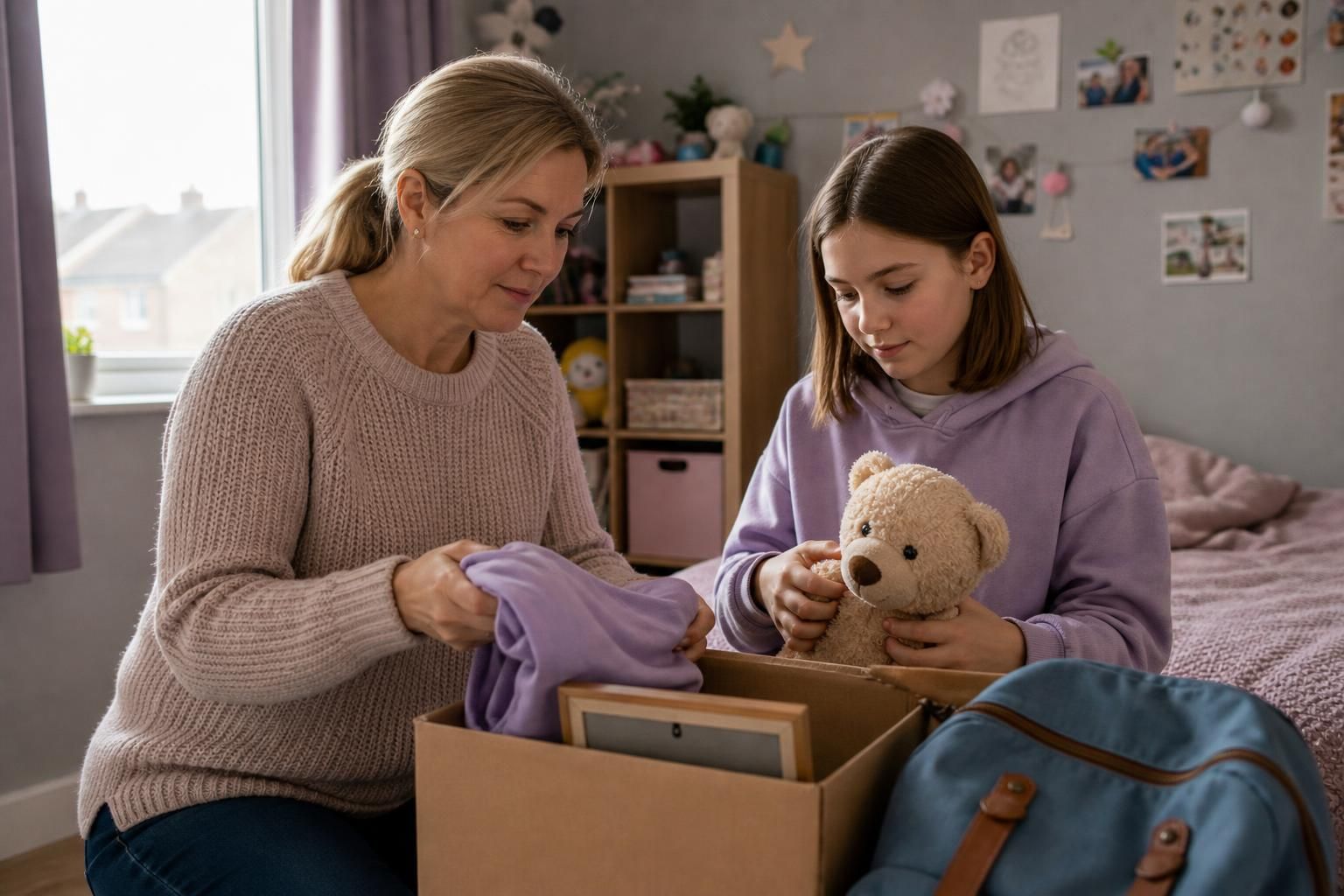
What happens when a foster placement ends?
A foster placement may end when a child returns to their birth family, moves to another care setting, is adopted or becomes independent. The ending is planned with the child’s social worker and fostering team wherever possible, with arrangements made to support the child’s transition and help you manage the practical and emotional impact.
Partnering with an
Ofsted Outstanding Provider
When a foster placement ends, the foster carer’s day-to-day caring responsibilities usually come to an end, while the child’s move to their next stage is managed through an agreed transition plan. The process involves practical arrangements, information sharing, record keeping and support for everyone affected.
How the ending is prepared for
Where there is time to prepare, the child’s social worker, foster carer and fostering team will discuss the proposed arrangements. The plan may cover:
- where the child will live next and who will be responsible for their care;
- how the move will be explained to the child in an age-appropriate way;
- visits, introductions or overnight stays before the move, where suitable;
- transport, school arrangements, healthcare information and important appointments;
- the child’s belongings, photographs, medication, documents and comfort items;
- how the child will maintain important relationships after leaving; and
- the date and practical steps for handover.
The level of preparation depends on the circumstances. A planned move can take place over a period of time, whereas an urgent move may need to happen with little notice. If a placement ends unexpectedly, the professionals involved should still review what happened and identify any further support or action required.
What the foster carer may need to do
Before the child leaves, you may be asked to provide up-to-date information about their routines, health, education, behaviour, relationships, achievements and any concerns. Daily records, incident reports and other relevant documents must be completed and passed on in line with the fostering service’s procedures. Clear information helps the next carers or care setting understand what supports the child and what may cause anxiety.
You will usually help the child gather their belongings and may contribute to a life-story record, memory box or letter, if this is appropriate. Practical details matter: familiar items, photographs and information about routines can make a change of home easier to manage. Personal information must be handled confidentially and only shared through agreed channels.
Contact after the placement
Some foster carers continue to have contact with a child after the placement, but this is not automatic. It must be agreed with the child’s social worker and fostering service and must reflect the child’s wishes, welfare and care plan. Contact might involve letters, cards, telephone calls or visits. The arrangements can be reviewed if the child’s circumstances change.
Foster carers should not make private arrangements directly with a child or their family without discussing them with the professionals responsible. This protects the child, the carer and everyone involved, particularly where there are safeguarding, confidentiality or family-contact considerations.
Reviews and financial administration
After a placement ends, the fostering service will normally review the placement with you. This may consider what worked well, the child’s progress, any difficulties, the quality of the support provided and lessons that could inform future placements. A review is also an opportunity to discuss your own response to the ending and whether any additional guidance or training would be useful.
There may also be administrative tasks, such as returning equipment, updating records and confirming the final financial arrangements under the fostering service’s policy. Allowances are linked to the placement and the applicable payment rules, so your supervising social worker or fostering team can explain what applies in your circumstances.
The emotional impact
Even when a move is positive and carefully planned, the end of a placement can bring mixed feelings. Foster carers may feel relief, sadness, uncertainty or concern about how the child is coping. Other members of the household may also need time and space to talk about the change. A child may show their feelings through withdrawal, anger, questions or changes in behaviour rather than by explaining them directly.
Use the support available from your supervising social worker and fostering team. Keeping communication factual, maintaining appropriate boundaries and allowing people to talk without making promises about the future can help. If you have concerns about the child’s safety, wellbeing or adjustment after the move, raise them promptly through the agreed professional route.
Can you foster again afterwards?
Many foster carers continue fostering after one placement ends, but the next step should be discussed with the fostering service rather than assumed. You may need time to complete the review, reflect on the experience, prepare your household and consider what type of placement would be suitable next. Your supervising social worker can discuss your availability, skills, training needs and any changes in your family circumstances before another match is considered.
An ending does not mean that the relationship or the work you carried out becomes unimportant. Accurate records, a well-managed handover and appropriate ongoing contact can help preserve the child’s sense of continuity while allowing the next stage of their care to proceed safely.

When a foster placement ends, your responsibility to protect the child’s privacy does not end with the move. Information about their history, health, education, relationships and care arrangements should remain confidential and must only be discussed with people who have a legitimate role in supporting them.
- Do not share identifying details, photographs or updates about the child on social media or in public conversations.
- Keep any paperwork, digital files, photographs or recordings securely, and follow your fostering service’s instructions for returning, storing or deleting them.
- Refer requests for information from relatives, friends or other organisations to the child’s social worker or fostering team unless you have been specifically authorised to respond.
- Continue to report safeguarding concerns through the agreed professional route, even if the child is no longer living with you.
These boundaries help prevent confusion about the child’s new arrangements and protect their identity as they move into the next stage of their care. Your fostering service can explain what information you may retain, what must be returned and how any future communication should be managed.
Talk to us about what happens when a foster placement ends
If you are considering fostering and would like to discuss how placement endings are managed, speak to our fostering team for guidance tailored to your circumstances. We can help you understand the process and the support available at each stage.