

How are foster parents involved in decisions about a child's care?
Foster parents are involved in decisions about a child’s day-to-day care, while also contributing to wider planning with social workers, the child’s family and other professionals. Their observations, knowledge of the child’s needs and understanding of their progress help inform reviews and ongoing care decisions.
Partnering with an
Ofsted Outstanding Provider
Foster parents are involved in care decisions at different levels, depending on the child’s care plan, legal status and the authority delegated to them. They usually make routine decisions about daily life, contribute evidence and recommendations to wider planning, and attend meetings where the child’s needs and progress are reviewed. Decisions with significant legal, medical, educational or long-term consequences normally remain with the local authority, the child’s parents where they retain parental responsibility, or the court.
Everyday decisions in the foster home
Foster parents are generally expected to make ordinary decisions that help a child live safely and normally. These may include:
- what the child eats and wears;
- how they spend their free time;
- household routines, bedtimes and appropriate boundaries;
- taking part in hobbies, clubs and ordinary social activities;
- arranging routine transport and attending day-to-day appointments;
- allowing suitable friends to visit, where this is consistent with the placement plan; and
- giving permission for ordinary school activities when authority has been delegated to them.
The precise scope of this authority should be explained during the placement process. It should not be assumed that every foster parent has the same decision-making powers for every child.
Delegated authority and the placement plan
When a child moves into a foster home, the social worker and other relevant adults should clarify who can give consent for different types of decision. This is often recorded in the child’s placement plan or related care documentation. It may cover matters such as school trips, photography, haircuts, overnight stays, travel, social media and activities involving a degree of risk.
Delegated authority can be adapted to the child’s age, understanding, history and needs. A child who has previously experienced disruption or harm may need more careful arrangements around contact, online activity or unsupervised time. Foster parents should ask for unclear arrangements to be confirmed rather than making assumptions.
Decisions that usually require wider agreement
Some decisions are too significant to be made solely by a foster parent. These can include a change of school, non-routine medical treatment, major dental work, a change of religion, international travel, permanent changes to appearance and arrangements that affect family contact. The correct decision-maker depends on the child’s legal status and the authority recorded in their care plan.
Where a child is subject to a care order, the local authority generally shares parental responsibility with the child’s parents. Where there is no care order, the position may be different, and the child’s parents may retain the relevant legal authority. A foster parent does not normally acquire parental responsibility simply by being approved or by caring for a child. The supervising social worker or child’s social worker can explain the arrangements for a particular placement.
How foster parents contribute to planning
Foster parents provide practical information that other professionals may not see directly. Their contribution can include observations about a child’s routines, relationships, communication, behaviour, health, education and response to different approaches. They may be asked to comment on:
- whether the placement is meeting the child’s needs;
- changes in mood, behaviour or presentation;
- the child’s progress at school and participation in activities;
- how contact with parents, relatives or other important people is affecting the child;
- emerging health, emotional or developmental concerns; and
- what practical support or changes might help the placement continue safely.
These observations should be factual and specific. A record of what happened, when it happened and how the child responded is usually more useful than a general description or assumption about the reason for their behaviour.
Reviews and meetings
Looked-after children have formal review arrangements, with the independent reviewing officer overseeing the review process. Foster parents are commonly invited to share information and take part in discussion, although the people attending and the precise arrangements can vary. They may contribute written reports, speak about the child’s daily experience and help identify whether agreed actions have been completed.
A review may consider the child’s placement, health, education, contact arrangements, identity needs, emotional wellbeing and longer-term plan. Foster parents can raise concerns before the meeting, ask for relevant issues to be recorded and check who is responsible for each agreed action. They should also tell the social worker promptly if a child’s needs change rather than waiting for the next review.
Listening to the child
Decision-making should take account of the child’s wishes and feelings in a way that reflects their age and understanding. Foster parents can help by creating opportunities for the child to express views, explaining decisions in language they understand and passing their views to the social worker. They should not coach the child or suggest that the child is responsible for the final outcome.
Older children and young people may take part directly in meetings or may prefer to share their views separately. They may also have access to an advocate or independent reviewing officer if they feel their wishes are not being heard. Foster parents can help them understand what different professionals do and what will happen to information they share.
Working with parents and professionals
Foster parents are part of a wider team that may include the child’s social worker, supervising social worker, teachers, health professionals, therapists, family members and contact workers. Good decision-making depends on sharing relevant information appropriately and respecting confidentiality. Foster parents should not make promises about contact, reunification, adoption or other long-term outcomes unless the responsible professionals have confirmed the plan.
Contact arrangements should follow the agreed plan. A foster parent may help a child prepare for contact, observe how they are affected afterwards and report concerns, but should not unilaterally change the arrangement unless there is an immediate safeguarding reason and they have followed the required reporting procedure.
When a foster parent disagrees with a decision
Foster parents can raise concerns and ask for the reasons behind a decision. A practical approach is to:
- describe the concern using clear, dated observations;
- explain how it may affect the child’s safety, welfare or stability;
- ask which part of the care plan or delegated-authority agreement applies;
- discuss the issue with the child’s social worker and supervising social worker; and
- request that unresolved concerns are recorded and taken to the appropriate meeting or reviewing officer.
Urgent safeguarding concerns should be reported through the procedure explained by the fostering service. Foster parents should follow professional advice on recording incidents, sharing information and seeking medical or emergency help where necessary.
In practice, foster parents have meaningful influence without being the sole decision-maker. Their role is to provide safe day-to-day care, keep the child’s needs at the centre of discussions, contribute reliable information and take part in agreed plans while respecting legal responsibilities and professional boundaries.
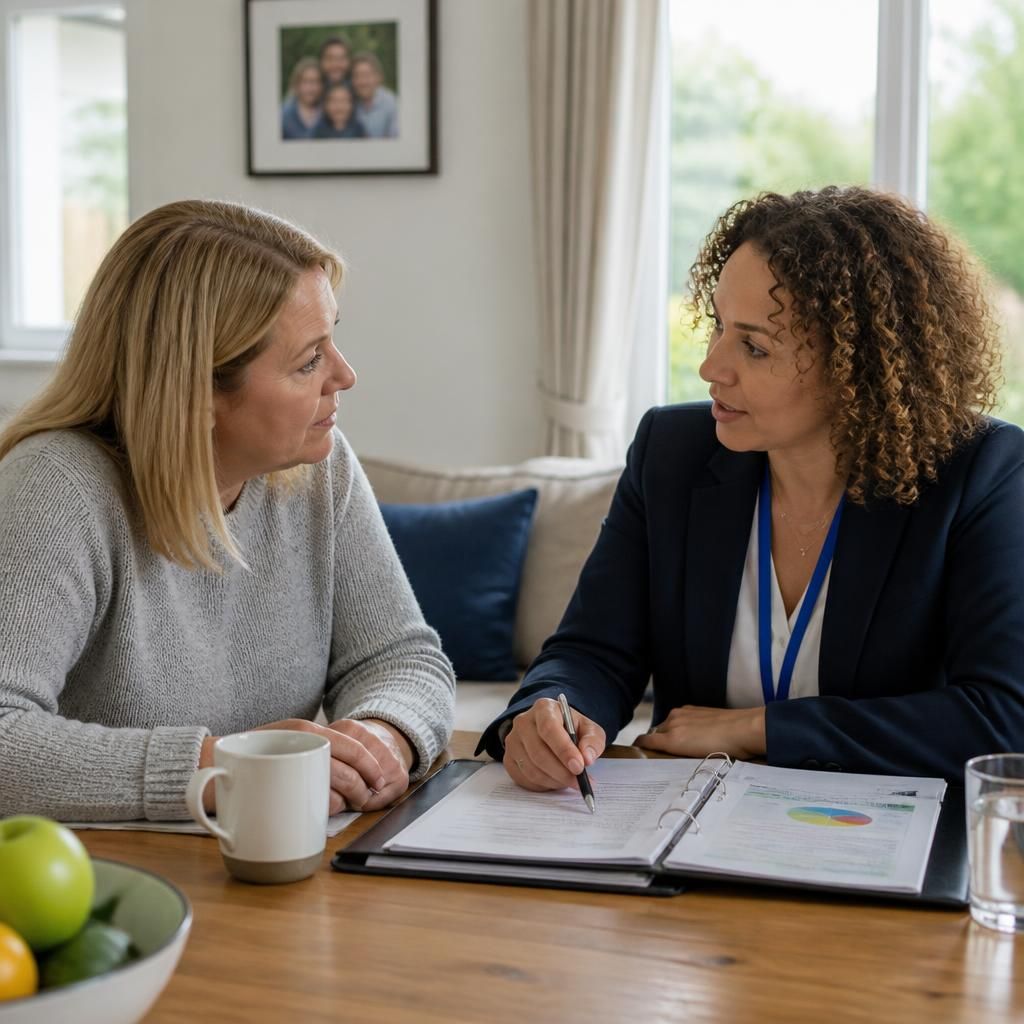
A foster parent’s practical knowledge helps turn formal care plans into arrangements that work in everyday life. By explaining how a decision affects the child’s routines, relationships and ability to feel settled, they can help professionals identify unintended difficulties and consider suitable adjustments. This gives foster parents meaningful input while keeping final responsibility with the person or organisation legally authorised to make the decision.
Find out more about becoming a foster parent
Find out more about becoming a foster parent and the steps involved in applying. You can then consider whether fostering is right for you and your household.