

What training do foster carers receive to meet required standards?
Foster carers receive preparation training before approval, followed by ongoing learning to develop and maintain the knowledge and skills required by foster carer standards. Training commonly covers safeguarding, child development, health, safer caring, recording, equality and inclusion, and responding to the individual needs of children in placement.
Partnering with an
Ofsted Outstanding Provider
Foster-carer training is a competency-based programme that prepares applicants for approval and then helps approved carers demonstrate, maintain and extend the skills required by the fostering standards. It is not simply a course to complete once: learning is connected to the carer’s assessment, the children placed with them, supervision and regular review.
Before approval, preparation training normally helps applicants understand:
- what fostering involves in practice, including the responsibilities of caring for a child who may have experienced neglect, abuse, loss or disrupted relationships;
- how fostering affects household routines, relationships, privacy and family life;
- the roles of the fostering service, social workers, schools, health professionals, birth families and other people involved in a child’s care;
- how applicants’ values, attitudes, experience and practical circumstances relate to the expectations placed on foster carers; and
- how to respond safely and appropriately to common situations, including distress, conflict, challenging behaviour, contact arrangements and allegations.
This preparation gives applicants an opportunity to test their understanding and consider whether fostering is suitable for their household. Attendance is considered alongside the wider assessment; completing training by itself does not determine whether approval is granted.
Training is usually linked to the Training, Support and Development Standards for Foster Carers. These standards provide a framework for the knowledge and practice a carer is expected to develop. They cover areas such as understanding a child’s needs, promoting health and education, working as part of a professional team, maintaining safe care and developing as a foster carer. The fostering service will explain how evidence is gathered and which requirements apply to the individual carer.
Learning is often practical rather than purely theoretical. A session about safeguarding, for example, should help a carer recognise indicators of harm, understand reporting duties, preserve relevant information and avoid asking inappropriate questions. Training about behaviour should help carers consider what a child’s behaviour may communicate, set safe boundaries and use approaches that do not involve prohibited or unsafe punishment. This allows the carer to show how knowledge would be applied in the home.
Common areas of more detailed learning may include:
- safer caring plans, household boundaries, supervision and managing risk;
- trauma, attachment, separation, loss and the effect of early experiences on development;
- promoting physical, emotional and mental health, including working with health professionals and following agreed medication arrangements;
- first aid, household health and safety, fire safety and safe transport, where required by the fostering service;
- protecting children online and helping them use digital devices safely;
- recording significant events accurately, objectively and promptly, while protecting confidentiality;
- supporting education, identity, culture, religion, language, sexuality and relationships without discrimination;
- working with birth parents and other significant people, including supporting agreed contact safely; and
- understanding allegations, complaints, whistleblowing and the steps to take if a safeguarding concern arises.
After approval, a foster carer’s learning should reflect the children they care for and the responsibilities they undertake. A new placement may create a need for additional preparation about a child’s medical condition, communication needs, developmental stage, history, behaviour or contact arrangements. A carer may also need specific learning before accepting a placement involving specialist or more complex needs. The relevant social workers and fostering staff should identify this with the carer rather than expecting general preparation to cover every situation.
Ongoing learning can be delivered through taught sessions, online learning, workshops, discussions with supervising social workers, reading, reflective exercises and learning from practice. The method matters less than whether the carer understands the subject and can use it safely. Carers may be asked to discuss examples from their own experience, complete activities, reflect on an incident or show how they would adapt their approach to a particular child.
Training also supports professional accountability. Foster carers are expected to keep information confidential, share relevant concerns, maintain appropriate records and follow the policies and procedures of their fostering service. Learning should therefore explain not only what good care looks like, but also when to seek advice, who to contact, what must be reported and how decisions should be recorded.
Evidence of development is normally considered through training records, completed learning or standards work, supervision discussions, placement documentation, observations and review meetings. A carer does not have to know everything at the outset. The important question is whether they engage with learning, reflect on feedback, recognise the limits of their knowledge and put new skills into practice. Where further development is identified, the fostering service can agree a learning plan and monitor progress.
The exact programme differs according to the fostering service, the carer’s previous experience and the needs of children in placement. Applicants should ask which preparation courses are required, how the standards are evidenced, what ongoing learning is expected and how placement-specific training is arranged. These questions clarify the practical commitment involved and show how training will support safe, consistent care throughout the fostering journey.
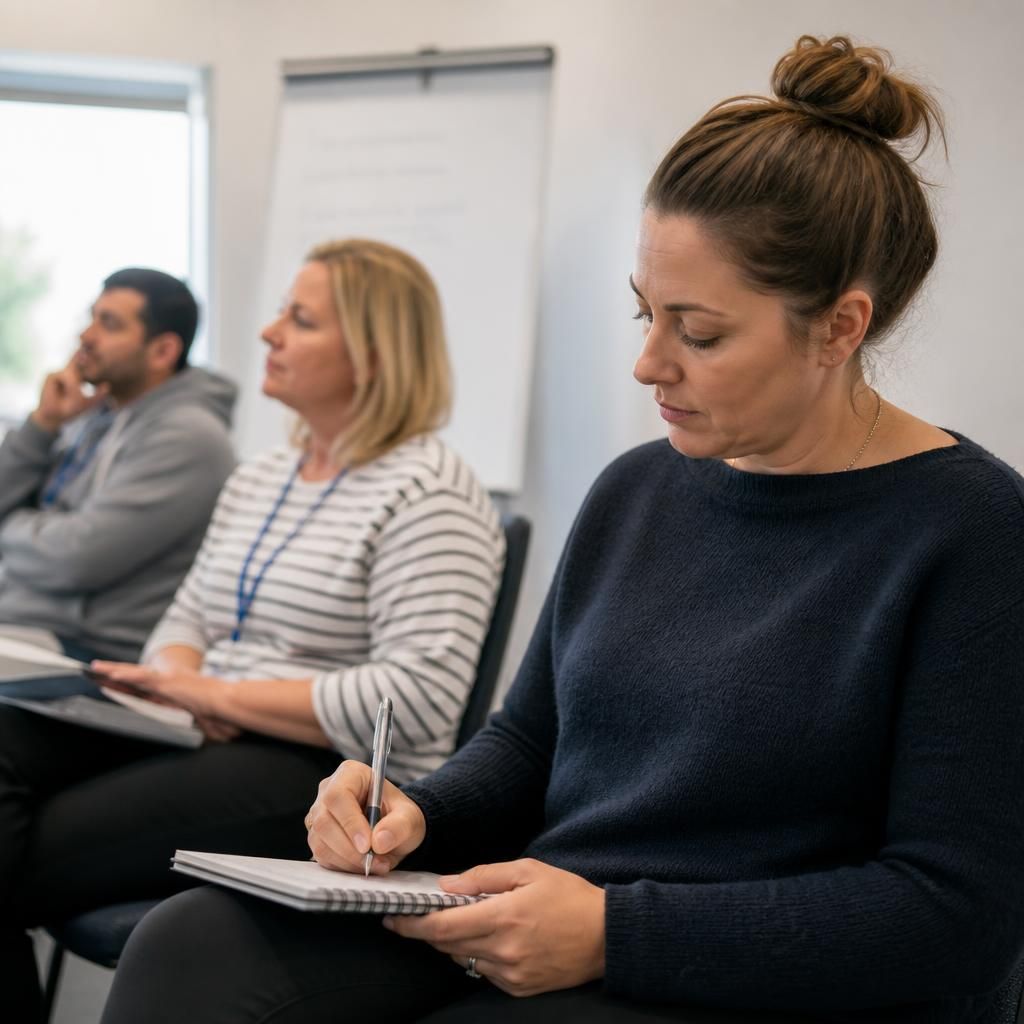
Training helps foster carers make safe, consistent decisions in everyday situations, not just recall information in a course. For example, when a child becomes distressed or a concern is disclosed, carers need to recognise the immediate risk, follow the agreed safer caring arrangements, contact the appropriate professional and record what happened accurately.
Good training also explains the limits of a foster carer’s role. Carers should know when they can respond within the child’s care plan and when they must seek guidance from the fostering service or other professionals. This supports sound judgement, protects confidentiality and ensures concerns are managed through the correct safeguarding process.
Find out more about foster carer training
Contact our fostering team to ask how preparation training, ongoing learning and placement-specific development are arranged for foster carers.