
Can foster children share a bedroom under foster home requirements?
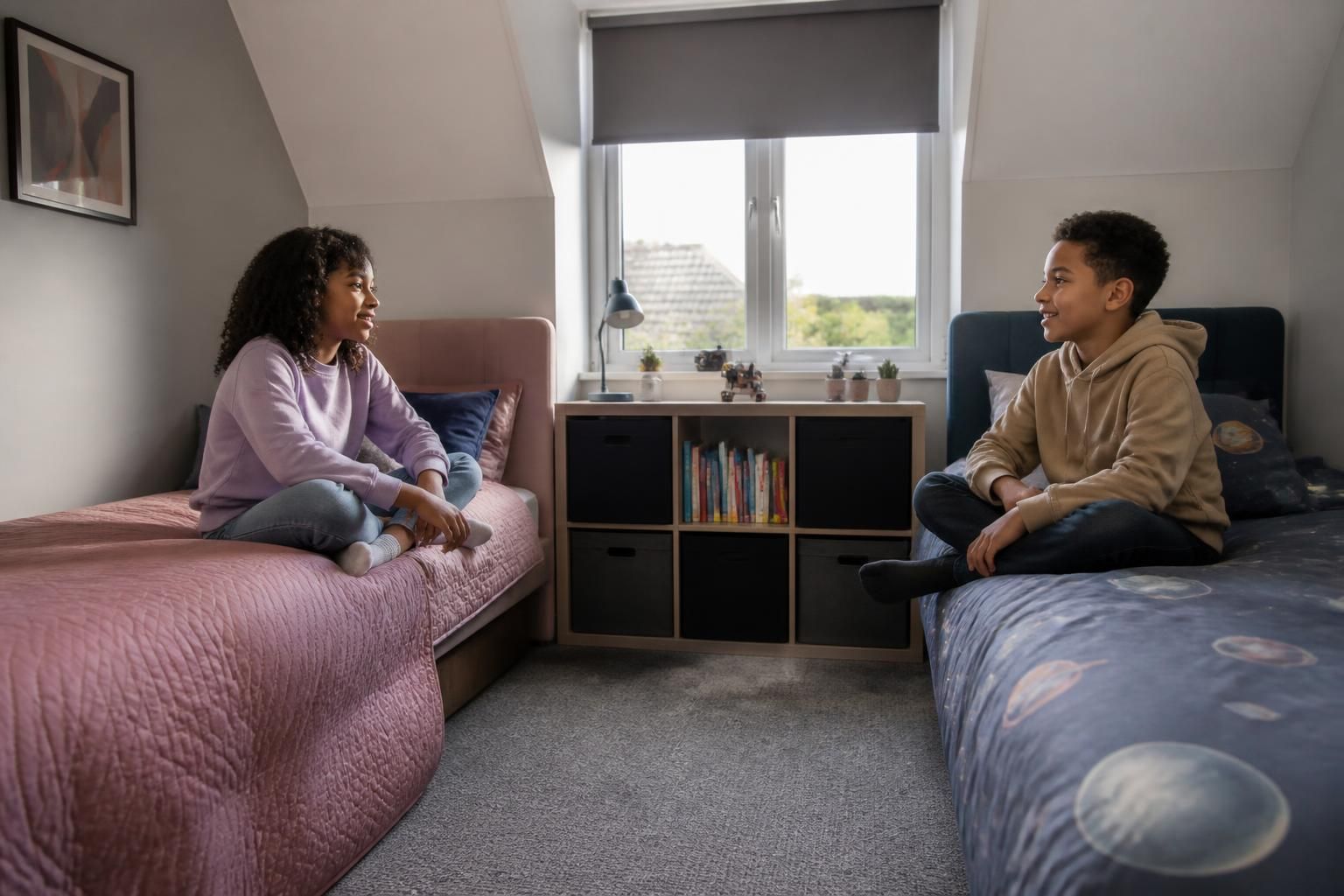
Foster children will usually need their own bedroom, but siblings may sometimes share if this is considered safe and appropriate. Any bedroom-sharing arrangement is assessed individually, taking account of the children’s ages, sex, relationship, needs, wishes and safeguarding risks, and must meet the fostering service’s requirements.
Partnering with an
Ofsted Outstanding Provider
Bedroom sharing is not automatically prohibited, but it must be justified by the children’s circumstances and accepted as safe by the fostering service. In England, the National Minimum Standards state that children over the age of three should normally have their own bedroom. An exception may be made for siblings where sharing is appropriate and the risks have been properly assessed.
When deciding whether siblings can share, the fostering service will consider:
- each child’s age, sex, development and level of independence;
- the children’s relationship and whether they feel comfortable sharing;
- any history of trauma, abuse, exploitation, bullying or harmful behaviour;
- the children’s individual needs, including emotional, behavioural, medical or sensory needs;
- their wishes and feelings, taking account of their ability to express a view;
- whether either child needs privacy, personal space or particular sleeping arrangements; and
- whether the room is large and suitable enough for the proposed number of occupants.
Being siblings does not, by itself, mean that children should share. A shared room may be unsuitable where the children have a difficult relationship, significantly different needs, or experiences that could make sharing distressing or unsafe. The arrangement may also need to change as the children grow older or their needs become clearer.
A foster child would not normally share a bedroom with an adult foster carer. The bedroom must provide a suitable, private and safe sleeping space, with appropriate furniture and room for the child’s belongings. It should not be treated simply as spare space, and the fostering service may check how the room is used, whether it can be kept private and whether it meets relevant safety requirements.
Foster children sharing with a foster carer’s birth child or another child in the household is considered separately. The assessment looks at everyone’s safety, privacy, age and needs, as well as how the arrangement could affect existing children in the home. A room arrangement that is acceptable for one placement may not be suitable for another.
Bedroom requirements are considered during the fostering assessment. A social worker will usually discuss the rooms available, who currently lives in the household, the types of placements being considered and any limitations on matching children. The home will also be assessed for general safety, including sleeping arrangements, fire safety, access and suitable storage.
If a family has only one available bedroom for a foster child, this does not necessarily prevent them from applying. It may, however, restrict the age, number or circumstances of children who can be considered. Foster carers must be able to offer a sleeping arrangement that meets the child’s needs before a placement is made.
Bedroom sharing should be reviewed if circumstances change. This can include a child becoming distressed, a safeguarding concern arising, a change in behaviour or development, or a placement becoming more permanent. The fostering service will work with the foster carer and the child’s placing authority to decide whether the arrangement remains suitable or whether separate rooms are needed.
During the assessment, be open about the bedrooms available and the type of arrangement your household could realistically manage. The assessing social worker can explain how the requirements apply to your home and which placements may be appropriate. Become A Foster Family provides information, training and ongoing guidance through the fostering process, with local teams supporting families across Birmingham, Worcestershire, Staffordshire and the wider West Midlands.
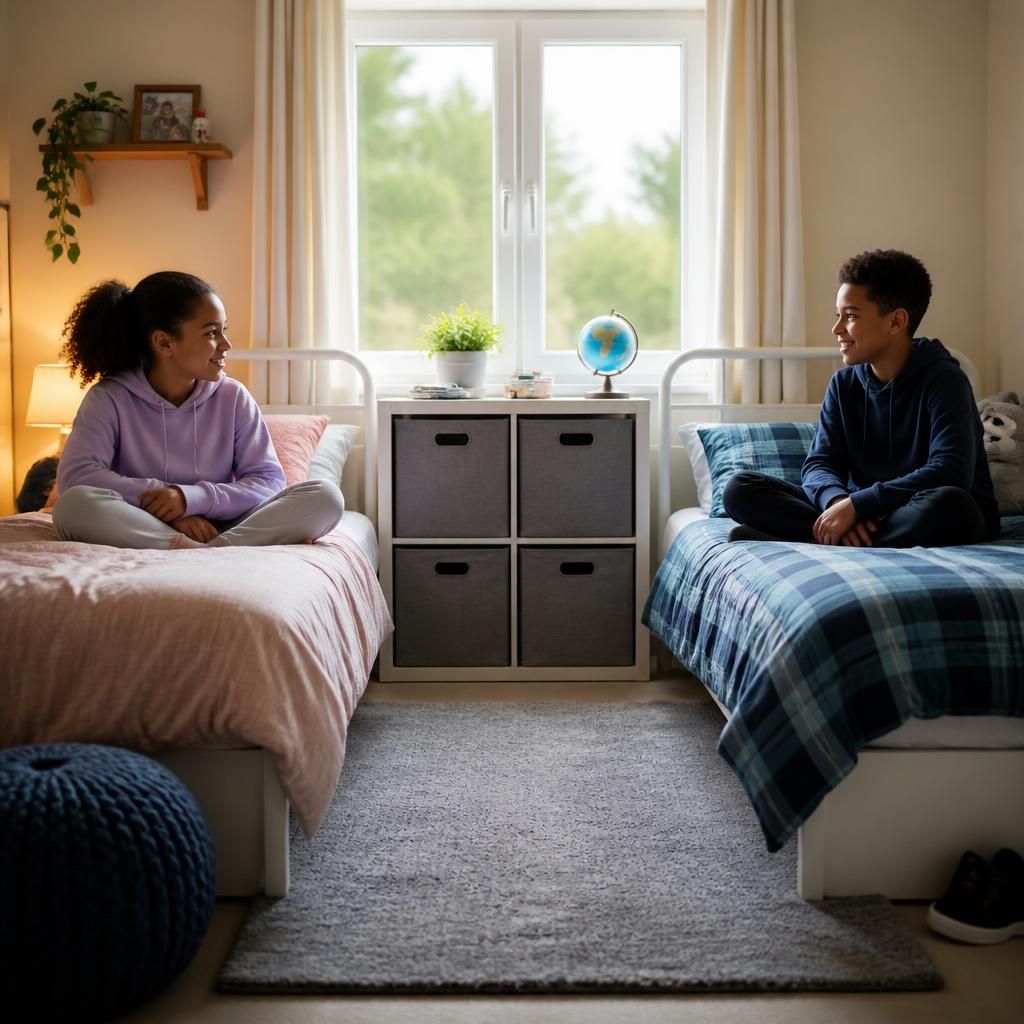
Bedroom sharing is generally considered only for siblings. Unrelated foster children would not normally be expected to share, because each child’s privacy, safety and individual needs must be protected. A child sharing with a foster carer’s own child is assessed separately and cannot be assumed to be suitable simply because both children are of a similar age.
Where siblings do share, the arrangement should be clear before the placement begins. The matching discussion should confirm who will use the room, how privacy and personal belongings will be managed, and whether either child has concerns about sharing. If the arrangement becomes unsuitable, the fostering service should reassess it rather than treating the original decision as permanent.
Find out whether your home could meet fostering requirements
If you are unsure whether your available bedrooms could support fostering, speak to Become A Foster Family for guidance based on your household and the types of placements you may consider.