
Do foster home requirements include having a garden?
Having a garden is not usually an essential foster home requirement. Fostering agencies assess whether the whole home can safely meet a child’s needs, considering factors such as access to suitable outdoor space, the child’s age and needs, and how you would support safe outdoor activities if you do not have a garden.
Partnering with an
Ofsted Outstanding Provider
A garden is not a standard condition for approval as a foster carer. The assessment focuses on whether your home, including any outdoor areas available to a child, can be managed safely and appropriately for the type of fostering you are considering.
If you have a garden, the assessing social worker will usually consider its condition and potential hazards as part of the home safety assessment. This may include:
- whether boundaries, gates and locks are secure and suitable;
- whether ponds, water features, sheds, garages or other hazardous areas can be restricted;
- the condition of paths, steps, paving, play equipment and garden furniture;
- whether tools, chemicals, fuels and other dangerous substances are stored securely;
- whether plants, trees or other features could present a foreseeable risk; and
- how the space would be supervised and used by a particular child.
A garden does not have to be large, landscaped or specially equipped. It should be reasonably well maintained, with risks identified and controlled. You may be asked to make practical changes, such as repairing a fence, fitting a gate lock, securing a shed or removing an unsafe item. The exact recommendations will depend on the property and the needs of any child who may be placed with you.
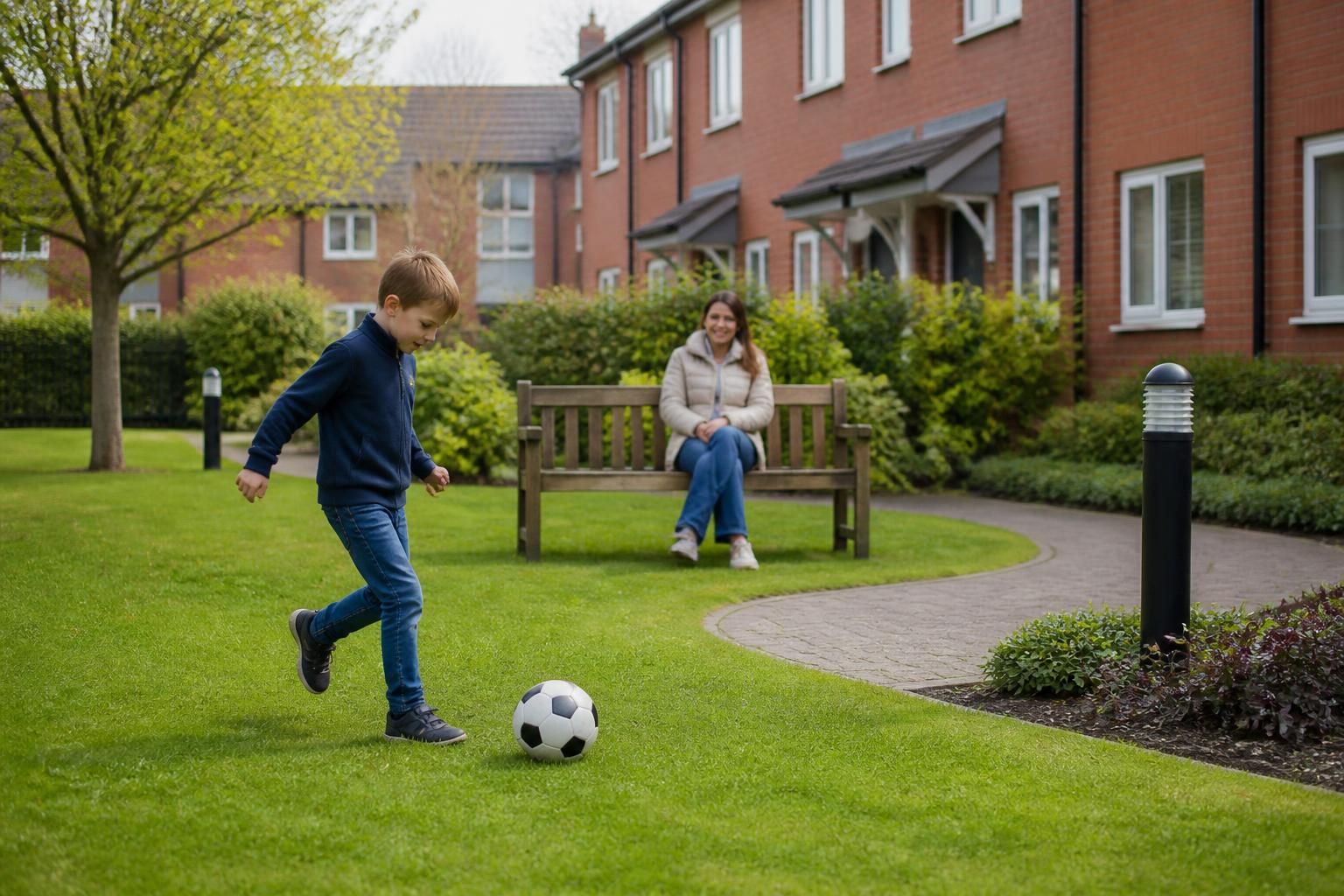
If you do not have a private garden, the assessment can consider how outdoor space is accessed and used in your local area. This could include a communal garden, a courtyard or nearby parks and other appropriate facilities. The important issue is not ownership of a garden, but whether you can provide a suitable routine for outdoor play, exercise and recreation, with appropriate supervision and transport where necessary.
Outdoor arrangements may need closer consideration for some placements. Younger children may need direct supervision, while a child with mobility, sensory or behavioural needs may require particular arrangements. The fostering assessment should match the proposed placement to what your home and local environment can safely support. A household without a garden may therefore be suitable for some placements but not every type of placement.
During the application process, the agency will discuss your home in detail and carry out the relevant safety checks. You should be open about any shared outdoor areas, access arrangements and restrictions. If you are renting, you may also need to follow your tenancy conditions when making changes to the property, although having or not having a garden is considered separately from permission to foster.
Before approval, it can help to inspect the outdoor areas from a child’s perspective. Check gates and boundaries, lock away hazardous items, address trip hazards and consider how you would supervise access. Keep any changes proportionate: the aim is to create a well-managed home rather than a perfect garden.

If you plan to use a communal garden rather than a private one, the assessment may consider how reliably the child can use it. Be ready to explain who manages the space, whether children are allowed to play there, how it is reached from your home and what arrangements apply when it is busy or unavailable.
This helps the assessing social worker understand how outdoor activities would fit into everyday care, rather than judging the property solely by whether it has its own garden. Any plan should be practical for the child’s age, abilities and placement needs.
Find out whether your home is suitable for fostering
Speak to our fostering team to discuss your home and any questions about the assessment process. We can help you understand the next steps towards finding out whether fostering could be right for your household.