
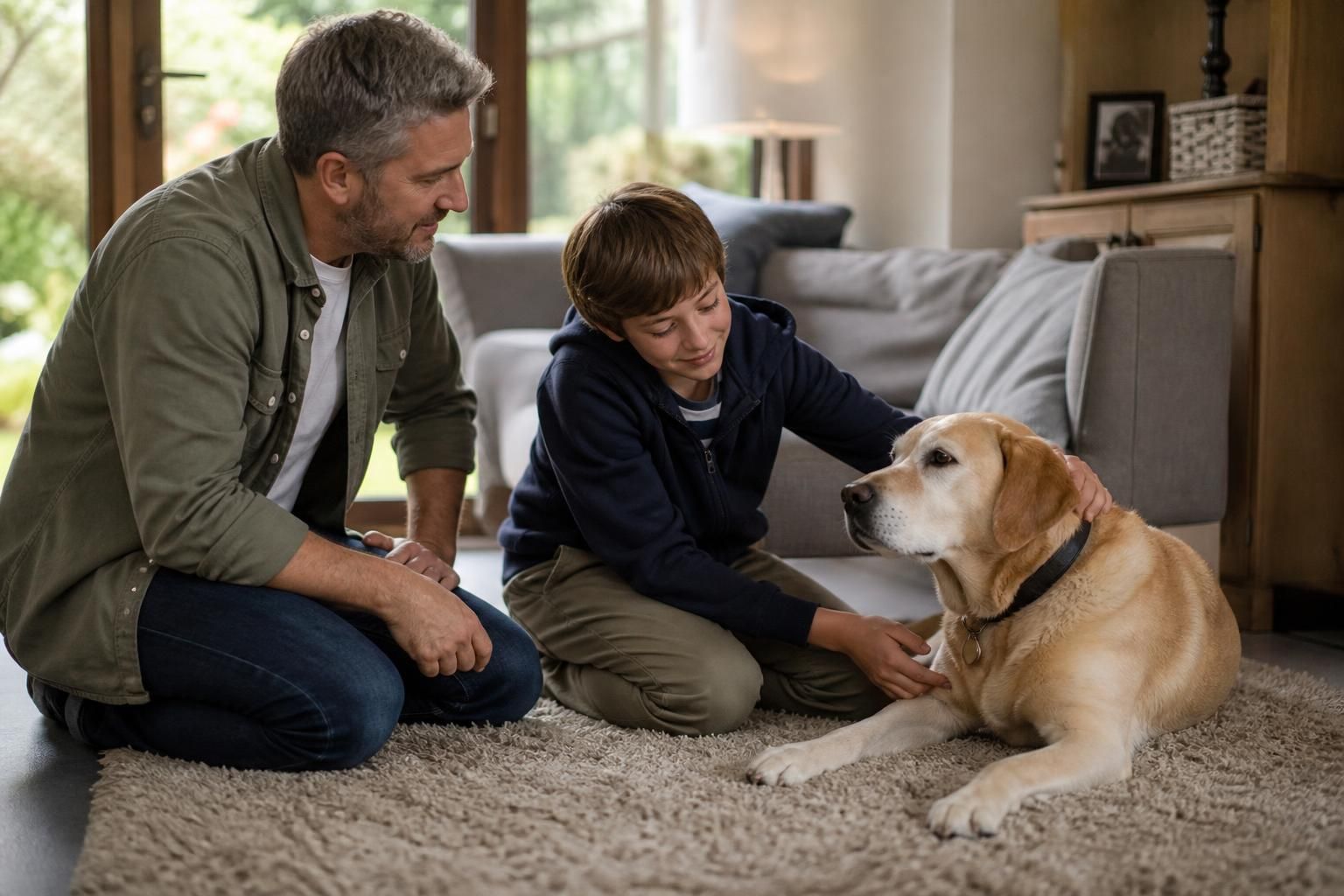
Are certain dog breeds unsuitable for fostering?
No dog breed is automatically unsuitable for fostering, but some dogs may require more detailed assessment because of their size, strength, temperament, guarding behaviour or history. The key consideration is whether the individual dog can live safely with foster children, based on its behaviour, needs and ability to respond reliably to boundaries.
Partnering with an
Ofsted Outstanding Provider
Fostering decisions are based on a documented assessment of the individual dog and the risks within the household, rather than on breed name alone. A dog may need additional assessment if its typical characteristics, physical strength, behaviour or history could make accidents or unsafe interactions more likely around children.
Features that may lead to closer consideration include:
- strong guarding or protection behaviours, particularly around food, toys, sleeping areas or people;
- a tendency to chase, fixate on or react strongly to movement;
- high levels of physical strength that could make an accidental knock, jump or pull more serious;
- difficulty responding to basic handling, boundaries or recall;
- fear, anxiety, reactivity or unpredictable responses to noise and sudden movement; and
- any known incident involving a bite, attempted bite, threatening behaviour or loss of control.
These points are not a list of banned breeds. They are reasons to ask more detailed questions and consider whether the dog can be managed safely in the proposed fostering household. A calm, well-managed dog from a breed often viewed as powerful may be suitable, while an individual dog from a smaller or commonly owned breed may still present concerns if its behaviour is difficult to predict.
As part of the assessment, you should give accurate information about your dog’s behaviour, training, health and history. Explain how the dog responds to children, visitors, other animals, handling, food, toys, loud sounds and changes to its routine. Do not minimise incidents because they appeared minor or happened only once. Relevant information helps the fostering team consider appropriate safeguards and identify placements that are compatible with the dog.
The assessment may also consider the needs and age of the child, the layout of the home, outdoor space, household routines and whether secure separation is possible. A dog that may cope well with calm teenagers might not be appropriate for a young child who is mobile, noisy or unable to understand the dog’s boundaries. Similarly, a home may need stair gates, closed doors, a separate feeding area or other arrangements to prevent unwanted contact.
Foster children should not be expected to supervise, exercise, feed or manage a dog as a condition of their placement. Adults remain responsible for safety. Children should be taught simple, age-appropriate rules, such as not disturbing a dog while it is eating or sleeping, not taking toys or approaching it when it is hiding. Interactions should be actively supervised, especially during the early stages of a placement.
Where a dog has a history of aggression, a serious bite, repeated incidents or behaviour that cannot be reliably controlled, the fostering team may need specialist advice before reaching a decision. If the risks cannot be reduced to an acceptable level, the dog may make some placements unsuitable, or fostering may not be recommended while the dog remains in the home. This is a safeguarding decision, not a judgement about the value of a particular breed.
Discuss your dog with the assessing social worker at the earliest opportunity. The outcome should take account of the dog’s actual behaviour, the proposed child’s needs and the practical controls available in your home. If your circumstances change, or your dog develops new behaviour, tell the fostering team so that the safety plan and placement arrangements can be reviewed.

A dog with an unknown or limited history is not automatically unsuitable for fostering, but the lack of reliable information should be treated as a factor requiring caution. This may apply to rescue dogs, recently rehomed dogs or dogs whose previous experiences with children are unclear. In these situations, assumptions about the dog’s breed or apparent temperament cannot replace evidence about how it behaves in everyday situations.
The fostering assessment should consider whether the dog has had enough time to settle and whether its behaviour is consistent across different circumstances. A dog that appears relaxed in one setting may respond differently to visitors, household noise, unfamiliar handling or changes in routine. Until its behaviour is properly understood, careful management and a child placement compatible with the available information may be necessary. If the dog’s responses remain uncertain, this should be discussed openly with the assessing social worker before fostering arrangements proceed.
Talk to Us About Your Dog’s Suitability for Fostering
If you are considering fostering, contact our fostering team to discuss your dog openly and understand how their assessment will inform suitable placement decisions.