
Can foster children be responsible for caring for a dog?
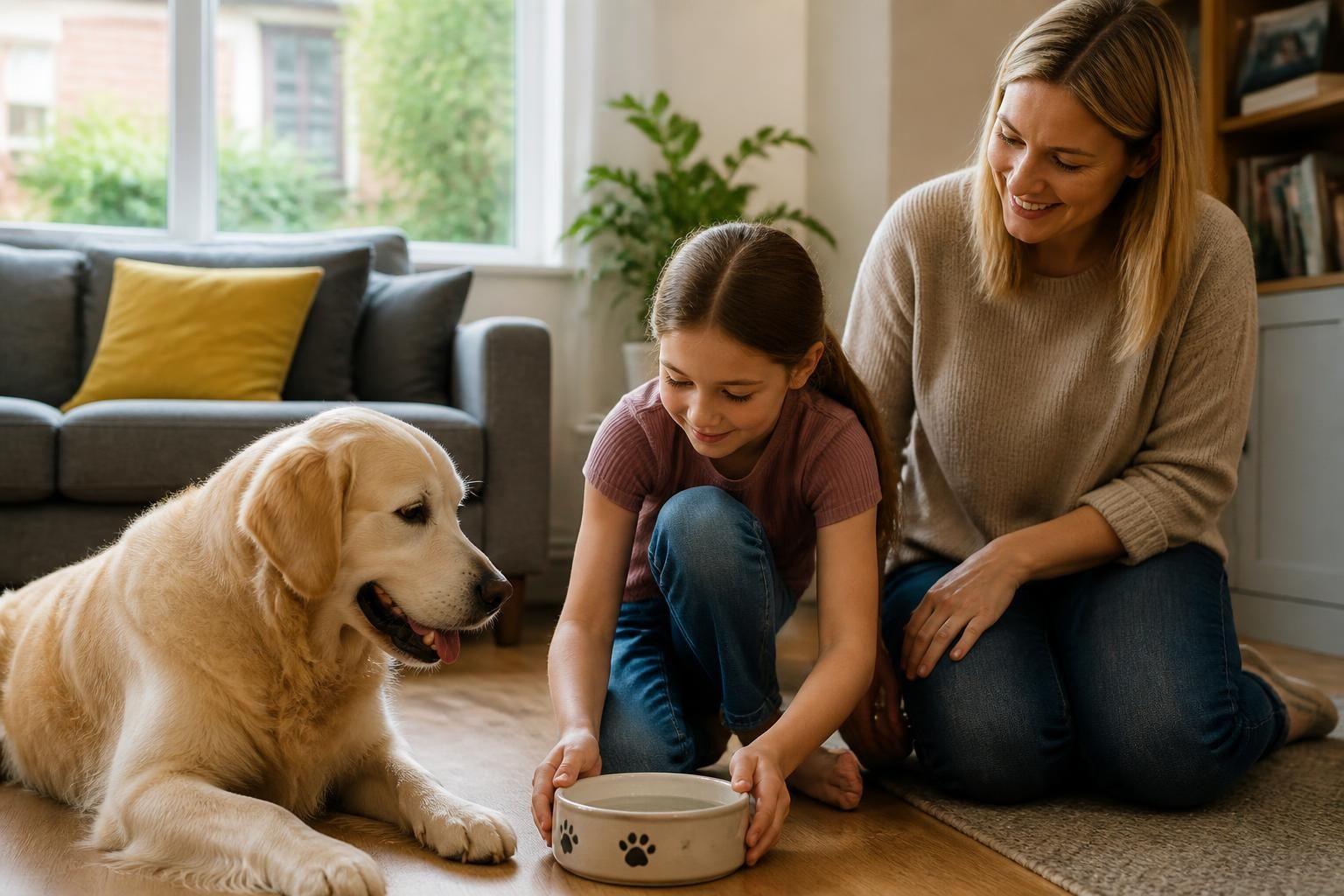
Foster children should not be solely responsible for caring for a dog. They may help with age- and ability-appropriate tasks, such as supervised grooming or filling a water bowl, but the foster carer remains responsible for the dog’s welfare, safety and supervision.
Partnering with an
Ofsted Outstanding Provider
A foster child may take part in a dog’s care, but only as part of an agreed, supervised household routine that matches their age, understanding and circumstances. They should not be treated as the dog’s primary carer or expected to manage the animal independently.
Whether involvement is appropriate will depend on the child’s individual needs and the dog’s temperament. A child may have limited experience of animals, feel anxious around dogs, struggle with boundaries or have previous experiences that affect how they respond to pets. The fostering assessment should therefore consider the proposed tasks alongside the child’s care plan, the dog’s behaviour and the overall safety of the household.
Suitable involvement might include:
- helping to prepare equipment for a walk, while an adult controls the dog;
- placing food or water out when an adult has checked the amount and location;
- taking part in grooming if the dog is comfortable and an adult is present;
- helping with simple training activities under clear adult direction; or
- observing and learning about responsible pet care without being required to carry out the task.
Tasks should be explained clearly and stopped if either the child or dog becomes uncomfortable. A foster child should not be expected to break up animal conflicts, restrain a dog, handle a dog that is distressed, administer medication, clean up dangerous substances or make decisions about veterinary care. They should also not be sent out alone to walk a dog unless this has been specifically assessed as safe and appropriate for that child, that dog and the local environment.
Adults should set practical boundaries around contact with the dog. These may include not disturbing the dog while it is eating or sleeping, keeping away from its bed or crate, asking before touching it and knowing when to move away. Children should never be left to supervise a dog during play or other situations where the animal may become overexcited. An adult should remain able to intervene and should monitor interactions rather than assuming that a familiar family pet will respond in the same way to every child.
The arrangement may need to change as the placement develops. A child who initially watches from a distance may later choose to participate, while a child who appears confident may need less responsibility if the dog’s behaviour or the child’s circumstances change. Foster carers should share concerns with their supervising social worker and follow any agreed household or placement guidance. Roles can then be reviewed as part of the ongoing support around the placement.
In practice, the safest approach is to present dog care as an optional household activity rather than a duty placed on the foster child. The child can develop confidence, learn about animal welfare and contribute to family life, while adults retain the planning, supervision and decision-making needed to keep both the child and dog safe.
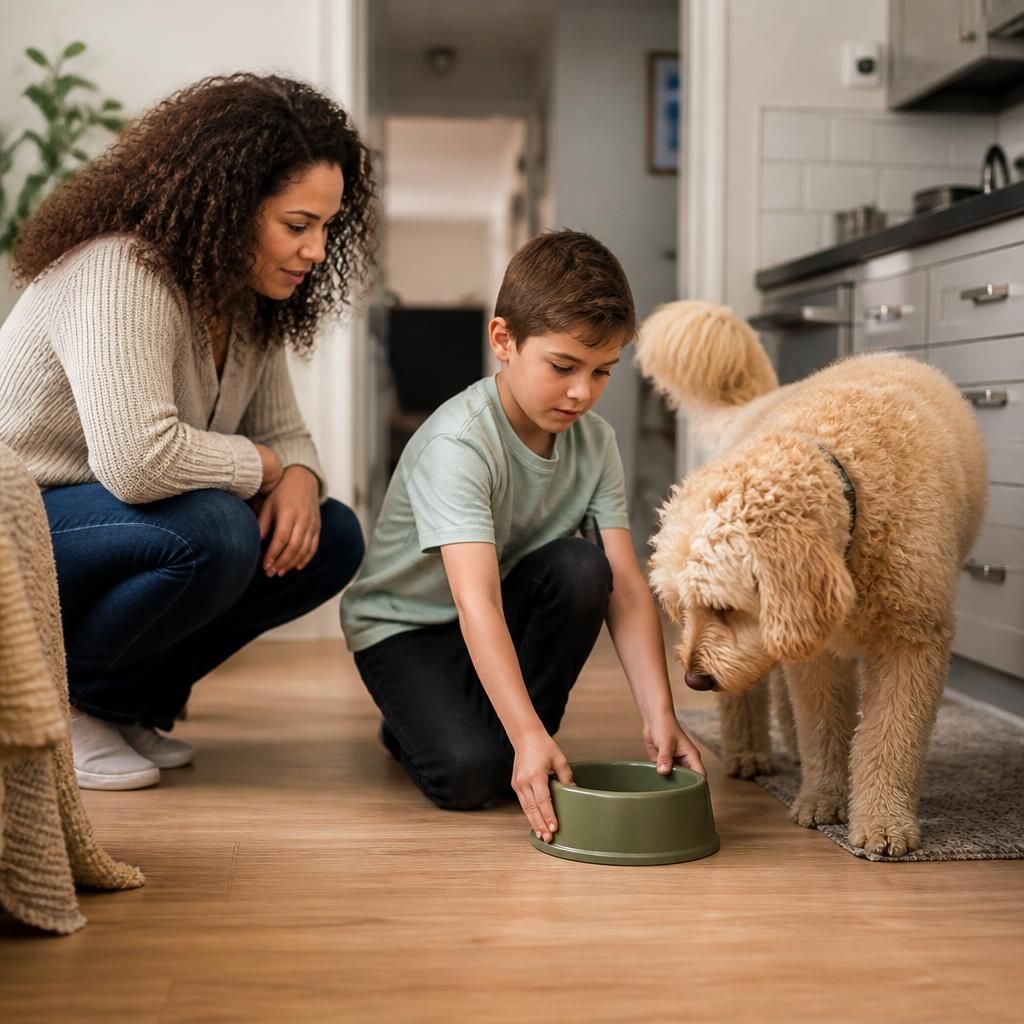
Dog care should not be used as a condition of a foster child’s place in the household, nor should a child be blamed if the dog becomes unwell, unsettled or needs a change to its routine. Decisions about feeding, exercise, behaviour, veterinary treatment and safety remain adult responsibilities.
It is also helpful to agree that the child can say no to taking part in an activity without being criticised. This keeps involvement voluntary and allows the foster carer to notice whether the child is comfortable, rather than assuming that an earlier willingness to help will continue throughout the placement.
Ask about fostering with a family dog
Have questions about fostering with a family dog? Contact our fostering team to discuss your household circumstances and understand how your dog would be considered during the assessment.