
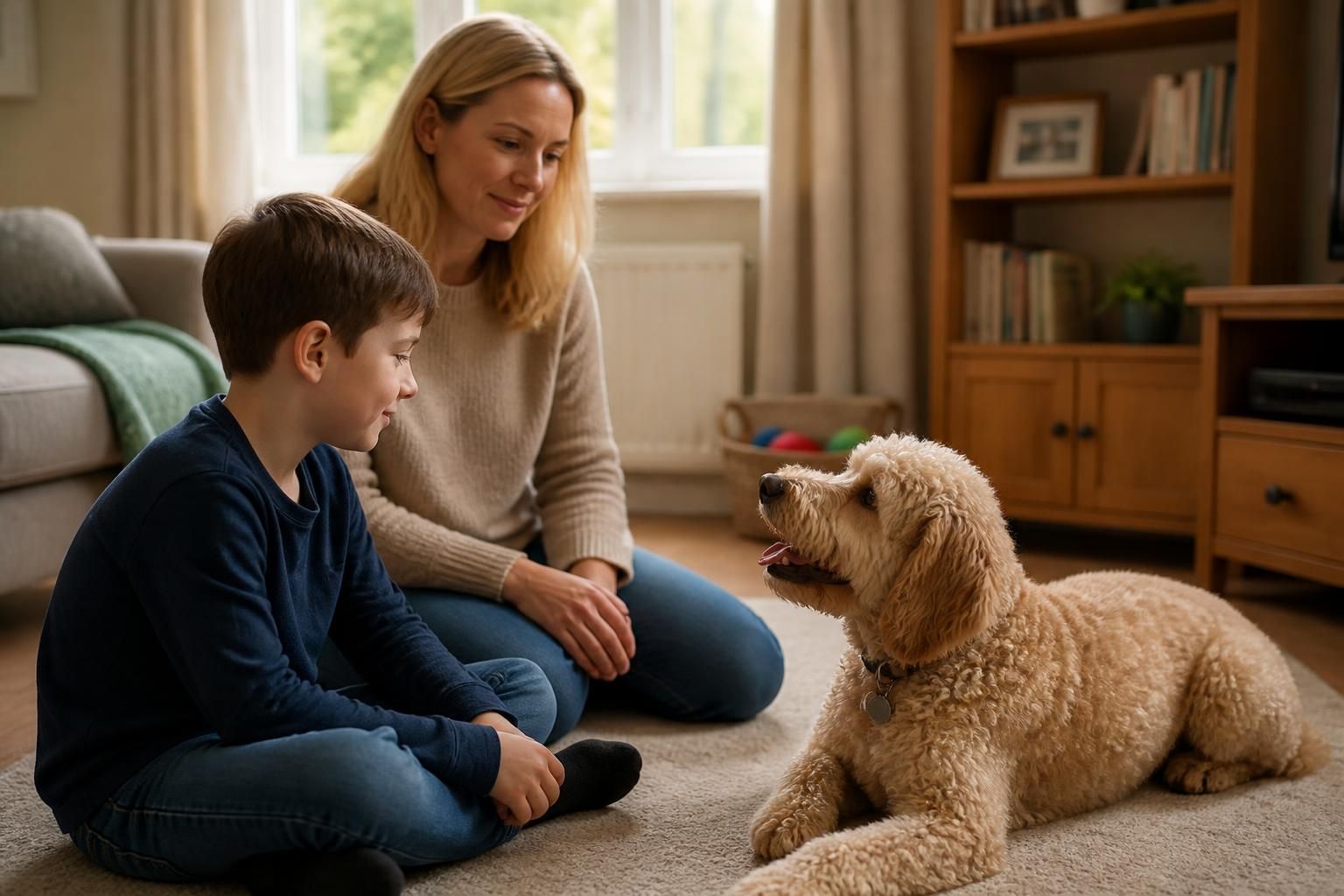
How are dogs introduced to foster children?
Dogs are introduced to foster children gradually, with the child’s needs, comfort and the dog’s behaviour considered as part of the plan. Initial meetings should be calm and supervised, followed by clear boundaries and ongoing monitoring as the child and dog become familiar with one another.
Partnering with an
Ofsted Outstanding Provider
Introducing a dog to a foster child is a planned household transition, based on the child’s individual circumstances, the dog’s temperament and the risks identified during the fostering assessment. It should take place only when the supervising adults are satisfied that contact is appropriate and that both the child and the dog have a safe way to move away from one another.
Before the child arrives
- Share relevant information about the dog with the fostering team, including its age, temperament, training, health, reactions to noise or sudden movement, and experience around children.
- Tell the team about any behaviours such as guarding food or toys, chasing, jumping up, nervousness or sensitivity to handling. These details help determine what arrangements may be needed.
- Consider the child’s history and preferences. A child may be frightened of animals, unfamiliar with dogs, affected by previous experiences, or have an allergy or other health need that requires additional planning.
- Prepare a dog-free area where the child can eat, sleep, study and calm down without the dog entering. The dog should also have its own bed or retreat that the child is taught not to disturb.
- Remove situations that could create competition, such as food bowls, chews and favourite toys, from shared areas before the first contact.
Planning the first contact
The supervising adults should agree in advance who will handle the dog, where the meeting will happen and what signs would mean that it should stop. A first meeting may be arranged in a familiar setting or another suitable place, depending on the child’s needs and the dog’s behaviour. The child should not be expected to touch, feed or approach the dog immediately. Simply being in the same space at a comfortable distance may be the most suitable first step.
The child should be given simple, age-appropriate guidance, such as asking an adult before stroking the dog, avoiding the dog while it is eating or sleeping, and not climbing on, hugging or pulling it. Adults should demonstrate how to interact safely rather than relying on the child to remember instructions in an unfamiliar situation.
During the introduction
- Use an adult-controlled lead, gate or other suitable separation method where appropriate.
- Allow the dog to approach at its own pace rather than directing the child towards it.
- Keep the interaction brief and end it while both are settled.
- Watch the dog’s whole body, not just its tail. Avoidance, freezing, stiffening, lip-licking, repeated yawning, growling or sudden changes in behaviour can indicate discomfort or stress.
- Pay attention to the child’s response as well. A child who becomes quiet, tense, tearful or withdrawn may need space, even if the dog appears relaxed.
Children should never be left alone with a dog, including a familiar family pet. This applies even when the dog has previously behaved well around children. An adult must remain responsible for managing access, particularly during busy periods, meals, play, visitors or times when the child or dog is tired.
After the first meeting
Further contact can be introduced as the placement plan allows. Adults should keep the dog’s usual exercise, feeding and rest arrangements as consistent as possible, while ensuring the child understands which parts of the routine are adult responsibilities. The child may take part in suitable activities, such as helping to fill a water bowl, only when an adult has decided that this is safe and provides direct supervision.
Any concerns should be recorded and discussed with the supervising social worker or fostering team. A change in the dog’s behaviour, a new fear shown by the child, an injury, a bite, repeated attempts to avoid contact or conflict around food and possessions should be treated seriously. The plan may need to be changed, including using more separation or arranging professional advice. If safe contact cannot be maintained, the adults must prioritise the child’s welfare and the dog’s welfare rather than trying to continue the introduction.
There is no requirement for every foster child to have direct contact with a household dog. Some children may need a dog-free arrangement, while others may become comfortable with carefully managed contact over time. The fostering assessment and placement planning process should establish what is suitable, and the supervising team can help carers review the arrangements as the child settles into the home.
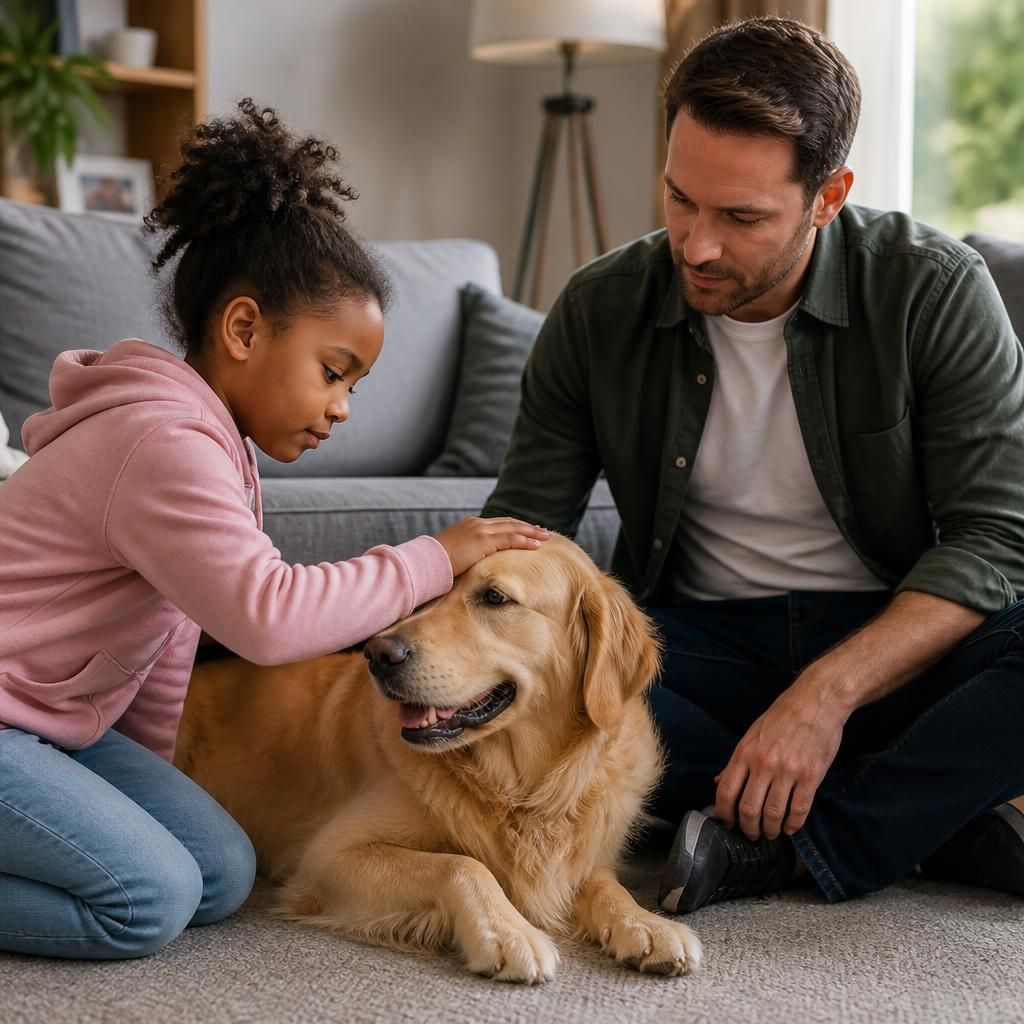
Dogs are introduced to foster children through a clear household agreement that sets out where contact is allowed, which areas remain dog-free and what each person should do if they feel uncomfortable.
Agree these arrangements with the child in language they can understand, and display the key points where they can be seen. The agreement might cover:
- which doors, stairways or rooms are used to separate the dog and child;
- when the dog rests and should not be approached;
- how adults will manage doors, visitors and busy household routines;
- who the child should speak to if the dog behaves unexpectedly or the child feels worried; and
- which activities are adult responsibilities rather than tasks for the child.
Introducing these expectations before contact begins can make the arrangement more predictable. They should remain flexible, because the child’s understanding, confidence and needs may change as they settle into the placement. Adults should explain any changes and make sure the child is not blamed for needing additional distance from the dog.
Discuss introducing your dog to a foster child
If you are considering fostering and have a dog, speak to our fostering team about your household circumstances and how this can be considered during the assessment process.