
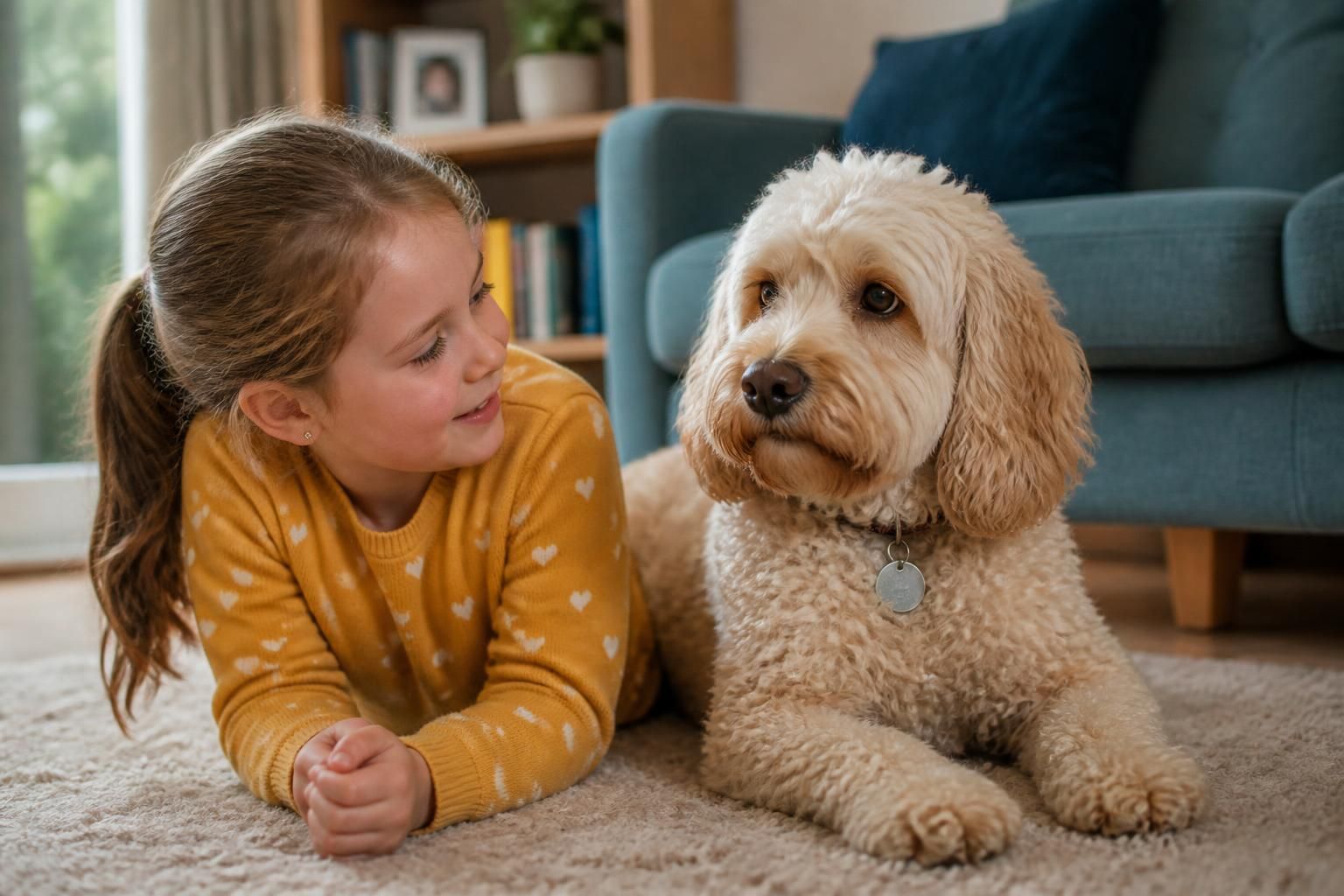
What if my dog has never lived with children?
A dog that has never lived with children may still be suitable for fostering, but their individual temperament, behaviour and ability to cope with change must be assessed carefully. You will need to discuss your dog with the fostering team and follow advice on preparation, introductions, supervision and managing interactions safely.
Partnering with an
Ofsted Outstanding Provider
A dog that has not lived with children is not automatically unsuitable for a fostering household. The important question is whether the dog can remain calm and predictable around children, including children whose behaviour, communication and routines may differ from those the dog has experienced before. The fostering assessment will consider the dog’s individual behaviour and whether suitable safeguards can be put in place.
Dogs can find children difficult to understand because children may move suddenly, make unexpected noises, approach closely or behave inconsistently. A dog may also need to cope with changes to the household, such as more activity, unfamiliar belongings, altered routines or a child who is distressed. A dog that is relaxed with adults is not necessarily relaxed with children, so this distinction should be considered rather than assumed.
Useful information for the fostering team includes:
- how your dog behaves when visitors arrive and move around the home;
- whether the dog has encountered children in controlled settings, and how it responded;
- how it reacts to noise, running, sudden movement and unfamiliar voices;
- whether it guards food, toys, resting places or particular people;
- how it responds to being touched, moved away from a space or interrupted while resting;
- its response to frustration, excitement, fear and changes in routine; and
- any history of snapping, biting, lunging, chasing, hiding or showing other concerning behaviour.
Be open about minor concerns as well as serious incidents. Full information allows the fostering team to consider which placements may be appropriate and what arrangements would be needed. A dog’s behaviour should not be tested by deliberately putting it in a stressful situation or asking a child to approach it. If a more detailed assessment is needed, follow advice from the fostering team and seek help from a suitably qualified canine behaviour professional.
Before a child is placed, you may need to help your dog build positive associations with the types of experiences that could occur in a family home. This might include gradually introducing everyday sounds, visitors, changes in activity and calm handling, always keeping the dog below the point at which it becomes anxious or over-excited. Reward-based training is generally more useful than punishment, which can increase fear or suppress warning signals without resolving the underlying problem.
Your dog should have a quiet, secure area where it can rest undisturbed. Children should be taught not to enter that space, take the dog’s belongings or disturb it while it is eating, sleeping or withdrawing. Baby gates, doors or other physical separation may help manage access, but they should form part of a wider safety plan rather than being treated as the only precaution.
Any introduction should be planned around the child’s age, understanding, previous experiences and needs, as well as the dog’s behaviour. The child should receive simple, age-appropriate guidance about approaching, stroking and giving the dog space. Interactions should remain controlled and closely supervised, particularly at the beginning and whenever the dog or child is tired, excited, upset or unwell. Children should not be expected to manage the dog, interpret its behaviour or take responsibility for its care.
Pay attention to early signs that your dog is uncomfortable. These may include turning away, avoiding eye contact, licking its lips, yawning, becoming unusually still, hiding, pacing, growling or showing increased tension. These signals should be treated as information that the dog needs more space, not punished. Separate the dog and child calmly, record what happened and seek guidance before allowing a similar interaction.
A placement may not be suitable if the dog cannot cope safely with the expected household environment, if there is a history of aggression or resource guarding, or if the required separation cannot be maintained consistently. This is not necessarily a judgement on the dog; it may mean that a different match or alternative arrangements are needed to protect both the child and the animal.
Discuss your dog at the earliest stage of your fostering enquiry and continue to share any changes in behaviour. The assessment should result in clear arrangements for introductions, supervision, safe spaces and responding to concerns. Following that plan consistently is essential when a dog is meeting children for the first time.
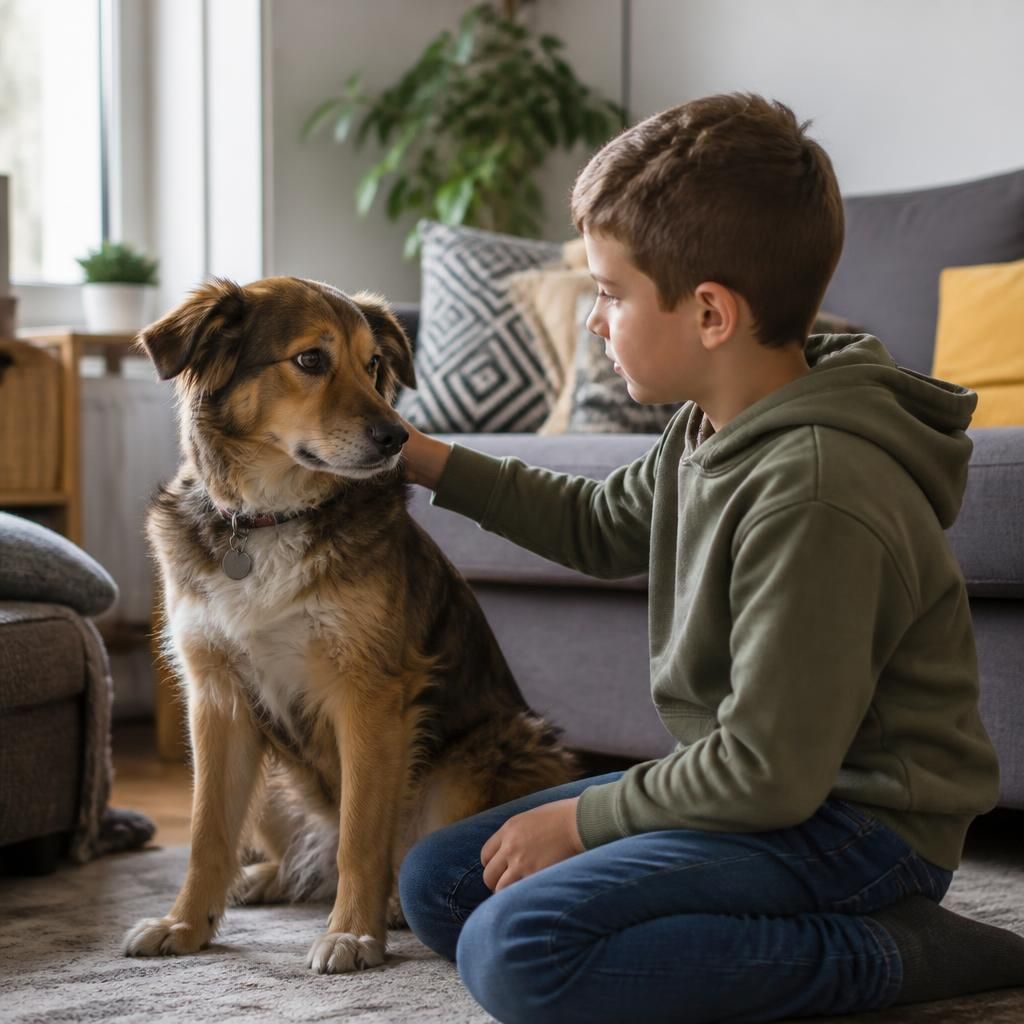
If your dog has never lived with children, preparation should involve every member of the household, not just the dog. Agree in advance where the dog will rest, which areas are out of bounds, who will manage feeding and how adults will supervise contact. Consistent rules reduce the risk of the dog receiving mixed signals when the household becomes busier or routines change.
Keep a brief record of how your dog responds to new situations during preparation, including what happened before any signs of discomfort and what helped the dog settle. Share this information with the fostering team. It can support decisions about whether a particular household arrangement is suitable and whether the plan needs adjusting once a child joins the home.
Discuss Your Dog With Our Fostering Team
Discuss your dog with our fostering team as part of your fostering enquiry, so they can explain what information is needed and outline the next steps for assessing suitability.