
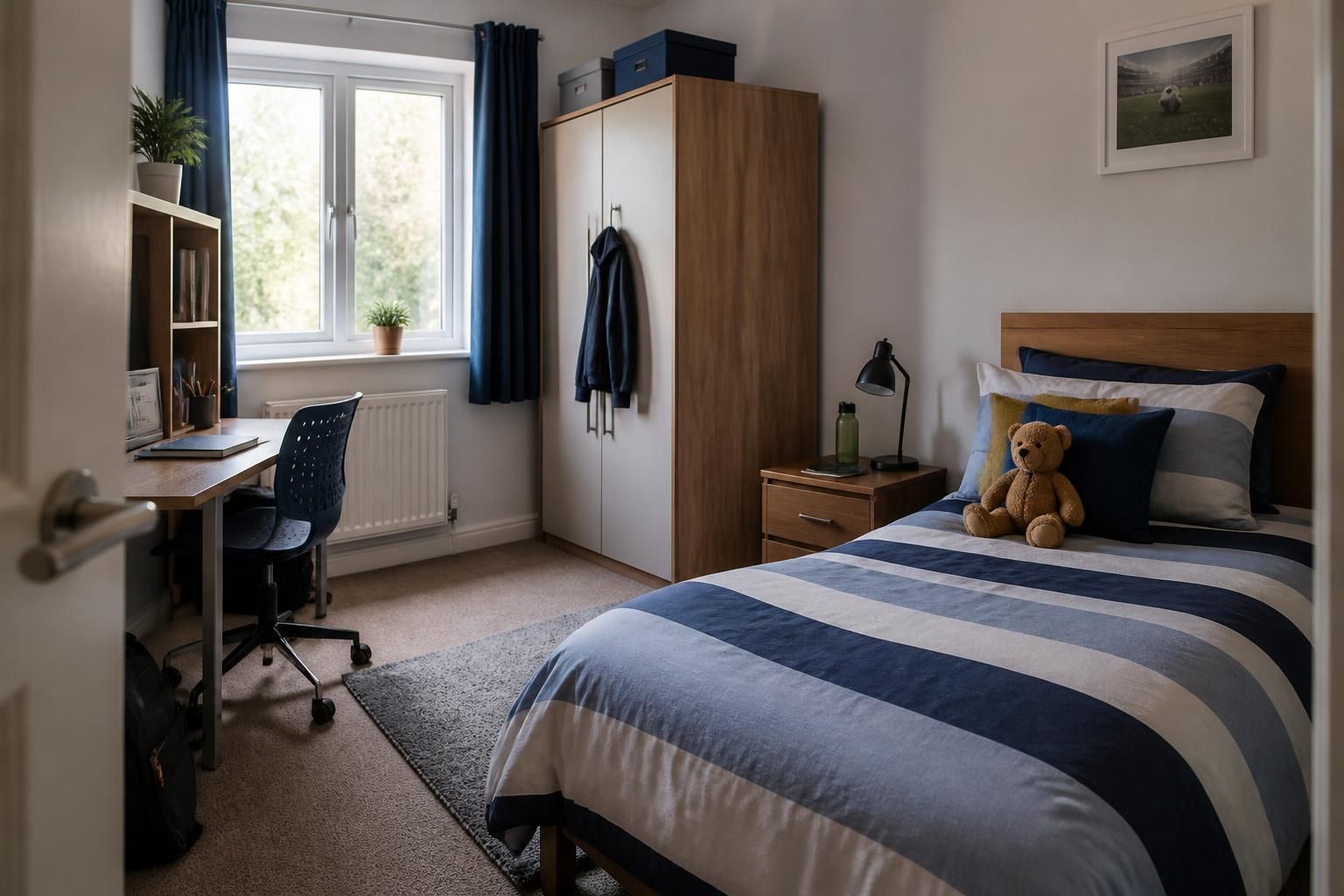
Does a foster child need their own bedroom?
In most cases, a foster child should have their own bedroom, providing privacy and a safe personal space. Exceptions may be considered for siblings or in other specific circumstances, but this depends on the children’s ages, needs, relationships and the fostering service’s assessment.
Partnering with an
Ofsted Outstanding Provider
Bedroom arrangements in fostering are assessed individually as part of the fostering assessment. The key considerations are the child’s age, sex, personal history, relationships with other children, privacy needs, and whether the proposed room is safe and suitable. Having a spare bedroom is therefore usually important, but the assessment is about more than simply counting rooms.
When can children share a bedroom?
Foster children may sometimes share with a brother or sister when this is considered safe and appropriate. The fostering service will look at their ages, whether they have a positive relationship, their previous experiences and whether sharing supports their wellbeing. Sibling placements are not automatically suitable for sharing, particularly where there are significant differences in age, trauma-related needs or behaviour.
Children who are not siblings would not normally be expected to share a bedroom. Children’s privacy, personal boundaries and safety must be protected, and bedroom sharing may be unsuitable where either child has experienced abuse, exploitation or other circumstances that make personal space particularly important. The fostering service will consider each situation rather than applying one arrangement to every placement.
Age and bedroom arrangements
Age is an important part of the decision. Older children and teenagers generally need a private space for sleeping, dressing, keeping belongings and having time alone. Younger children may have different practical needs, but this does not remove the requirement to consider safe sleeping arrangements and appropriate supervision. A child under three should not normally share a bedroom with another child.
A foster child should not share a bedroom with a foster carer. The bedroom must be available for the child’s use and should not be an area where other household members regularly sleep.
What makes a bedroom suitable?
During the home assessment, the fostering service will consider whether the room provides enough space, privacy and safe access. It should normally be a proper bedroom rather than a living room, dining room, conservatory or room that other people need to pass through to reach another part of the home. The room should have suitable ventilation, heating, lighting and storage for the child’s belongings.
The assessment will also consider practical safety issues, including:
- safe windows, doors, stairs and access routes;
- fire safety, smoke alarms and evacuation arrangements;
- the position and condition of furniture and electrical items;
- any risks from pets, medication, tools or other household items; and
- whether the child can have reasonable privacy without being isolated from appropriate supervision.
Specific requirements can vary according to the child’s needs and the fostering service’s policies. A room may need changes before approval, and the assessor will explain what is required.
Can a home with one spare bedroom foster?
One spare bedroom may be enough to foster one child, subject to the full assessment and the type of placements being considered. It may also be possible to care for siblings if the room-sharing arrangement is approved as suitable. However, the number of available bedrooms does not decide the number of children a household can foster on its own. Household size, existing children, space in communal areas, supervision and the needs of potential placements are all taken into account.
If you have children of your own, their bedrooms and privacy will also be considered. A foster child should not be placed in a room-sharing arrangement simply because it is convenient for the household. The arrangement must be suitable for everyone affected, including the child already living at home.
What if the bedroom is currently used for another purpose?
A spare room used as an office, storage area or occasional guest room may need to be cleared and made available before approval. The room should not be treated as permanently available if another household member may need to use it during a placement. Discuss any proposed dual use with the assessing social worker, as this may affect which placements can be considered.
How is this checked during the application?
The home study includes visits to your home, discussion of your household and an assessment of the proposed bedroom. You will be asked how the space would be used, how you would support the child’s privacy, and what you would do if their needs changed. Training and assessment will also cover safeguarding, safer care and responding to children who may need more supervision or personal space.
Bedroom suitability is reviewed alongside the wider household assessment. If your circumstances change, such as moving home, having another child or changing the use of a room, you should tell your fostering service. A new assessment may be needed before a different type or number of placements can be considered.
If you are unsure whether your home has suitable space, it is worth discussing the layout with a fostering adviser before assuming you cannot apply. The adviser can explain how the room and household would be assessed, while the final decision will depend on the individual circumstances of the children you may be approved to care for.
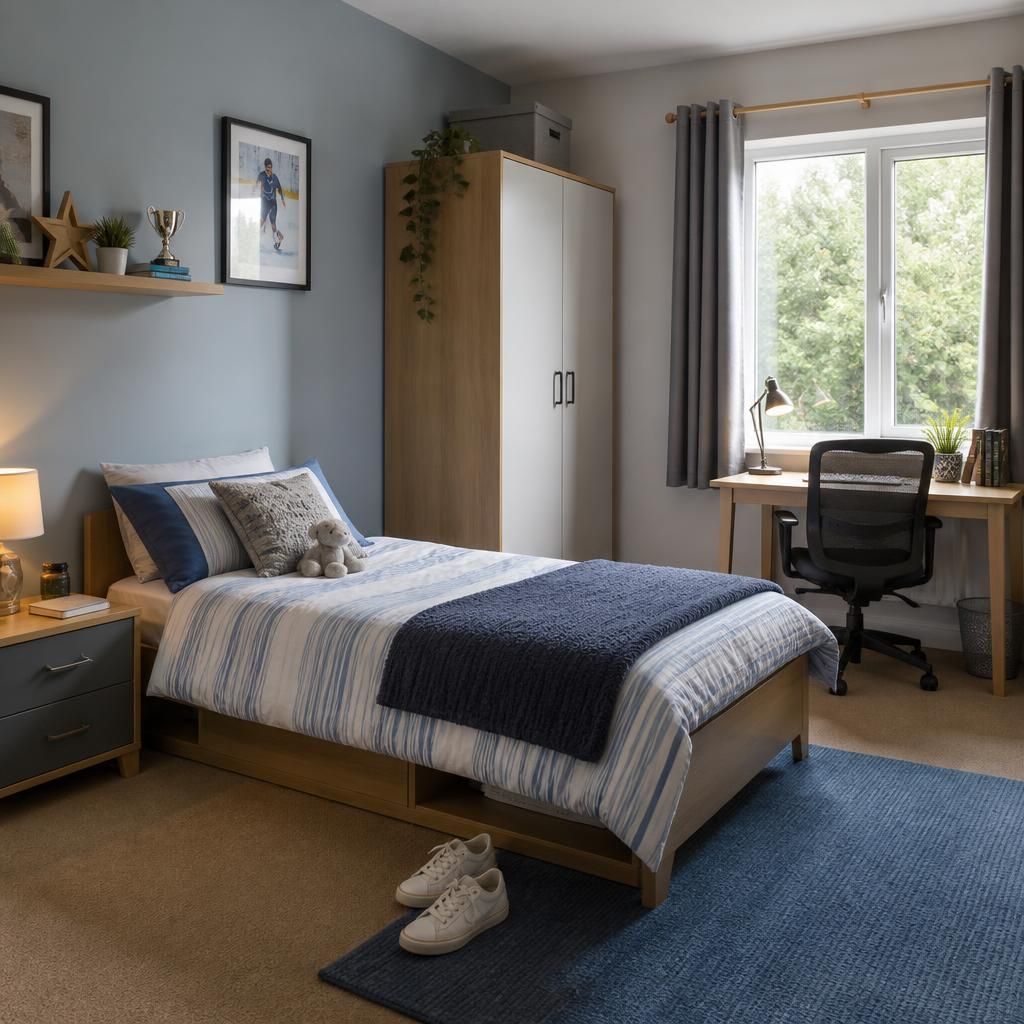
A foster child’s bedroom does not need to be elaborate or newly furnished. It should be clean, comfortable and suitable for the child’s age and needs, with enough room for essential furniture, clothing and personal belongings. The focus is on safety, privacy and practical use rather than decoration or expensive items.
Where appropriate, the child can be involved in making the room feel personal, such as choosing bedding, colours or a few familiar items. This can help the space feel like their own while allowing foster carers to make sensible changes as the child’s needs develop.
Discuss your bedroom options with a fostering adviser
Discuss your bedroom options with a fostering adviser to understand how your home could be assessed and which arrangements may be suitable. They can explain the next steps if you decide to apply.