
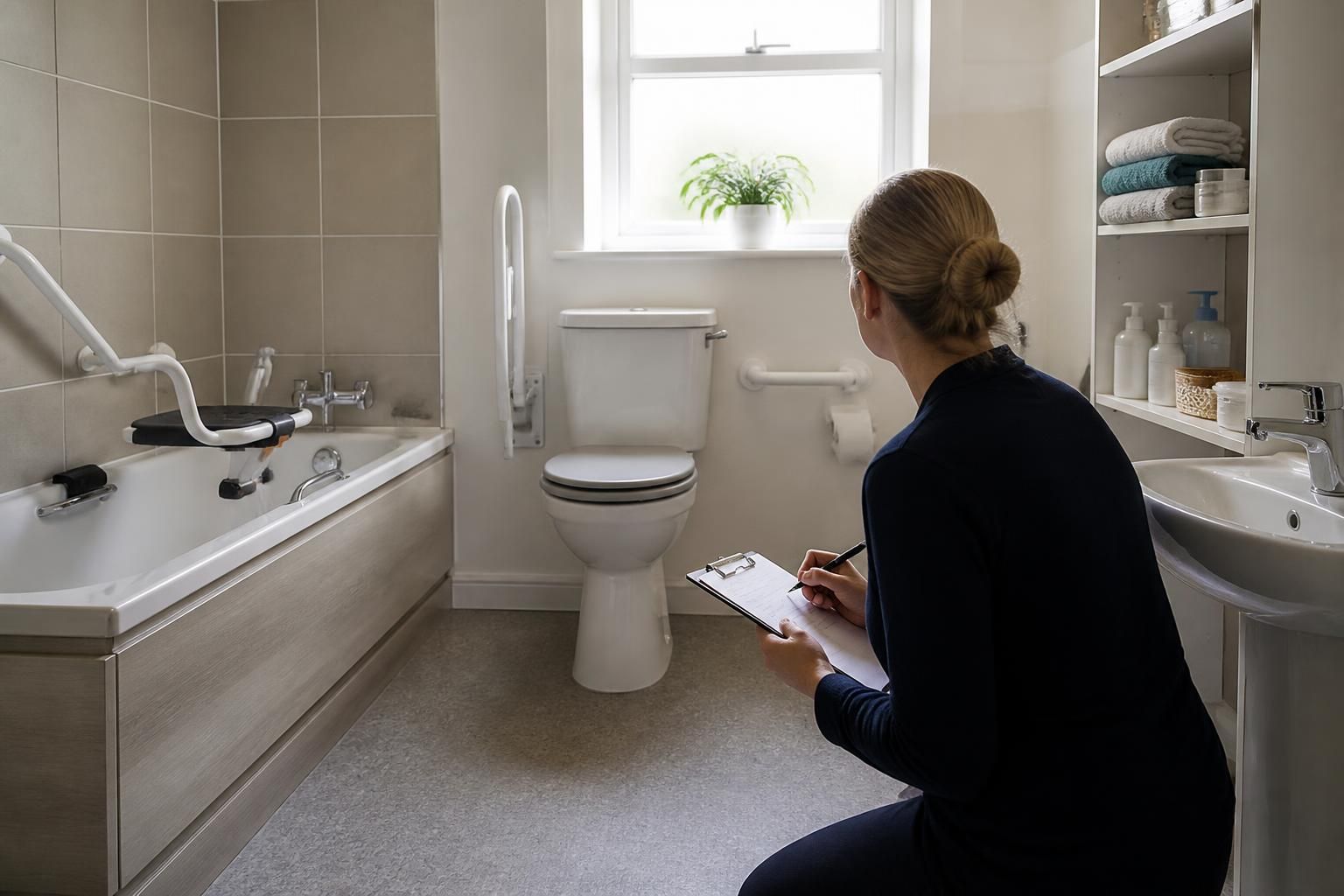
How are bathroom safety arrangements assessed in a foster home?
Bathroom safety arrangements are assessed by considering risks such as slips, scalding, unsafe storage and inadequate privacy, alongside the child’s age, development and individual needs. The assessment may identify practical measures or adaptations needed to make the bathroom safe, accessible and suitable for fostering.
Partnering with an
Ofsted Outstanding Provider
A bathroom safety assessment is a practical review of the room, its equipment and the way it will be used by a foster child. The assessor considers whether the bathroom is suitable for the child’s age, abilities, health needs and level of independence, then records any actions, equipment or changes required before or during fostering.
What the assessor examines
- General condition: The bath, shower, toilet, basin, taps, flooring, lighting, ventilation and electrical fittings should be in good working order and properly maintained. Damaged surfaces, loose fittings, poor ventilation or inadequate lighting may need to be addressed.
- Access and layout: The route to the bathroom should be practical for the child, including at night. The assessment considers whether there is enough space to move safely, use the facilities independently where appropriate, or receive help from a carer.
- Water temperature controls: The assessor may check how hot water is produced and controlled, whether controls are easy for a child to operate safely, and whether additional safeguards are appropriate. The child’s age, understanding and any disability or sensory need will influence the arrangements.
- Bath and shower equipment: The suitability of the bath or shower is considered alongside the child’s physical ability. This can include the need for a non-slip surface, a shower seat, grab rails or other specialist equipment. Equipment should be appropriate, securely fitted and used in line with professional advice where relevant.
- Electrical and heating arrangements: Any electrical items used in or near the bathroom should be positioned and maintained safely. Heating should be suitable for the room and not create an accessible hazard. Portable electrical equipment should not be left where a child could misuse it.
- Toiletries and cleaning materials: The assessor looks at where toiletries, aerosols, razors, cosmetics and cleaning products are kept. Items that could be harmful if swallowed, inhaled or misused should be managed according to the child’s developmental stage and known behaviours.
- Personal care needs: Some children may need help with washing, toileting, continence, menstruation or prescribed treatments. The assessment considers how this support can be provided respectfully, with clear boundaries and suitable arrangements agreed with the child and relevant professionals.
How the child’s circumstances affect the assessment
There is no single bathroom arrangement that suits every foster placement. A younger child may need close supervision and help with routines, while an older child may need a plan that supports growing independence. A child with mobility difficulties may require adapted facilities or specialist advice. Children with trauma-related behaviours, developmental differences or medical conditions may also need additional safeguards and a carefully agreed care routine.
The fostering assessment will consider information available about the child rather than making assumptions. If a particular need is not known at the initial home assessment, bathroom arrangements can be reviewed when a placement is considered. Foster carers should tell their supervising social worker if the child’s needs change or if the existing arrangements are no longer suitable.
What happens if changes are needed?
Not every issue requires major building work. Actions might include repositioning items, improving lighting, securing equipment, changing storage arrangements, agreeing supervision procedures or obtaining suitable aids. More significant adaptations should be considered with the fostering service, the child’s social worker and, where necessary, an occupational therapist or other relevant professional.
Any agreed actions should be clear about who will complete them and when. A child should not be placed in an arrangement that is unsuitable for their assessed needs simply because an adaptation has been identified but not completed. The fostering service may also revisit the bathroom during supervision, placement reviews or a further health and safety check.
Information foster carers should provide
During a home assessment, it is useful to explain how the bathroom is normally used and to raise any factors that could affect a placement. This may include shared facilities, young children in the household, pets, continence arrangements, existing adaptations or any concern about a child’s ability to use the room without help. Honest information allows the fostering team to match placements responsibly and identify practical support before it is needed.
The outcome should be a written, child-focused plan showing that the bathroom can be used safely and appropriately. It should also make clear what supervision, equipment, household rules and review arrangements apply to the individual placement.
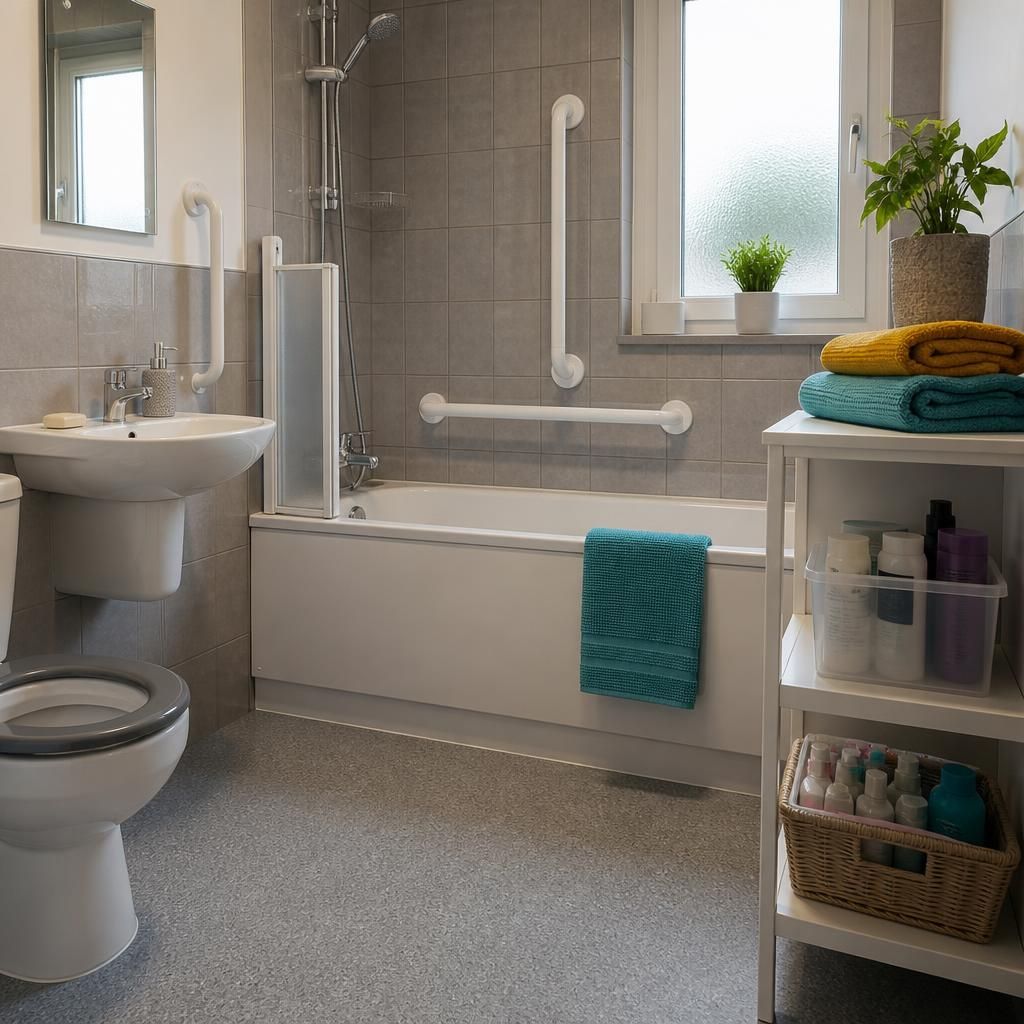
Bathroom safety assessments also consider how privacy and supervision will be balanced. Children should be able to use the bathroom with dignity, while carers must be able to respond appropriately if a child needs help, becomes distressed or may be at risk. The arrangements should reflect the child’s age, communication, history and ability to manage personal care safely.
- Agreeing when a child can use the bathroom independently and when supervision is required
- Setting respectful arrangements for checking on a child who may need assistance
- Considering how privacy is maintained when the bathroom is shared with other household members
- Explaining boundaries clearly so the child understands how support will be provided
These arrangements should be discussed as part of the placement plan rather than applied identically to every child. They can then be reviewed if the child becomes more independent, develops additional needs or finds the agreed routine difficult to manage.
Discuss your foster home’s bathroom safety arrangements
Discuss your foster home’s bathroom safety arrangements with our team to understand how the assessment applies to your circumstances and what support may be available.