
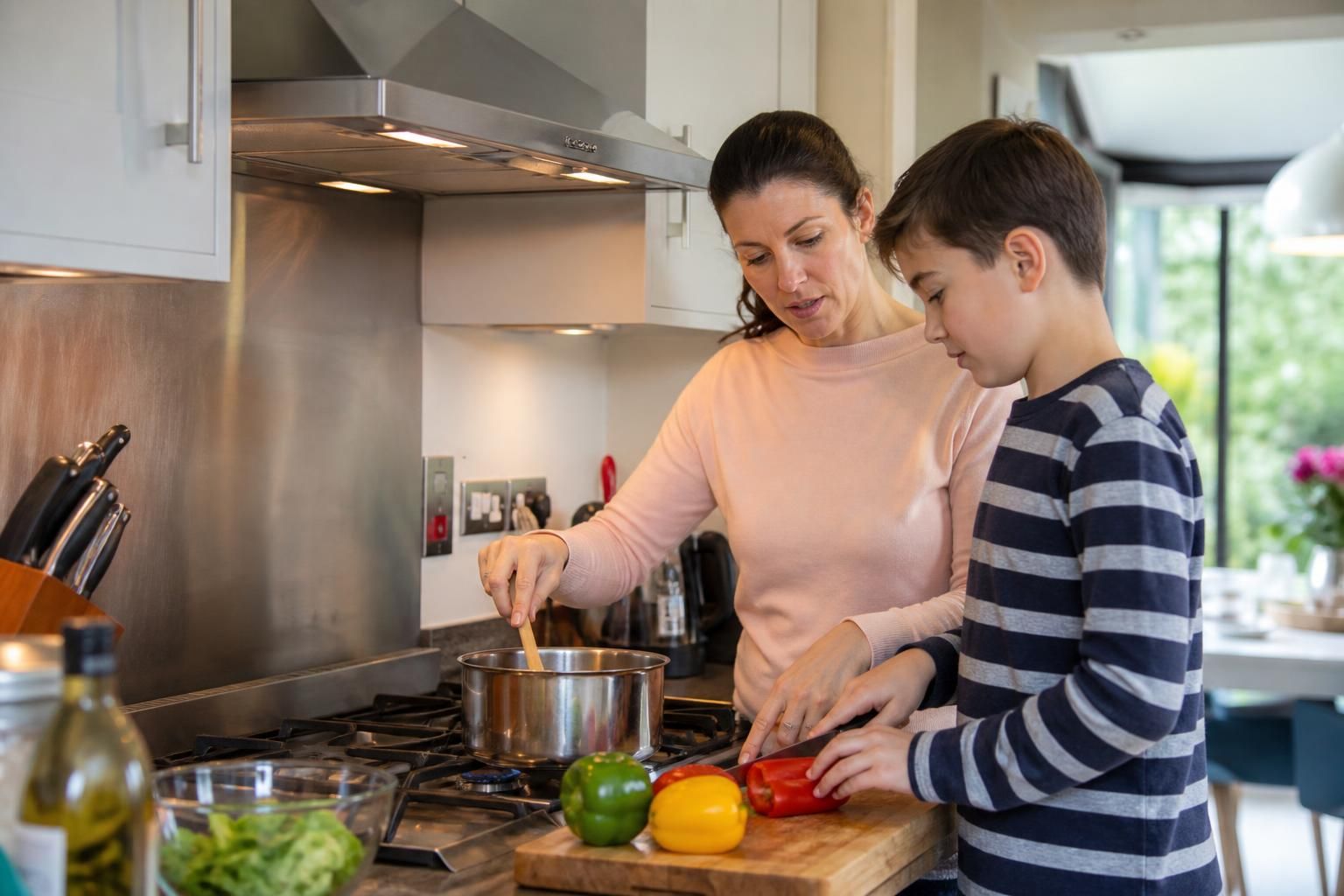
How are kitchen safety arrangements assessed in a foster home?
Kitchen safety arrangements are assessed by checking whether the space, appliances and stored items are suitable for the age and needs of a foster child. Assessors typically look for secure storage of knives, cleaning products and medicines, safe appliance use, working safety equipment and arrangements that prevent unsupervised access to hazards.
Partnering with an
Ofsted Outstanding Provider
Kitchen safety arrangements are assessed as part of the wider foster home risk assessment, with attention to how the room can be used safely by a particular child. The assessor considers the kitchen’s layout, condition, routines and level of supervision, rather than applying a single checklist to every household.
The assessment usually considers the following areas:
- Layout and access: There should be enough space for adults to prepare food and supervise children without unnecessary crowding. The route through the kitchen should be clear, particularly around work surfaces, cooking areas and entrances. An assessor may consider whether a child could enter the room unnoticed or reach a hazard while an adult is occupied.
- Condition of the room: Floors, worktops, cupboards, handles and other fittings should be in sound condition and reasonably easy to keep clean. Damage, unstable fixtures, exposed sharp edges or other defects may need to be repaired before approval or before a child moves in.
- Supervision arrangements: The required level of supervision depends on the child’s age, understanding, development and experiences. Younger children may need close adult supervision in the kitchen, while an older child may be introduced to tasks gradually. The assessment looks at whether household routines make this supervision realistic.
- Heat and scald prevention: Assessors consider how the household manages hot food, drinks, pans, kettles and recently heated surfaces. Safe positioning, careful carrying and clear rules can reduce the chance of a child pulling, touching or knocking over something hot. The plan should reflect any additional risks linked to impulsivity, limited mobility or sensory needs.
- Food hygiene: Safe food preparation includes handwashing, keeping preparation areas clean, separating raw and ready-to-eat foods and storing food appropriately. Foster carers should also consider allergies, intolerances, cultural or religious dietary requirements and any eating-related risks identified for the child.
- Electrical and gas safety: The assessor may check that sockets, leads and fixed installations appear well maintained and are used appropriately. Cables should not create a route for pulling equipment down or cause a trip. Any concern about an installation or appliance should be dealt with by a suitably qualified professional.
- Child-specific risks: The assessment may be revisited if a child has a history of fire-setting, unsafe eating, self-harm, pica, developmental delay or difficulty understanding danger. This does not automatically prevent approval; it means that supervision, household rules and protective measures need to be matched to the assessed risk.
- Emergency arrangements: Foster carers should know how they would respond to a burn, scald, cut, poisoning incident or kitchen fire. First-aid supplies and emergency information should be accessible to adults without creating an additional hazard for children.
An assessor will normally discuss how the kitchen is used day to day, who prepares meals, whether children are expected to help with cooking and how rules are explained. They may ask how a carer would manage a child who enters the kitchen without permission, becomes distressed during meal preparation or needs additional support with eating.
The aim is not to make the kitchen inaccessible or remove every ordinary household activity. Children can often develop independence by taking part in suitable tasks, such as washing produce, preparing simple food or learning safe cleaning routines. These activities should be introduced progressively, with an adult choosing tasks that match the child’s abilities and supervising them appropriately.
Before an assessment, walk through the kitchen from a child’s viewpoint. Check what can be reached, pulled, climbed on or knocked over, consider how hot food and drinks are handled, and review whether household rules are clear to everyone. Resolve straightforward repairs and discuss any child-specific concerns openly with the fostering team. If a change is needed, it may form part of the household’s agreed safer-care plan and should be reviewed as the child’s needs develop.
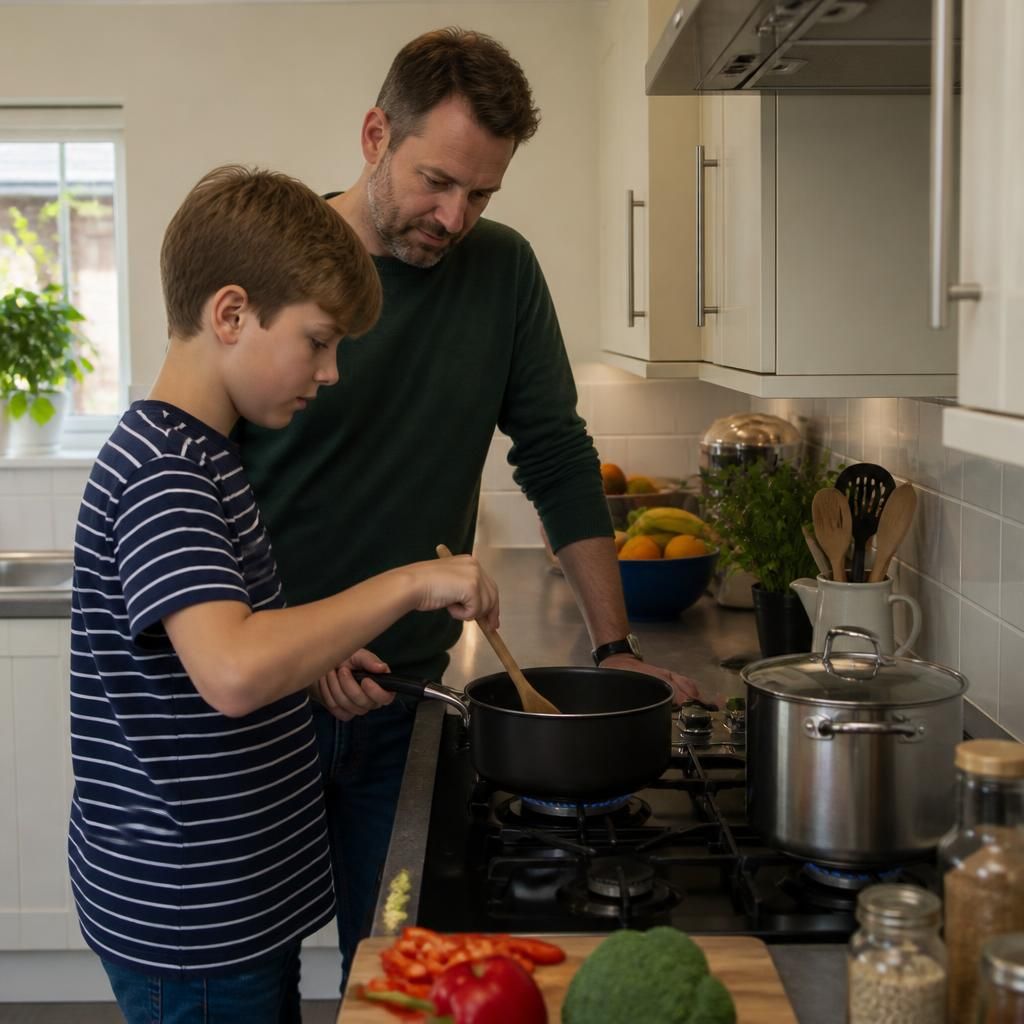
When an assessor identifies a kitchen concern, they will usually consider the control in place rather than judging the room in isolation. This may involve discussing the household rule, who is responsible for applying it and how the arrangement would work during busy routines such as preparing several meals or having visitors.
Any action should be clear and practical. The fostering team may agree that a repair, change to the household routine or additional information is needed, then record this within the assessment or safer-care plan. Carers should be able to explain how they will maintain the arrangement consistently and how they will review it if circumstances change. A kitchen does not need to be risk-free, but identified risks must be understood, managed and proportionate to the child’s assessed needs.
Discuss kitchen safety in your foster home
If you are considering fostering and would like to discuss how your kitchen arrangements may be assessed, speak to our fostering team. They can help you understand the assessment process and identify any practical steps to consider before applying.