
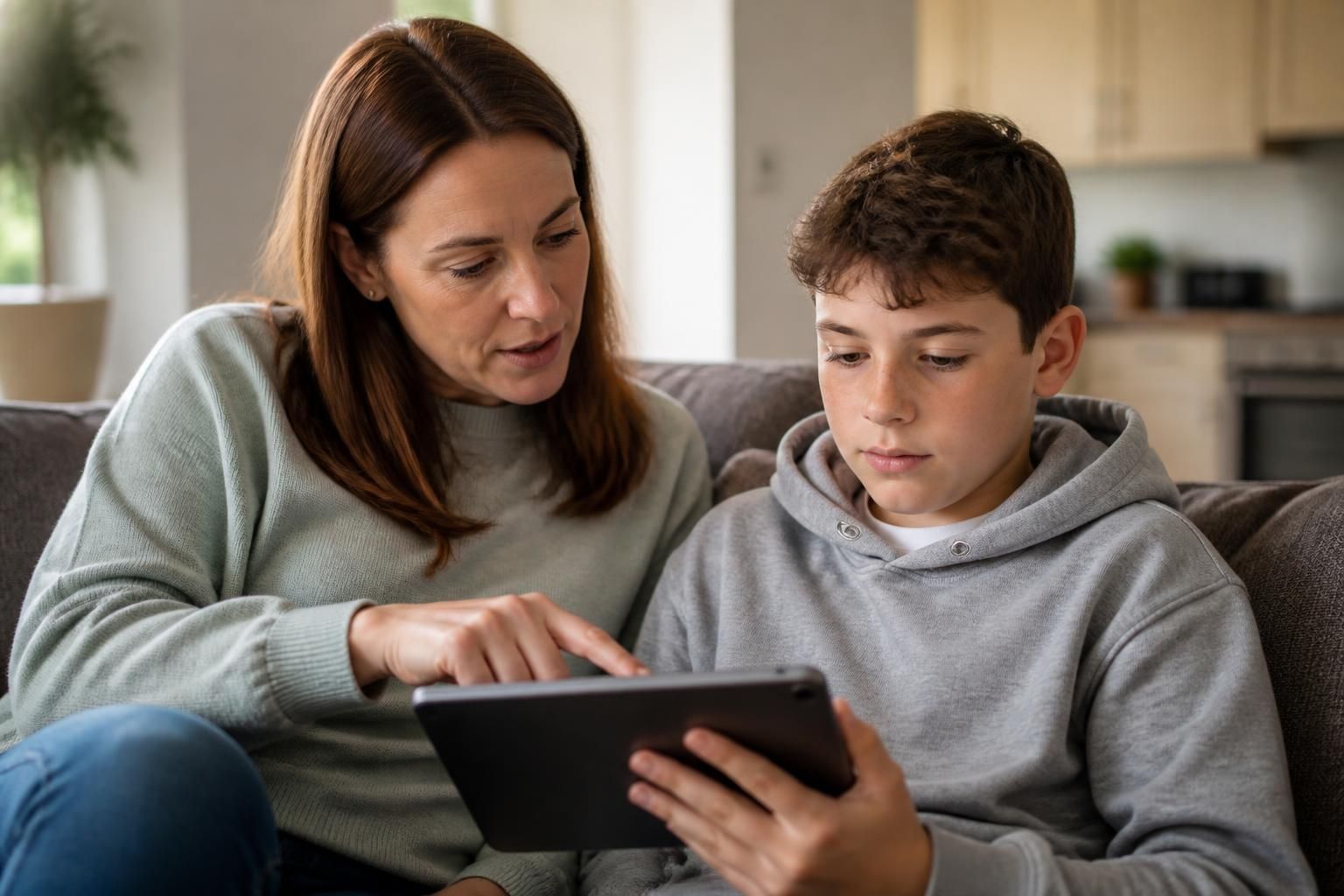
How is online safety managed for foster children?
Online safety for foster children is managed through an individualised approach that combines age-appropriate supervision, clear household rules, privacy settings and education about online risks. Foster carers receive guidance to monitor internet use appropriately, respond to concerns and review arrangements as the child’s needs and digital activities change.
Partnering with an
Ofsted Outstanding Provider
Online safety for foster children is managed as part of the child’s wider safeguarding plan. It involves assessing the child’s digital experiences and vulnerabilities, agreeing proportionate safeguards with the professionals involved, and reviewing those arrangements as the placement develops. The aim is to reduce risk while helping the child use the internet, social media, gaming platforms and messaging services safely.
Online risks are considered alongside the child’s history and circumstances. Some children may be more vulnerable to grooming, exploitation, cyberbullying, harmful content, unwanted contact, financial scams or pressure to share images. Others may use the internet to maintain important relationships, find support or express themselves. A foster carer should therefore understand what the child uses the internet for, who they communicate with and whether particular platforms or contacts present a concern.
The child’s social worker, foster carer and supervising social worker should agree practical arrangements through the placement plan and relevant risk assessments. These may cover:
- which devices and platforms the child uses;
- whether certain applications, websites, games or online contacts require additional safeguards;
- how accounts are set up and secured;
- how online communication with family members or other people is managed where this forms part of the contact arrangements;
- what information the child may share about their identity, location, school or foster home;
- how concerns will be recorded, reported and reviewed; and
- what steps are appropriate if the child receives threatening, sexualised or manipulative messages.
Supervision should be proportionate and explained clearly. Younger children may need closer support with devices, apps and online communication, while older children may need guidance that recognises their growing independence. Foster carers should avoid secretly accessing accounts or messages unless this is authorised as part of an agreed safeguarding response. Children should be told what checks may take place, why they are needed and who will be informed if a serious concern arises. Any arrangement should respect the child’s privacy while prioritising their safety.
Practical controls can include checking age ratings, reviewing application permissions, enabling content filters, using secure passwords and multi-factor authentication where appropriate, and limiting location-sharing features. Devices should be kept up to date and protected with a passcode. Carers may also agree where devices are used or charged, particularly when a child needs support to manage late-night messaging, gaming or contact with unsafe individuals. These measures should support the agreed plan rather than replace conversations with the child.
Education is an important part of safeguarding. Foster children should know how to block and report users, check whether an account is genuine, recognise pressure or manipulation, and seek help without fearing automatic punishment. They should be encouraged not to meet an online contact in person without trusted adult involvement, to avoid sharing intimate images, and to tell a carer if someone threatens them, asks for secrecy or offers gifts, money or opportunities in exchange for contact or images. A child should understand that responsibility for abusive or exploitative behaviour lies with the person causing harm, not with the child who reports it.
Foster carers should take concerns seriously and remain calm. They should not forward or save illegal or sexual images, repeatedly question the child, confront a suspected offender or promise complete confidentiality. Where messages, usernames or other information may help professionals, the carer should preserve relevant details safely and follow the agency’s reporting procedure. Concerns should be passed to the supervising social worker and the child’s social worker. If there is an immediate risk of serious harm, emergency services should be contacted in line with safeguarding guidance.
Online safety arrangements should be reviewed after significant events, such as a new device, a change in contact arrangements, a disclosure, a serious incident, a change of school or a move towards greater independence. Reviews should also consider whether safeguards are working in practice and whether the child understands them. Foster carers receive guidance and ongoing support to manage these decisions, work with the child’s professional network and respond appropriately when digital risks change.
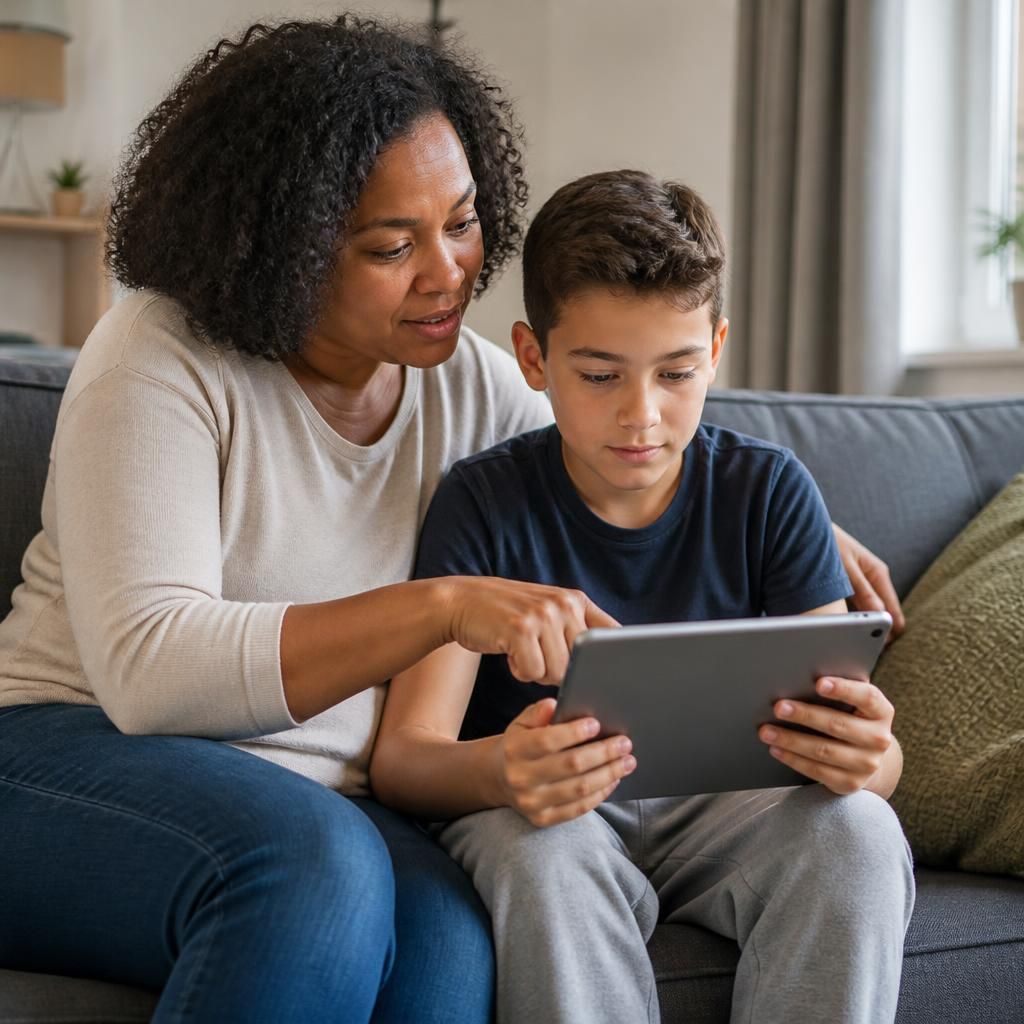
Online safety arrangements should be accessible to the individual child, including children with additional learning, communication or developmental needs. A rule that is suitable for one child may be confusing, overly restrictive or difficult to follow for another, so foster carers should agree how the guidance will be explained and supported.
This may involve using simple language, visual reminders or step-by-step instructions for reporting concerns and changing privacy settings. Carers should also check that safety controls do not unintentionally prevent a child from using digital tools needed for education, communication or appropriate support. If the child finds online information difficult to understand or is unable to manage a safety feature independently, this should be included in discussions with the child’s social worker and wider professional network.
The purpose is to help the child develop safe digital habits rather than rely only on restrictions. Arrangements should give the child a clear way to ask questions, disclose a worry or request help without feeling blamed.
Talk to us about online safety for foster children
If you are considering fostering and want to discuss how online safety arrangements could be tailored to a child’s needs, talk to us for clear, practical guidance.