
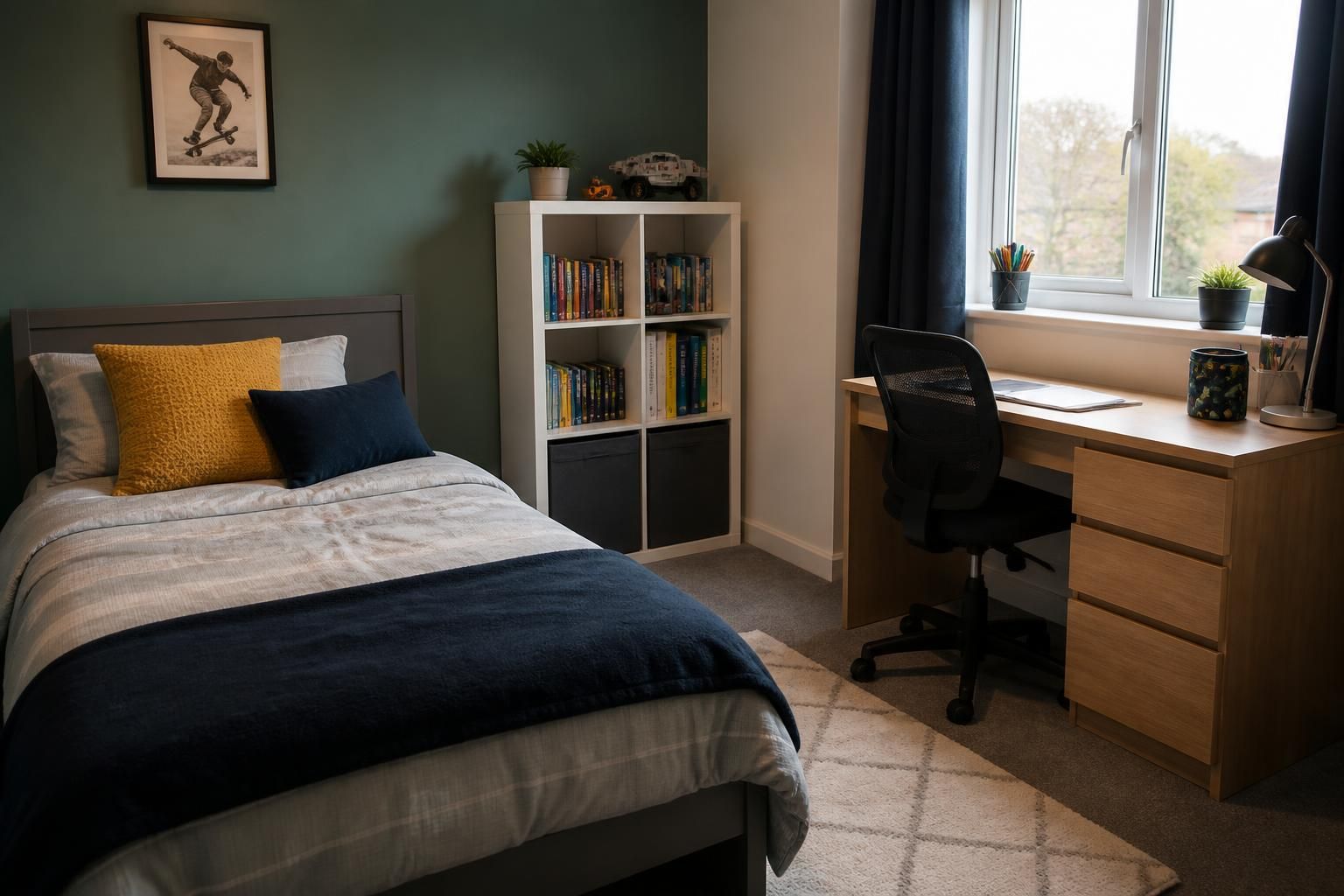
What bedroom requirements apply to foster children?
Foster children should usually have their own bedroom, providing appropriate privacy, personal space and safe sleeping arrangements. Siblings may sometimes share, but this depends on their ages, relationships, individual needs and the fostering assessment; the room must also be suitable, safe and appropriately furnished.
Partnering with an
Ofsted Outstanding Provider
Foster bedroom requirements are assessed according to the child’s age, circumstances, individual needs and the layout of the household. There is no single bedroom size that applies to every fostering situation, but the space must be suitable for sleeping, dressing, storing belongings and having reasonable privacy. The fostering assessment will consider whether the proposed arrangement meets the relevant fostering standards and is appropriate for a particular child.
In England, children aged over three are generally expected to have their own bedroom. Sharing may be considered in limited circumstances, usually where children are siblings, and only when the arrangement is safe and appropriate. The assessment will take account of factors such as:
- the children’s ages and stages of development;
- their sex, relationships and personal history;
- any known risks, vulnerabilities or behaviours;
- whether either child needs additional privacy or personal space; and
- whether the arrangement remains suitable as the children grow older.
A foster child’s bedroom should not be shared with a foster carer. It should also be separate from areas used for unrelated household activities, so the child has a consistent personal space. A room used as an office, playroom or storage area may need to be adapted before it can be considered suitable. The child should be able to keep clothing, toys, school items and personal possessions securely and accessibly.
The room will normally need appropriate furnishings, including a suitable bed and mattress, adequate lighting, heating and ventilation. It should be clean, in good repair and free from hazards such as exposed wiring, unstable furniture, damaged flooring or unsuitable window access. Furniture should be appropriate for the child’s age and size, and the sleeping arrangements should be reviewed if the child’s needs change.
Privacy is an important part of the assessment. The child should have a bedroom door that provides ordinary privacy without creating a safeguarding risk. Foster carers must be able to respond to emergencies, and arrangements should not prevent necessary supervision. Windows, doors and access to the room are considered alongside the wider fire safety arrangements in the home.
The bedroom may also need adaptations or additional equipment for a child with a disability, medical condition or sensory need. This could include accessible furniture, space for specialist equipment, improved lighting or changes to reduce particular risks. These arrangements should be discussed with the fostering agency and relevant professionals before a placement is agreed, rather than assumed to be suitable.
Children’s identities and personal needs should be considered when preparing the room. Space for culturally important belongings, religious items, personal care products or possessions connected with the child’s identity can help the room feel properly allocated to them. This does not replace the formal safety assessment, but it forms part of providing an appropriate environment.
During the fostering assessment, the social worker will usually inspect the proposed bedroom and discuss who uses each room in the home. They may ask how the arrangement would work for different ages and genders, where a child would store belongings, and how privacy and supervision would be balanced. The suitability of the room is considered as part of the wider household assessment, not in isolation.
Bedroom arrangements can affect which children a foster family is approved to care for. A household may be approved for some placements but not others if a child’s age, needs or risks require a different sleeping arrangement. The space should therefore be described accurately during the application process, and any proposed change to room use or sharing should be discussed before it is put into practice.
Preparing a bedroom for fostering is not simply a matter of adding a bed. It should provide a safe, usable and private space that can be adapted to the child placed there. The fostering agency can explain how the standards apply to the specific home and help identify any changes needed before approval or before a particular placement is considered.
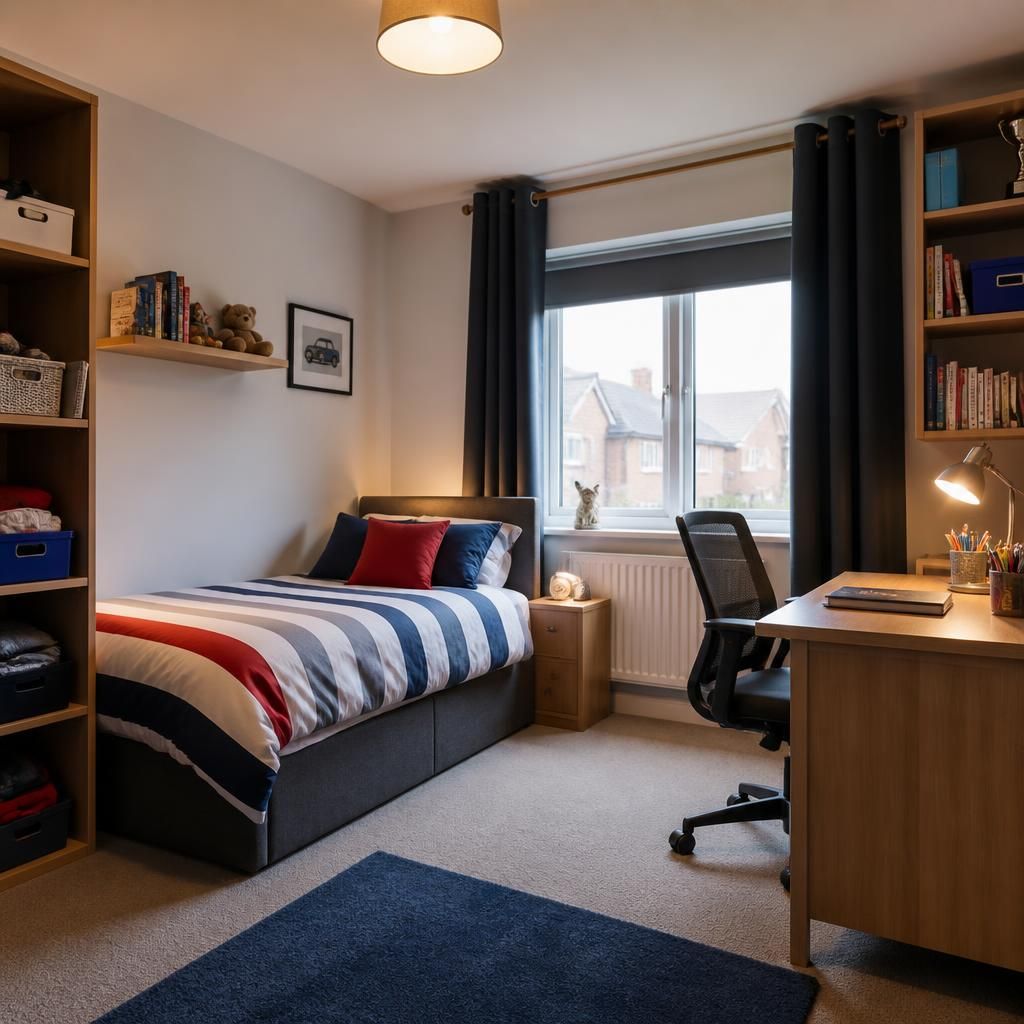
A bedroom for a foster child must be available for their sole use throughout the placement, rather than being treated as occasional or temporary accommodation. The assessment will consider whether the room remains suitable if the household’s circumstances change, such as a family member moving home, a child returning to the household or the room being needed for another purpose.
Foster carers should also be able to explain how the child will use the room as part of everyday life. This includes where they will change clothes, keep school items and manage personal belongings, as well as how the arrangement will work during holidays, illness or changes in the child’s placement plan. Discussing these practical details during the assessment helps ensure the proposed bedroom is genuinely appropriate for the child who may be placed.
Discuss your foster bedroom requirements
If you are considering fostering and want to discuss how your available bedroom could meet a child’s needs, speak to our fostering team. They can explain the assessment process and the points to consider before you apply.