
What evidence is needed to demonstrate your home meets foster care requirements?
Evidence that your home meets foster care requirements usually includes a home safety assessment, relevant property or tenancy documents, and checks confirming that bedrooms, facilities, security and fire precautions are suitable. Your fostering assessment will identify any further evidence needed and explain how outstanding requirements can be addressed before approval.
Partnering with an
Ofsted Outstanding Provider
Evidence that a home meets foster care requirements is gathered through a structured assessment of the property, the people living there and the arrangements that will keep a child safe. The evidence may include documents, professional checks, photographs or observations, and information you provide during discussions with your fostering assessor.
Property ownership or permission to live there
If you own your home, you may be asked for evidence of ownership or mortgage details. If you rent, written permission from your landlord may be needed before fostering can begin. This confirms that fostering is allowed under the terms of your tenancy. The agency may also need to know about any restrictions affecting the number of people living in the property, use of bedrooms or making safety adjustments.
Details of the household and living arrangements
You will normally provide information about everyone who lives in the home, including their relationship to you, their ages and how they feel about fostering. The assessment considers whether the household has enough space and privacy for a fostered child, while also looking at how existing routines, relationships and responsibilities may be affected.
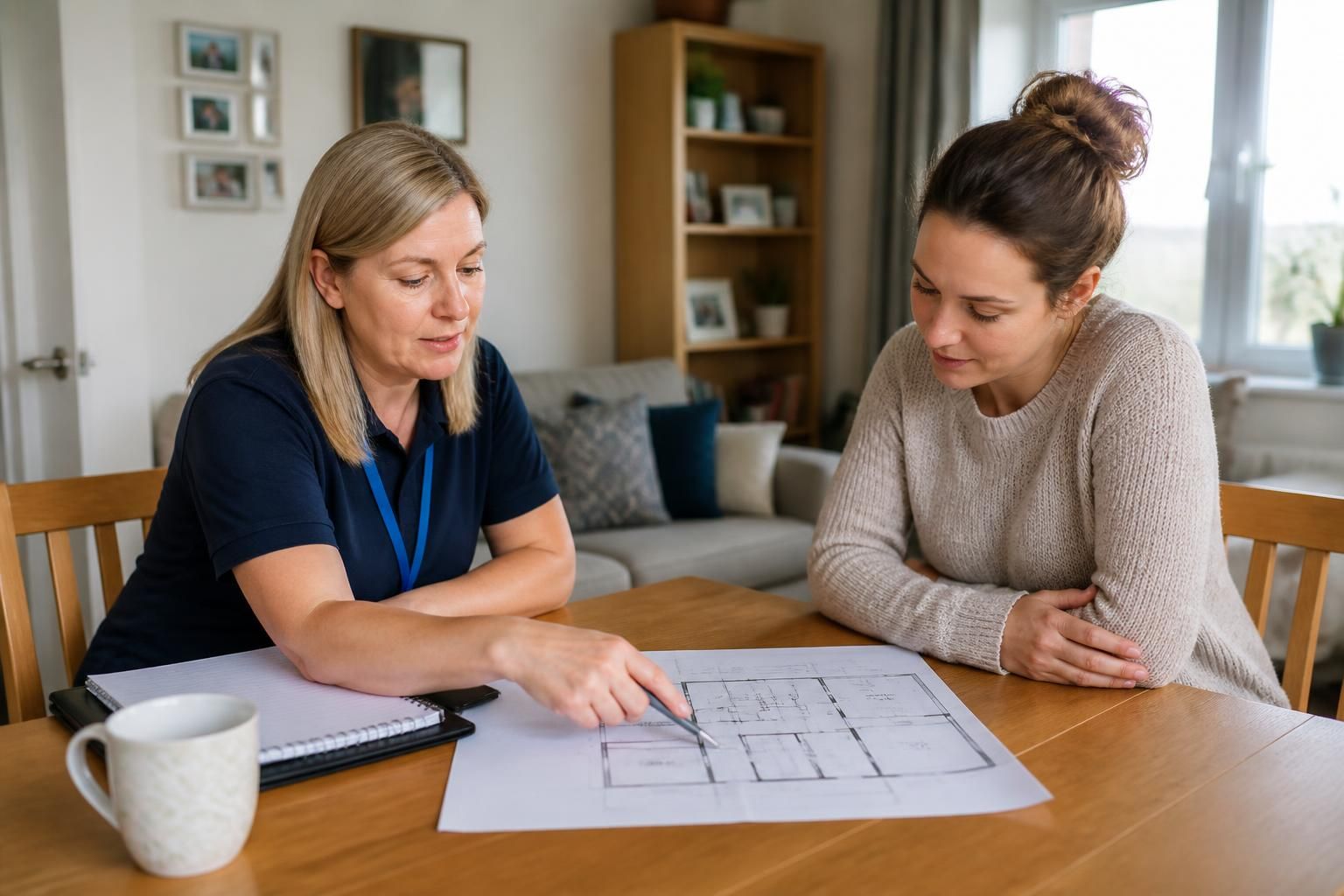
Evidence may include a description or plan of the home showing bedrooms, shared areas, bathrooms, entrances and outdoor space. An assessor will usually discuss who would sleep where and whether the proposed arrangement is suitable for the age, needs and circumstances of children who might be placed with you. A spare bedroom is generally expected for a foster child, although the precise arrangements depend on the fostering situation and applicable requirements.
Home safety information
A home safety assessment examines practical risks rather than simply relying on documents. This can include:
- safe access to and movement around the property;
- the condition of stairs, windows, balconies, doors and other potential fall hazards;
- the location and security of medicines, cleaning products, alcohol, tools and other hazardous substances;
- the safety of cooking, heating and electrical equipment;
- adequate lighting, ventilation and general cleanliness;
- arrangements for storing personal information and a child’s belongings securely; and
- any risks presented by pets, ponds, outbuildings, swimming pools or nearby roads.
The assessor may record observations during a visit and recommend practical changes. You may then need to provide confirmation that these actions have been completed, such as photographs, receipts, certificates or a follow-up visit, depending on the issue.
Fire and emergency arrangements
Fire safety is considered as part of the home assessment. Evidence can include information about smoke and carbon monoxide alarms, escape routes, doors, emergency access and how everyone in the household would respond to a fire. The position and condition of alarms may be checked in person. Where relevant, you may be asked for servicing or installation records for heating systems or other equipment, although the exact evidence depends on the property and the assessment findings.
You should also be able to explain how a foster child would be helped to understand household safety, what would happen in an emergency and how sleeping arrangements affect escape planning. Any recommendations must be addressed before approval or within a timescale agreed as part of the assessment.
Health, identity and suitability documents
Some evidence relates primarily to your suitability as a foster carer rather than to the building itself. This can include identity documents, Disclosure and Barring Service checks, health information, personal references, financial information and checks involving other adults in the household. These checks help the agency understand whether the household can provide safe and stable care.
A medical assessment may be requested from your GP or another appropriate health professional. It is not normally about requiring a person to have perfect health; it helps assess whether fostering is compatible with your health and whether any support or adjustments should be considered. The agency will explain which forms and permissions are required.
Evidence relating to children and the local environment
The assessment may consider whether the home is suitable for the type of fostering you are considering. For example, the location of schools, transport, health services, family contact arrangements and community facilities may be relevant to a child’s needs. You may be asked how a child would travel to school, attend appointments or maintain important relationships.
This does not mean that a particular type of property or neighbourhood is automatically required. The relevant question is whether the proposed home and practical arrangements can safely support the child likely to be placed there.
What happens if evidence is missing or a concern is identified?
Missing paperwork does not necessarily prevent an application from progressing. The fostering assessor should identify what is needed, explain why it matters and record any outstanding actions. Some matters may be resolved by providing a document; others may require a repair, a change to storage arrangements, additional safety equipment or a further assessment.
Do not make changes or incur substantial costs before discussing them with the fostering team. Requirements can depend on the property, household and type of fostering being considered. Ask for clarification if you are unsure whether a landlord’s letter, certificate or other document is acceptable.
Keeping evidence up to date
Information about the home must remain accurate after approval. Moving house, carrying out major alterations, changing bedroom arrangements, taking in another household member or acquiring a pet can affect the assessment. Tell the fostering service about significant changes so that any new risks or evidence requirements can be considered through the appropriate review process.
The most useful preparation is to keep relevant tenancy or ownership information together, make a clear list of household members, check that hazards are securely stored and consider how a child would use each part of the home. Your fostering assessor will then confirm which evidence applies to your circumstances and what needs to be completed before approval.

Evidence should show that the proposed home can meet the needs of the children you are considering fostering, rather than simply proving that the property meets a fixed checklist. Where a child has particular health, mobility, communication or behavioural needs, the fostering assessment may require more specific information about how the home will be used safely and what adjustments or support would be needed.
- Explain how you would manage any relevant features of the property, such as stairs, entrances or shared facilities.
- Provide details of adaptations or equipment already in place, where these affect a child’s safety or independence.
- Discuss any recommendations from an appropriate professional if a child’s assessed needs require specialist arrangements.
This evidence is considered alongside your household’s skills, routines and ability to follow agreed care plans. The requirements may therefore become clearer as the assessment identifies the age, needs and type of fostering placement that could be suitable for your family.
Find Out What Evidence Your Foster Home Will Need
Speak to our fostering team about your circumstances and the evidence your home may need to meet foster care requirements. They can explain the next steps and help you prepare for your assessment.