

Can I be a foster parent if I have a disability?
Having a disability does not automatically prevent you from becoming a foster parent. The assessment will consider how your disability affects your ability to meet a child’s needs safely and consistently, what support or adjustments may be appropriate, and whether fostering is suitable for your household.
Partnering with an
Ofsted Outstanding Provider
The key question is not the name or diagnosis of a disability, but whether you can provide safe, consistent and appropriate care for a child, with suitable adjustments and support in place. Disability can include physical, sensory, learning or neurological conditions, as well as long-term mental health conditions or fluctuating illnesses. Each application is considered individually.
How your disability is considered
As part of the fostering assessment, you will be asked about your health and how it affects your everyday life. This is not intended to judge you by your medical history alone. The assessment looks at the practical impact of your condition, including:
- your ability to supervise a child and respond to their needs;
- your mobility, stamina, concentration and energy levels;
- whether your condition is stable, recurring or likely to change;
- any medication, treatment, appointments or recovery periods that affect your availability;
- how you would manage unexpected situations or emergencies;
- whether you can attend meetings, school appointments, training and other activities linked to fostering; and
- what assistance, equipment, adaptations or backup arrangements would help you foster safely.
You may be asked to give consent for relevant medical information to be obtained from your GP or another healthcare professional. A medical adviser considers this information alongside the wider assessment. Their role is to identify any health-related risks, practical limitations and support needs; a diagnosis by itself does not determine the outcome.
What the assessment may explore
Children who need foster care may have experienced neglect, abuse, loss or instability. Some may need help with emotional regulation, personal care, school attendance, health appointments or contact with relatives. The assessment therefore considers whether your household can meet the likely needs of a child safely and reliably.
For example, if you have limited mobility, the assessment may consider the layout of your home, access to outdoor areas, transport arrangements and how you would respond if a child needed immediate supervision. If you have a sensory impairment, it may look at communication methods, alert systems and how you would remain aware of what is happening in the home. If you have a fluctuating or fatigue-related condition, it may consider routines, rest, contingency plans and the practical support available from other adults.
Some disabilities may affect particular types of placement but not fostering altogether. A plan may need to identify the age range, needs or number of children that would be appropriate. It may also be sensible to begin with a placement whose needs match your strengths and available support.
Reasonable adjustments during the application
You should explain any adjustments that would make the assessment accessible. Depending on your circumstances, this might include:
- providing documents in an accessible format;
- allowing additional time for meetings or completing paperwork;
- choosing an accessible venue or holding part of a meeting in your home;
- using communication support or assistive technology;
- planning breaks during training or assessment sessions; and
- agreeing how information will be communicated if you have a hearing, speech, processing or cognitive impairment.
Ask the fostering team about adjustments at the beginning of the process rather than waiting until difficulties arise. Adjustments should help you demonstrate your ability accurately; they do not remove the requirement to provide safe care.
Support and safety planning
A disability does not mean you must manage every task alone. The assessment can consider the role of a partner, relatives, friends, respite arrangements, community services, equipment and other practical resources. Any plan must be dependable, clearly understood by everyone involved and suitable for the child’s needs. It should not rely solely on informal help that may be unavailable at short notice.
It is also important to consider the effect of fostering on your own health. Caring for a child can involve disrupted routines, appointments, challenging behaviour and emotional demands. A realistic plan for rest, treatment, transport and backup care helps demonstrate that the arrangement could remain safe and sustainable.
Ongoing supervision, training and advice are available to approved foster carers. You can use this support to develop skills, review placements and discuss changing needs. Fostering allowances are separate from a health assessment, but any disability-related costs or practical expenses should be discussed with the fostering organisation before approval so that the financial arrangements are clear.
Information to prepare
It may help to make a short, practical summary covering your condition, how it affects you, treatment or medication, warning signs, adaptations, emergency arrangements and the support you already use. Be open about periods when your health has been more difficult. Withholding relevant information can create problems later, whereas accurate information allows the assessment team to consider appropriate safeguards and placements.
The final decision is based on the complete assessment, including your health, home, relationships, support network, skills and the needs you could meet. If your circumstances change after approval, tell your supervising social worker so that support and placement planning can be reviewed. If you are unsure whether your disability would affect your application, an initial discussion with the fostering team can clarify what information and adjustments may be needed.
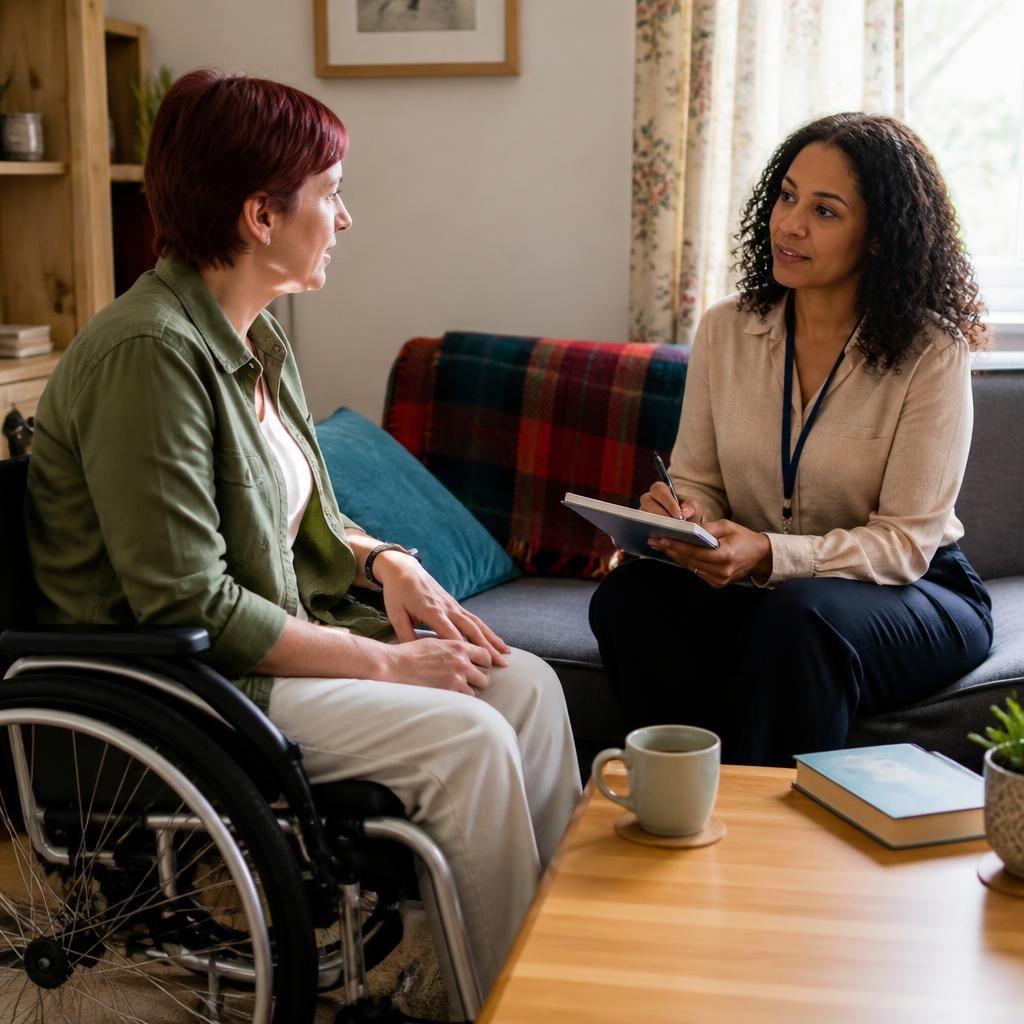
A disability may also give you valuable insight into experiences such as difference, communication barriers or needing support, but this does not replace the practical assessment of your ability to care safely. The fostering team will consider how your knowledge and experience could support a child, alongside the adjustments and safeguards needed in your household.
Be specific about what you can manage independently, where you may need assistance and which situations could be more difficult. This helps the assessment team consider suitable placement arrangements rather than making assumptions based on the label of a condition.
Discuss your fostering application with our team
Discuss your circumstances and questions with our fostering team before deciding whether to apply. They can explain the next steps and what information you may need to provide.