
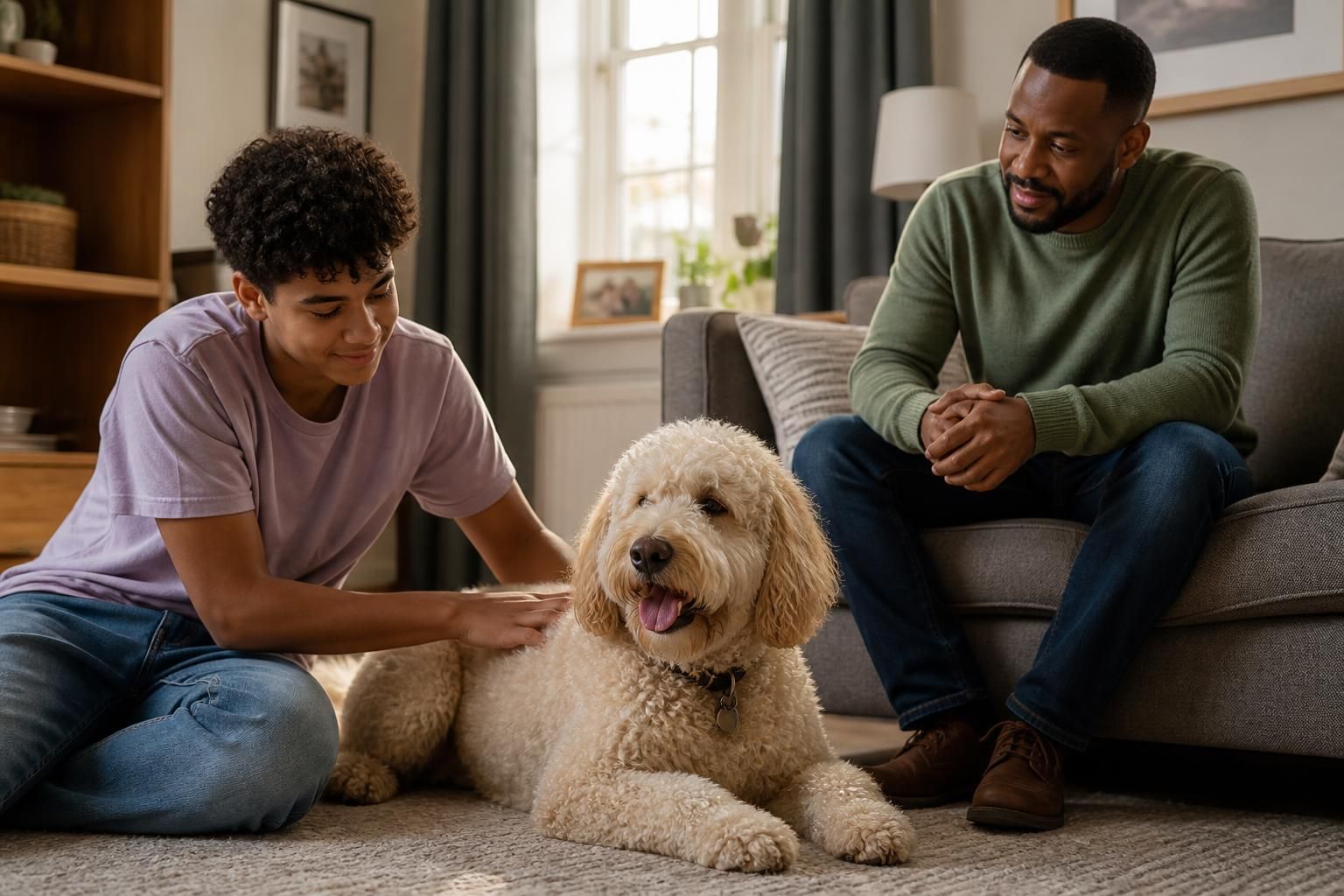
Can I become a foster parent if I have pets?
Yes, you can usually become a foster parent if you have pets; having an animal does not automatically prevent you from fostering. Your fostering assessment will consider each pet’s temperament, behaviour, health and living arrangements, alongside the needs and safety of any child placed with you.
Partnering with an
Ofsted Outstanding Provider
The important question is not simply whether you own a pet, but whether the animal, its care arrangements and your home environment can safely meet the needs of a foster child. As part of the fostering assessment, each pet is considered individually and the agency will discuss any risks, precautions and arrangements needed before approval.
You should expect to provide practical information about your pets, including:
- the species, breed, age and size of each animal;
- its temperament and typical behaviour around children, visitors and unfamiliar situations;
- any history of aggression, biting, chasing, excessive anxiety or unpredictable behaviour;
- its health, veterinary care, vaccinations and treatment needs;
- where it sleeps, eats and spends time in the home; and
- who is responsible for feeding, exercising, supervising and caring for it.
A social worker may ask to see how your pets are managed in everyday situations. You may also be asked for veterinary information or permission for relevant checks. The purpose is to understand the risks realistically, not to assume that owning an animal makes someone unsuitable to foster.
Safety planning is particularly important where a child may have allergies, a fear of animals, limited understanding of boundaries or previous experiences of harm involving pets. Some children may also need time to become comfortable around an animal. Depending on the circumstances, arrangements could include keeping a pet out of a child’s bedroom, using gates or other physical separation, supervising interactions, storing food and equipment securely, or preventing contact altogether.
Your safer caring guidance should explain how children and pets are to be supervised. Foster children should not normally be expected to take responsibility for an animal, and they should have a clear way to move away from a pet if they feel uncomfortable. Feeding areas, litter trays, cages, leads, medicines and cleaning products should be managed hygienically and kept secure where necessary.
Different types of pets can raise different considerations. Dogs and cats may need assessment of their behaviour around children, while birds, reptiles, small animals, horses and other pets may involve separate issues relating to handling, hygiene, allergies, space or physical safety. Where an animal is subject to legal restrictions or presents a significant safeguarding concern, this will need careful consideration during the assessment.
The needs of a particular child will be considered alongside your pets when a placement is discussed. A child who is allergic to animals, frightened of them or unable to follow safety instructions may not be suitable for a home with certain pets. This does not necessarily prevent you from fostering, but it may affect which placements can be considered and what safeguards are required.
Be open about every animal in your household, including pets that are kept outside or belong to another member of the family. Hiding a pet could create avoidable safeguarding concerns and make it harder to plan suitable placements. If you are thinking about fostering, gather up-to-date veterinary details and consider how your pets would respond to changes in household routines, visitors and a child needing personal space.
Pet ownership is discussed during your initial conversations, assessment, preparation training and ongoing support. The final decision will depend on the individual circumstances of your household, the animals involved and the children you may be asked to care for.

Before applying to foster, consider how your pets will be cared for if your household routine changes. An adult should remain responsible for feeding, exercise, supervision and veterinary appointments, with a suitable back-up plan for illness, appointments or other unexpected changes.
This helps prevent a foster child from being placed under pressure to manage an animal. It also allows you to maintain consistent pet-care arrangements while giving the child clear boundaries, personal space and predictable routines in your home.
Talk to us about fostering with pets
If you are considering fostering, speak to our fostering team about your circumstances and the next steps in the assessment process. We can help you understand how your household would be considered before you decide whether to apply.