
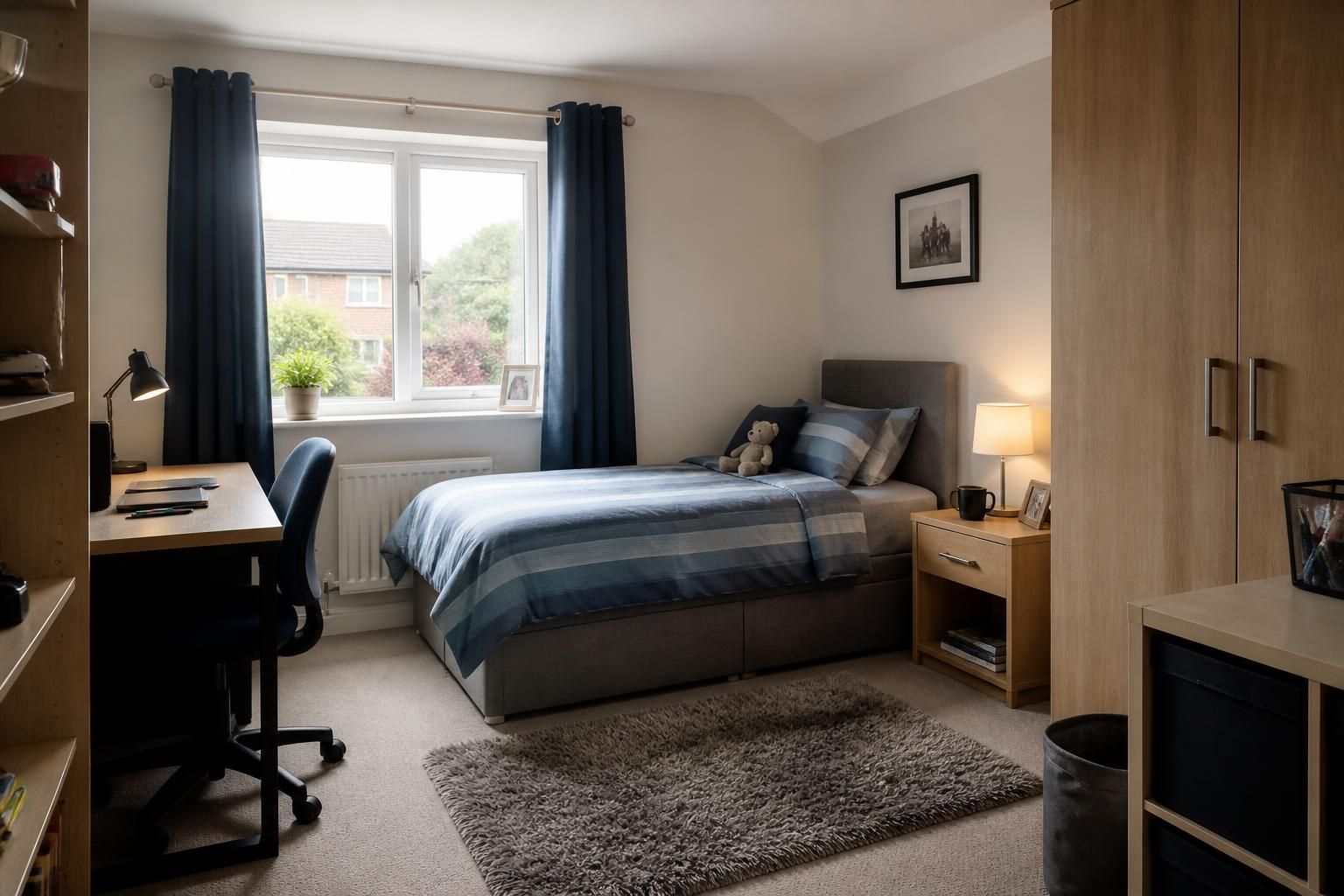
Do I need a spare bedroom to become a foster parent?
In most cases, yes: a foster child needs their own bedroom, separate from the foster carers and other children in the household. Limited exceptions may apply depending on the children’s ages, relationships and individual circumstances, and this will be considered during the fostering assessment.
Partnering with an
Ofsted Outstanding Provider
The bedroom must be a genuine, suitable personal space that can be made available to a foster child. It should provide privacy, security and enough room for the child’s belongings, rather than being a sofa bed in a shared living area or a space that adults continue to use regularly.
You do not necessarily need to move house. An existing room may be suitable if it can be prepared properly and remains available for fostering. For example, a room currently used as an office, storage area or occasional guest room may be considered if it is cleared, furnished appropriately and ready for a child to use. The assessing social worker will look at the whole home, not just the bedroom.
During the assessment, practical factors are likely to include:
- whether the room is clean, warm, adequately ventilated and in good repair;
- whether it has suitable furniture, sleeping arrangements and space for clothing and personal possessions;
- whether the child will have privacy and be able to keep personal items secure;
- whether the room and the wider home meet relevant fire, health and safety requirements; and
- whether the layout is appropriate for the age, development and needs of a child who may be placed there.
A foster child would not normally share a bedroom with another unrelated child, a foster carer or an adult. Arrangements involving siblings, or very young children, can sometimes be considered differently, but they depend on the individual children, their relationships, their needs and the applicable fostering standards. An exception is not something a carer should assume will be approved in advance.
The room also needs to work for the type of placement being considered. A younger child may need space for different equipment and closer supervision, while an older child or teenager may place greater importance on privacy, study space and somewhere to keep personal belongings. Matching decisions take these practical issues into account, so having a bedroom does not mean that every age group or type of placement will automatically be suitable.
If you have children of your own, the assessment will consider how the available bedrooms are arranged and how any placement could affect everyone in the household. A foster child’s bedroom should not simply be created by making another child give up their normal space without considering their welfare and the proposed arrangement carefully.
If you do not currently have a suitable room, you can still ask about fostering and discuss what would need to change before applying. This might involve reorganising the home, converting an appropriate room or considering a future move. Do not make major changes before receiving advice, as a room that appears suitable may still need to meet specific safety or placement requirements.
The bedroom is only one part of the fostering assessment. You will also need to provide information about your household, health, relationships, employment and circumstances, complete the required checks, and take part in preparation training. The assessment process gives you an opportunity to discuss your home honestly, understand the standards that apply and identify what support may be needed before a child is placed with you.
Become a Foster Family can provide information, guidance, training, financial support and ongoing assistance to people considering fostering. A conversation with the organisation can help you understand whether your current accommodation is likely to be suitable and what practical steps may be required.
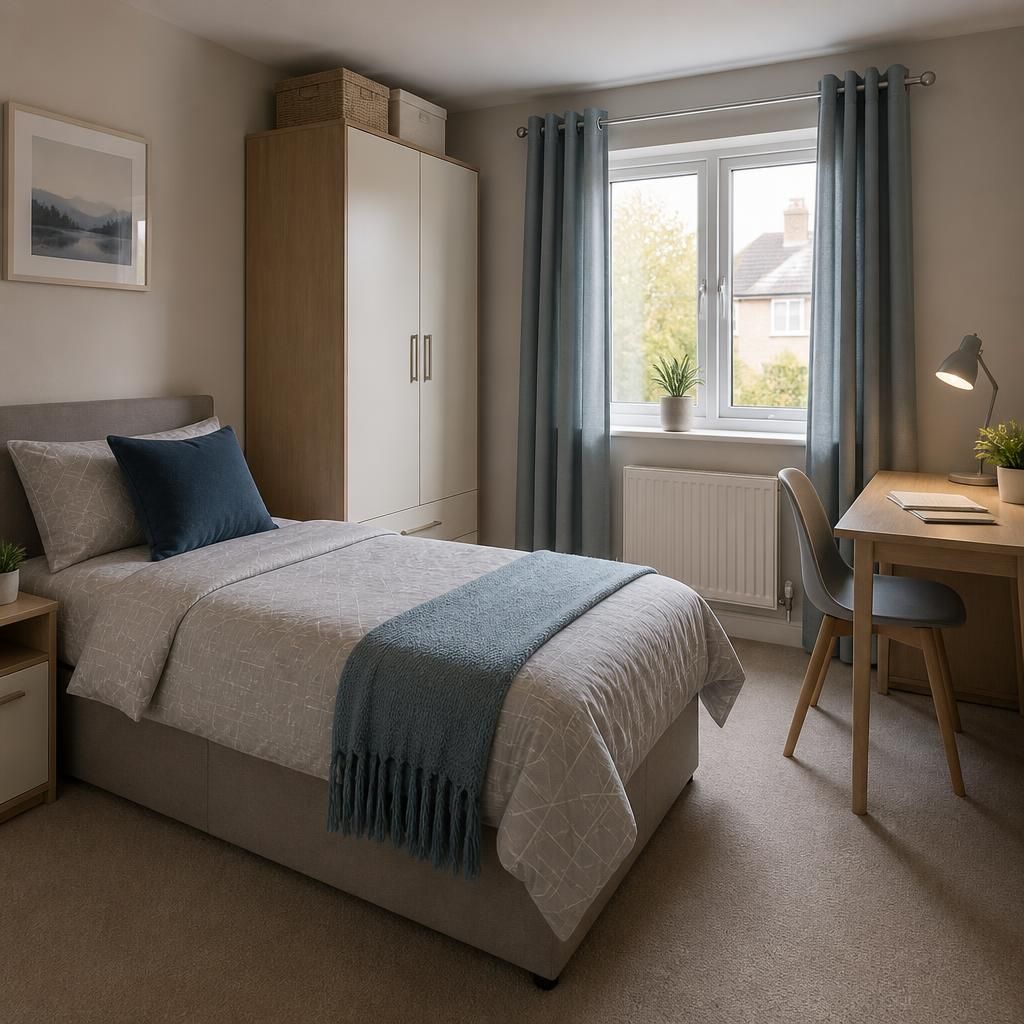
Being a tenant does not automatically prevent you from fostering. If you rent your home, the assessment may need to establish that you have permission to use the room for fostering and to make any necessary changes. Check your tenancy agreement and speak to your landlord or housing provider before carrying out alterations.
It is also sensible to discuss your plans with everyone who lives in the property. Their views may form part of understanding how fostering could work in your household, particularly where shared entrances, communal areas or other practical arrangements are involved.
Discuss Your Spare Bedroom and Fostering Plans
If you are considering fostering, contact Become a Foster Family to discuss your circumstances before making changes to your home. The team can explain the next steps for your enquiry and assessment.