
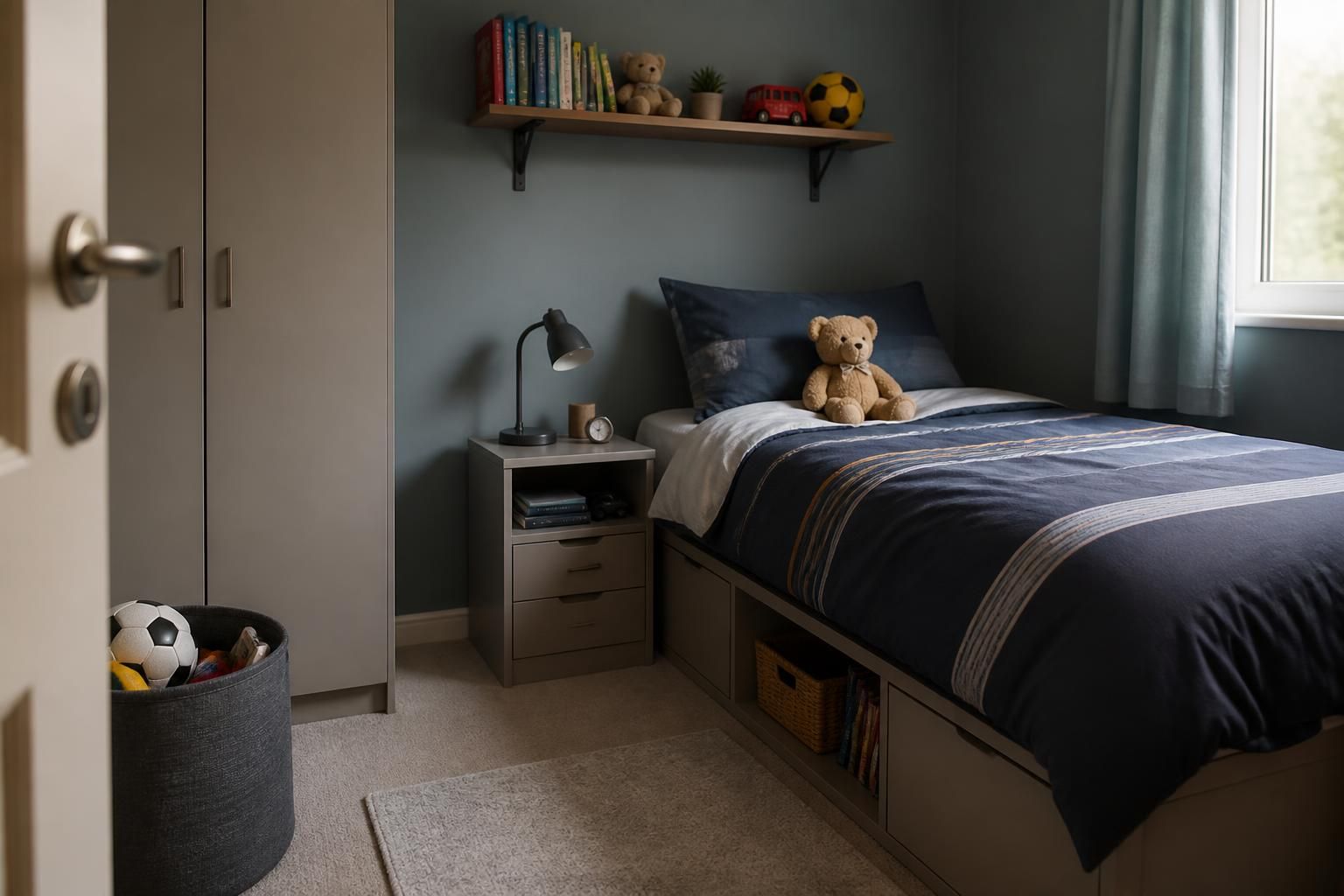
Do foster children need their own bedroom?
Foster children do not always need their own bedroom, but they must have a safe, suitable sleeping space that protects their privacy and meets their needs. Sharing may be considered after an individual assessment, taking account of age, sex, relationships, personal history and the needs of everyone in the household.
Partnering with an
Ofsted Outstanding Provider
A foster child will usually need a bedroom of their own, particularly once they are over the age of three, but room-sharing can sometimes be considered where it is assessed as appropriate and in the children’s best interests. The decision is made by the fostering service as part of the assessment and placement-matching process, rather than by applying one rule to every household.
In practice, the suitability of sharing a room will depend on factors such as:
- the children’s ages and developmental stages;
- their sex and gender;
- whether they are siblings or already have a safe, positive relationship;
- their individual histories, including trauma, abuse, sleep difficulties or experiences of neglect;
- any additional physical, emotional or behavioural needs;
- the views and privacy of everyone in the household; and
- whether the arrangement can be maintained safely over time.
Children of different sexes who are over three would not normally share a bedroom. A child who has experienced abuse, exploitation or unsafe contact may need particularly careful consideration before sharing any personal space. Similarly, two siblings may not automatically be suitable bedroom-mates if their experiences or needs make separate rooms more appropriate.
A foster child must not be expected to sleep in a communal area such as a living room, dining room or hallway. A study or other room may only be acceptable if it genuinely provides a suitable, private sleeping space and meets the fostering service’s requirements. A room used for fostering should have adequate space, ventilation, heating, lighting, storage and furniture, with suitable arrangements for privacy. It must also form part of a safe home that meets fire-safety and safeguarding requirements.
Children should not share a bedroom with foster carers. The assessment will also consider whether the proposed arrangement gives the foster child an appropriate level of privacy and allows them to keep personal belongings safely. The needs of birth children and other children in the household matter too; their bedrooms and personal space should not be treated as automatically available for sharing.
Room arrangements can affect which placements a foster carer is approved to accept. For example, having one spare bedroom may restrict the age, number or circumstances of children who can be considered, while a larger home may allow different arrangements. Approval is based on the household’s actual circumstances, so a room that is suitable for one placement may not be suitable for another.
During the fostering assessment, a social worker will discuss the available bedroom, inspect the home and consider how it could work in practice. They will also explore how household members feel about sharing space, what boundaries would be needed and how privacy would be protected. You should raise any concerns at this stage rather than assuming that an existing office, guest room or shared bedroom will be accepted.
If circumstances change after approval—for example, a birth child moves home, a household member needs the room, or a foster child’s needs change—the arrangement should be reviewed with the fostering service before a new placement is made. Do not rearrange sleeping arrangements without checking that the proposed placement remains suitable and safe.
For families in Birmingham, Worcestershire, Staffordshire and across the West Midlands, the local fostering team can explain the current room requirements and how they would apply to your home. Become A Foster Family has offices in Droitwich and Stoke, with staff located throughout the region to provide local guidance during the assessment.
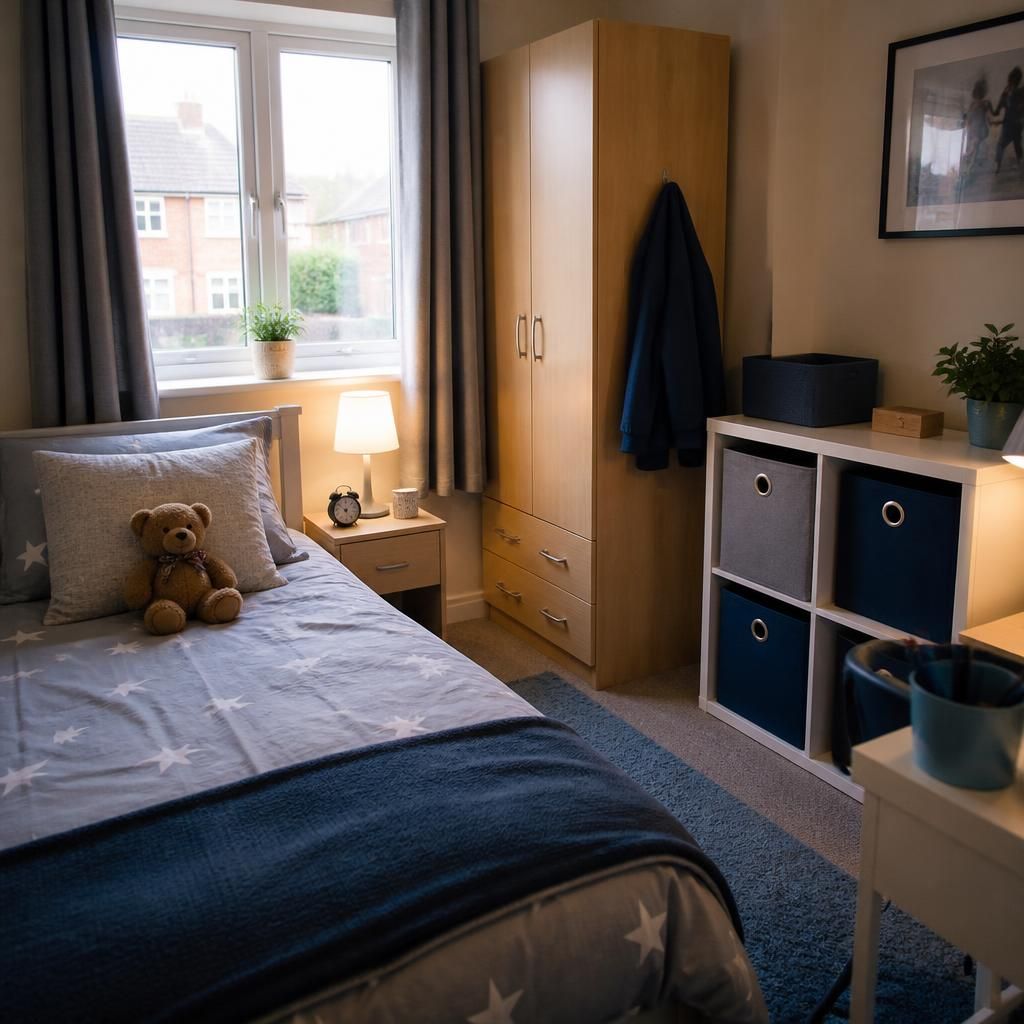
Preparing a bedroom for a foster child involves more than providing a bed. The room should be ready for the child’s age, development and individual needs, with suitable furniture and enough space for everyday belongings. Household items, clutter and equipment that could create a safety risk should be removed before the child arrives.
Where appropriate, involve the child in practical choices such as bedding, colours or storage, while avoiding assumptions about what they will like. A calm, adaptable room can help a child settle without making the space feel permanent before their needs are understood. The arrangement should also be reviewed if the child’s mobility, health, sleep or personal circumstances change during the placement.
Talk to us about your bedroom arrangements
If you are unsure how your available space could work for fostering, speak to our team before making changes to your home. We can discuss your questions and explain the next steps in the assessment process.