
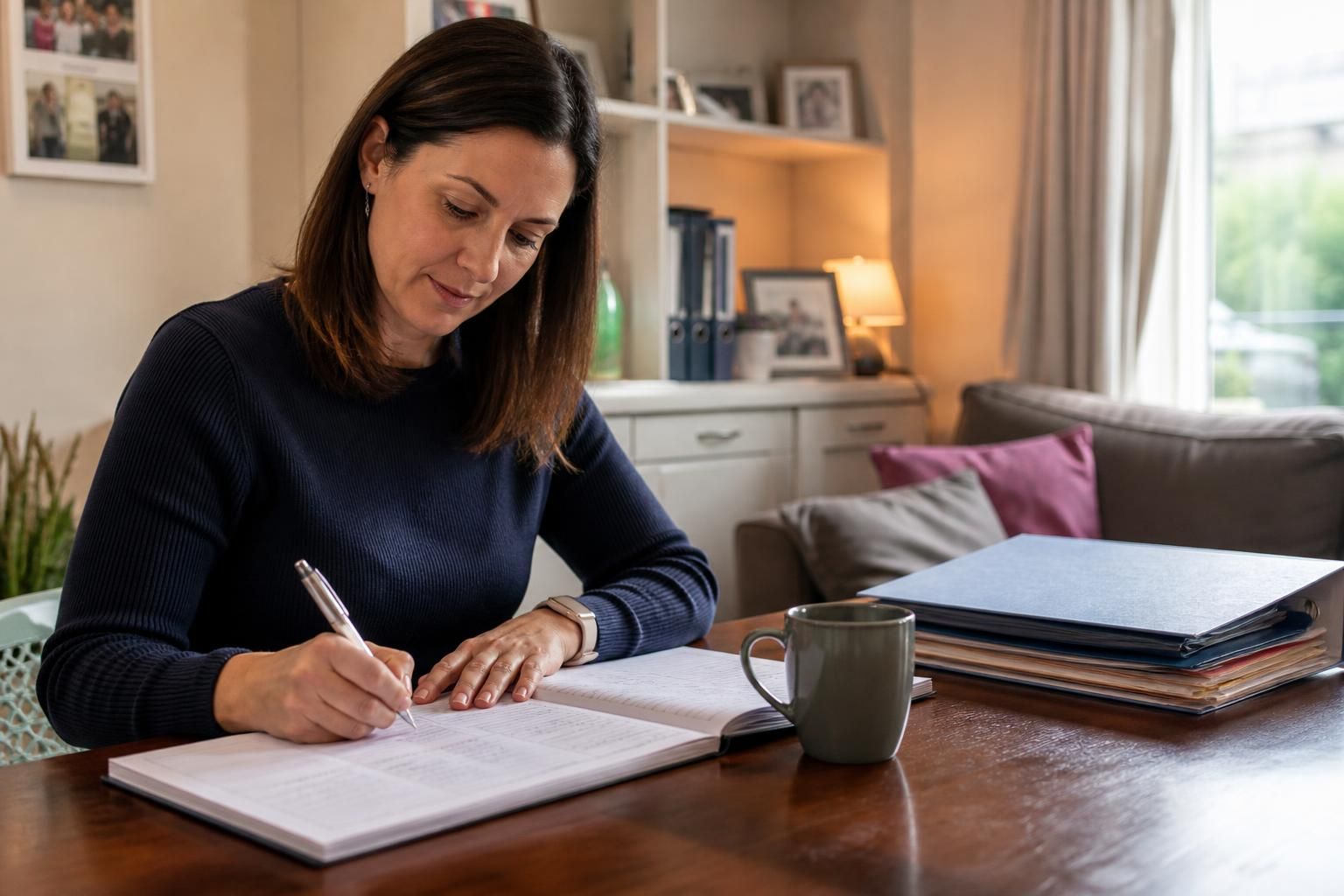
What records do foster carers need to keep?
Foster carers need to keep clear, factual records about a child’s care, including daily observations, significant events, appointments, medication, accidents, incidents and important conversations. Records should be completed promptly, stored securely and shared with the fostering agency or local authority in line with their procedures.
Partnering with an
Ofsted Outstanding Provider
Foster carers usually need to keep an organised record of the child’s day-to-day care, development, health, education, behaviour, relationships and significant events. These records form part of the child’s professional file, help everyone understand what is happening, and provide an accurate account of the care provided.
The exact requirements are set by the fostering service and, in some cases, the child’s local authority. Carers should use the agency’s forms, recording system or guidance rather than creating a separate system that might not meet its standards. During preparation and induction, your supervising social worker should explain what must be recorded, where it should be kept, who can see it and when it should be submitted.
Common areas that records cover include:
- Daily care and routines: relevant information about meals, sleep, personal care, activities, contact arrangements and how the child has presented.
- Health: appointments, advice received, changes in health, emotional wellbeing and any action taken. Medical information should be recorded accurately without attempting to diagnose the child.
- Education: attendance, meetings, communication with school, homework, achievements, concerns and support provided.
- Behaviour and presentation: observable behaviour, possible triggers, what helped and the child’s response. Avoid labels such as “attention-seeking” or “bad” unless you are recording someone else’s exact words.
- Family time and important relationships: arrangements, attendance, the child’s response before and afterwards, and any information that needs to be passed to the social worker.
- Incidents and safeguarding concerns: what happened, who was present, what the child said, immediate action taken and who was informed.
- Progress and achievements: new skills, interests, positive changes and the child’s views about their care and future.
Good records separate observation from interpretation. Write what you saw, heard or were told, rather than presenting an assumption as fact. For example, “Sam remained in their bedroom and did not respond when asked about school” is more useful than “Sam was being difficult”. If you need to offer an opinion, identify it clearly as your view and explain the observations on which it is based. Use the child’s own words where they are important, placing direct words in quotation marks and making clear when you are recording a report from somebody else.
Each entry should normally include the date, time, relevant people, a concise account of what happened and any action that followed. Record events as soon as reasonably possible while the details are clear. If you make a mistake in a paper record, follow the agency’s correction procedure; do not erase the original entry or use correction fluid. Electronic systems may have their own process for amending or adding information, so ask the fostering service before changing a submitted record.
A useful entry answers five practical questions:
- What happened?
- When and where did it happen?
- Who was involved or informed?
- How did the child respond or say they felt?
- What action is needed next?
Records should be professional and respectful. A child may read them in the future, and information may be considered during reviews, assessments, meetings or safeguarding enquiries. Avoid sarcasm, speculation, unnecessary personal detail and criticism of the child, their family or other professionals. A factual record can describe difficult behaviour while still recognising the child’s age, experiences, communication needs and context.
Foster carers also need to record information that affects the safe running of the placement. This may include changes to household arrangements, visitors, transport, delegated permissions, approved activities or instructions from professionals. The purpose is not to document every ordinary household detail, but to create a clear account of matters relevant to the child’s welfare and the agreed care plan.
Confidentiality is essential. Keep paper records in the place and format specified by the fostering service, and protect electronic information with suitable passwords and access controls. Do not leave records where household members or visitors can read them, discuss the child’s information casually, or share photographs and details on social media. Information should be shared only with people who have a legitimate role in the child’s care, using the agency’s approved method. If a document is lost, sent to the wrong person or accessed improperly, report it promptly to the supervising social worker or the person named in the agency’s procedure.
Keep records about different children separate, including where siblings are placed together. Be particularly careful when recording information about birth family members, other children, school staff or members of the public. Include only information that is relevant to the child’s care and follow the fostering service’s instructions about names, initials and secure storage.
Records should support communication, not replace it. A serious incident, safeguarding concern, unexplained injury, allegation, missing episode or significant change in the child’s presentation should be reported through the required route as well as recorded. Do not wait until a routine supervision meeting if the procedure says the matter must be reported immediately. Likewise, tell the supervising social worker when an entry raises a concern that needs professional advice.
At supervision and review meetings, your records can help identify patterns and questions. For example, they may show that a child becomes unsettled after particular types of contact, that a strategy is helping with bedtime, or that an education concern is continuing. Discuss patterns with the professional team rather than drawing firm conclusions from isolated incidents. The child’s views should be included wherever appropriate, in a way that reflects their age, understanding and communication style.
Fostering services have their own arrangements for submitting, storing and retaining records. Follow those arrangements when a placement ends or you stop fostering; do not throw away, copy or keep records for personal use unless the agency has specifically authorised this. If you are unsure whether something needs to be written down, it is sensible to ask your supervising social worker, particularly where the information relates to safety, health, contact, allegations or a change in the placement plan.
Accurate recording becomes easier when it is treated as part of the care routine rather than left until details are forgotten. Use the agreed template, write in plain language, check that actions have been followed up, and review entries for accuracy before submitting them. Your fostering service should provide training and explain its expectations, so ask for clarification whenever a requirement is unclear.

Make records useful to the child as well as the professional team. Use the child’s preferred name and, where relevant, note how they communicate, what helps them feel understood and how they express their views. Record their perspective accurately without pressuring them to speak or presenting an adult’s interpretation as their opinion.
Keep language age-appropriate and respectful. A child may later want to understand what was happening in their life, so records should explain decisions and events clearly rather than relying on professional shorthand. Where the child disagrees with an adult’s account, include that difference fairly and make clear whose view is being recorded.
Learn more about keeping foster care records
If you are considering fostering, speak to Become A Foster Family to ask questions about recording responsibilities and the application process.