
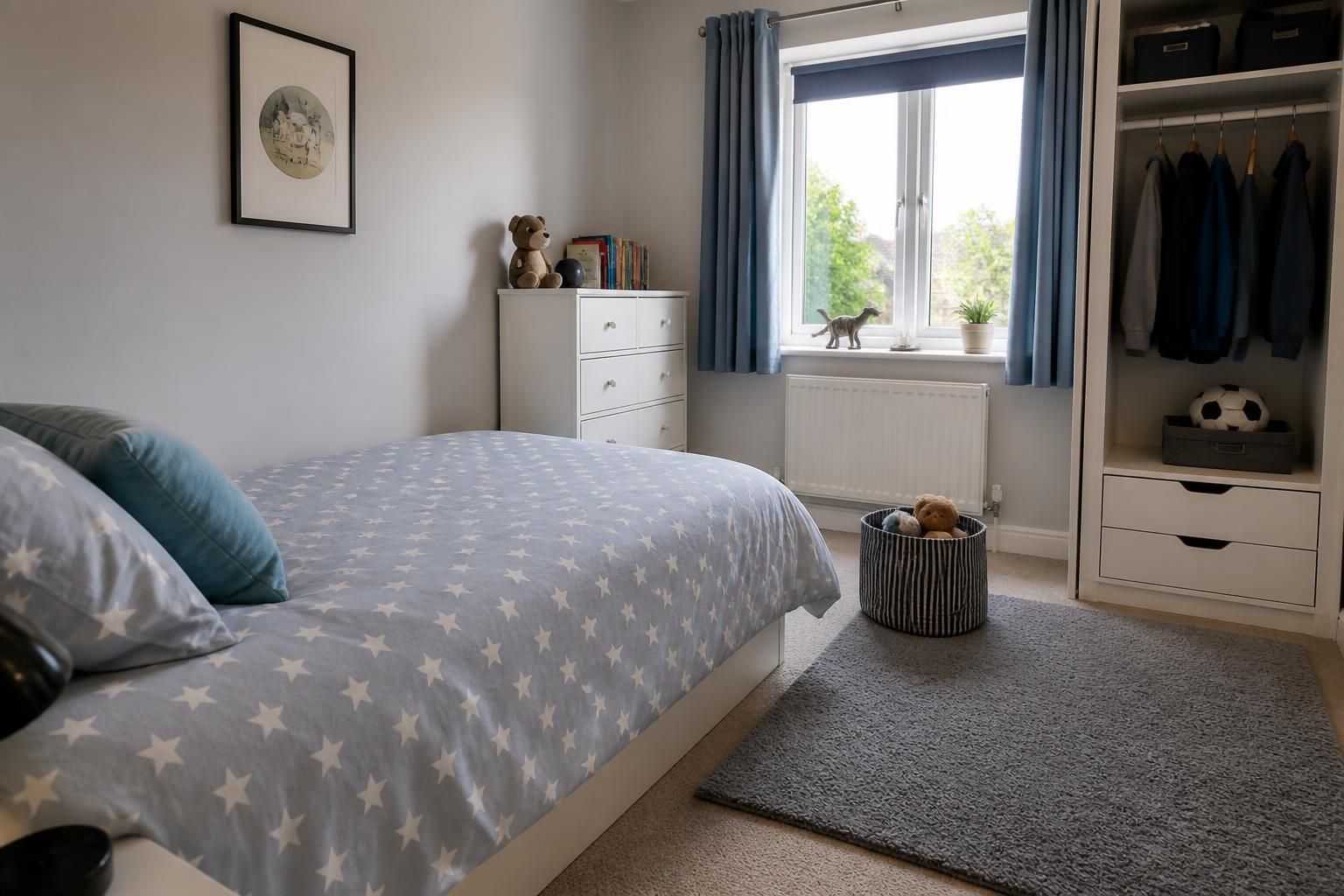
What bedroom requirements apply to a respite foster carer?
A respite foster carer will generally need a suitable bedroom where the child can sleep safely and have personal space; it must not be shared with an adult. The fostering assessment will consider the room’s size, privacy, furnishings, safety and whether sharing with another child is appropriate for the children involved.
Partnering with an
Ofsted Outstanding Provider
Bedroom arrangements for respite fostering are assessed case by case, with the child’s age, needs, relationships and length of stay all taken into account. The proposed arrangement must give the child an appropriate place to sleep, get dressed, keep belongings and have reasonable privacy throughout the placement.
The room should be genuinely available for fostering. A spare bedroom is usually the simplest arrangement, but a room used for another purpose may need to be adapted so that it functions properly as the child’s bedroom during respite stays. It should not be a space that the child must regularly leave so someone else can use it, or a room used as a route to another part of the home.
Furniture and storage matter. The room should contain a suitable bed and enough storage for clothing, toiletries and personal items. Furnishings should be in good condition and appropriate to the child’s age. A child coming for occasional respite may still need somewhere dependable to keep possessions, rather than having to live out of a suitcase or share storage with household members.
Privacy should be considered carefully. The child should be able to change and sleep without unnecessary interruptions. The assessment may look at the position of the bedroom, who is likely to pass through it, whether the door can be closed safely, and whether the child can reach the bathroom without entering private areas of the home. Privacy does not mean that adults should be unable to check on a child where this is needed for their safety.
Safety checks apply to respite arrangements too. Foster carers will need to consider fire safety, safe access and escape, electrical equipment, heating, windows, blind cords and other hazards in or near the bedroom. Medicines, cleaning products, unsuitable devices and other hazardous items should be stored securely. Any safety equipment or arrangement must be suitable for the child’s age and level of understanding.
The bedroom should also be suitable for the individual child. For example, a younger child may need space for a travel cot or other equipment, while an older child may need room for study, sensory items or mobility aids. A child with additional needs may require adaptations, clear access or equipment that affects how the room is arranged. These points should be discussed during the assessment rather than assumed from the room’s size alone.
Sharing a bedroom is not automatically acceptable. If sharing is proposed, the fostering service would need to consider the children’s ages, sex, relationship, personal histories, behaviours and wishes. Siblings may sometimes be considered for shared arrangements, but this still requires assessment. A respite child should not be expected to share simply because the placement is short or occasional. The arrangement must remain safe and appropriate for every child in the room.
A child should not normally share a bedroom with an adult foster carer. If a proposed arrangement falls outside the usual expectations, it would need clear professional consideration and approval; it should never be treated as an informal or last-minute solution.
During the fostering assessment, the assessing social worker will normally discuss the available bedrooms and may inspect the home. They will consider the practical layout, household members, existing children, pets, storage, fire precautions and how the room could be prepared for different respite placements. The outcome may identify which ages or types of placement the household can safely accommodate.
It is sensible to prepare a room that can be made welcoming without making assumptions about a child’s personality or preferences. Neutral decoration, clean bedding, accessible storage and a small amount of clear space can provide flexibility. Before each placement, remove fragile or unsuitable items, check that equipment is secure, and agree what the child may use or bring into the room.
If your home does not currently have a suitable bedroom, discuss this early with the fostering team. They can explain how the space would be considered, whether any changes may be needed and which respite arrangements could be appropriate. A room that is suitable for one child may not be suitable for another, so approval is based on the needs and circumstances identified for each placement.
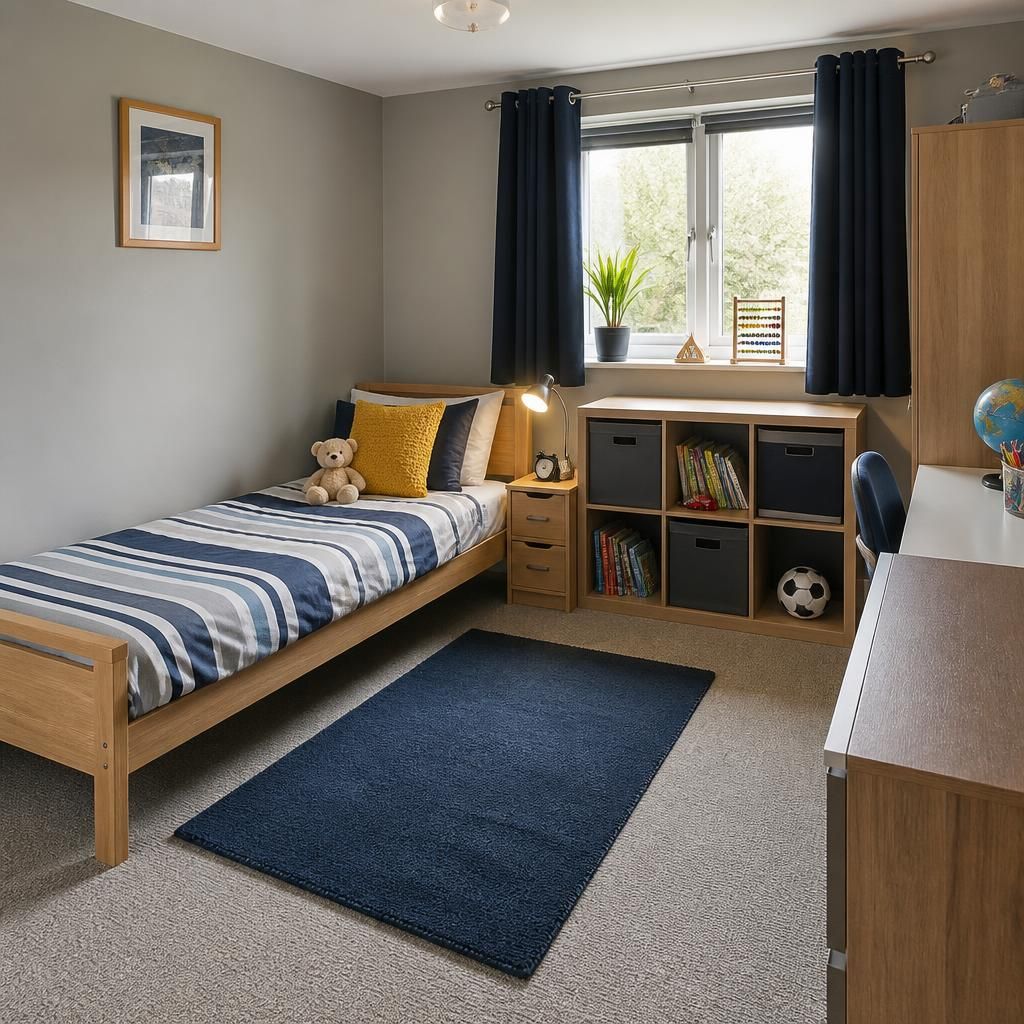
There is no single bedroom measurement that automatically makes a room suitable for respite fostering. The assessment considers how the available space works in practice, including the child’s age, development, mobility and likely equipment needs. A modest, ordinary bedroom may be appropriate if it provides safe, usable space and can be arranged around the child’s needs; a larger room may still need changes if its layout creates hazards or limits privacy.
Bedroom suitability can also influence the type of respite placement a household is approved to accept. For example, the assessing social worker may consider whether the room is appropriate for a younger child, an older child or a child requiring additional equipment. It is therefore more useful to discuss the room’s practical limitations openly than to rely on its dimensions alone.
Discuss your respite foster carer bedroom arrangements
If you are considering respite fostering, contact the Become a Foster Family team to discuss your household and bedroom arrangements. They can explain the next steps in exploring whether your home may be suitable.