

Can foster carers apply for grants towards essential household adaptations?
Foster carers may be able to apply for grants towards essential household adaptations, depending on the child’s needs, the property and the relevant local authority’s eligibility criteria. Become a Foster Family can help you understand what support may be available and how to explore the application process.
Partnering with an
Ofsted Outstanding Provider
Foster carers may be able to obtain grant support for essential household adaptations where changes are needed to meet a child’s disability, health or mobility needs. The main statutory route in England is usually a Disabled Facilities Grant (DFG), administered by the local authority, although other funding may be available through children’s services, the fostering service or charitable organisations. Eligibility is assessed individually and approval is not automatic.
What can count as an essential adaptation?
Grant funding is generally intended for substantial changes that help a disabled child move around the home, use essential facilities or live safely and independently. Depending on the assessment, examples may include:
- adapting a bathroom to make washing and toileting safer;
- improving access into or around the property, such as ramps or widened doorways;
- installing suitable fixed equipment or altering room layouts;
- creating safer access to a bedroom or essential living space; and
- making specified changes to reduce risks arising from the child’s disability or care needs.
Portable items, ordinary household improvements and changes that are mainly for convenience may fall outside a DFG. The adaptation normally needs to be linked directly to the child’s assessed needs rather than simply making the home more comfortable for fostering.
Can a foster child qualify?
A foster child’s placement and anticipated needs can be relevant, but the local authority will decide whether the legal eligibility requirements are met. The council may consider the child’s disability or mobility difficulties, whether the child is expected to live at the property, the suitability of the proposed work and whether the adaptation is necessary and appropriate.
Foster carers should discuss the situation with their supervising social worker before applying. The fostering service may need to confirm the placement arrangements and explain why the adaptation is needed. A council may also consider whether the work is the responsibility of another organisation, such as a landlord or housing provider.
How the application process usually works
- Discuss the need with the fostering team. Explain the child’s difficulties, the risks in the current home and the change being considered. The service may help identify whether the request should be handled through the local authority, children’s services or another funding route.
- Contact the relevant local authority. The council where the property is located normally manages DFG applications. Its housing or adaptations team can explain the local process and required evidence.
- Arrange an assessment. An occupational therapist or another suitably qualified professional may assess the child and recommend specific works. The assessment should focus on essential functions and the least extensive suitable solution.
- Provide supporting information. This may include medical or professional evidence, details of the child’s needs, placement information, proof of ownership or tenancy and landlord consent where applicable.
- Obtain any required quotations or surveys. The council may specify how costs should be estimated and whether planning permission, building regulations approval or other consents are needed.
- Wait for the written decision before starting work. Beginning alterations before funding is formally approved can put assistance at risk. The decision should explain the approved works, conditions and any contribution expected.
What if the property is rented?
Tenants should speak to their landlord or housing provider before making structural alterations. Written consent may be required, and the council may need confirmation that the proposed work is suitable for the property. A landlord may have its own adaptation process or may be expected to carry out certain repairs or improvements.
Is there a means test or contribution?
DFG rules can involve financial assessment, although the way this applies may differ where the person needing the adaptation is a child. The local authority will confirm whether a contribution is required and whose finances are considered. Foster carers should not assume that the fostering allowance will cover major structural work, and should ask for a full explanation of any costs not included in the grant.
Other sources of support
If a DFG is not suitable, the fostering service or local authority may identify another route. Possibilities can include children’s services funding, a council’s discretionary housing or social care budget, equipment supplied following a professional assessment, or a grant from a charitable organisation. These schemes have their own criteria, evidence requirements and application processes, so several routes may need to be explored.
Keep copies of assessments, quotations, approvals, invoices and correspondence. Ask whether the proposed work remains eligible if the child’s placement changes, and clarify who will own, maintain or remove any fixed equipment. Become a Foster Family can help prospective and approved foster carers understand which questions to put to their fostering service and local authority when essential adaptations are being considered.
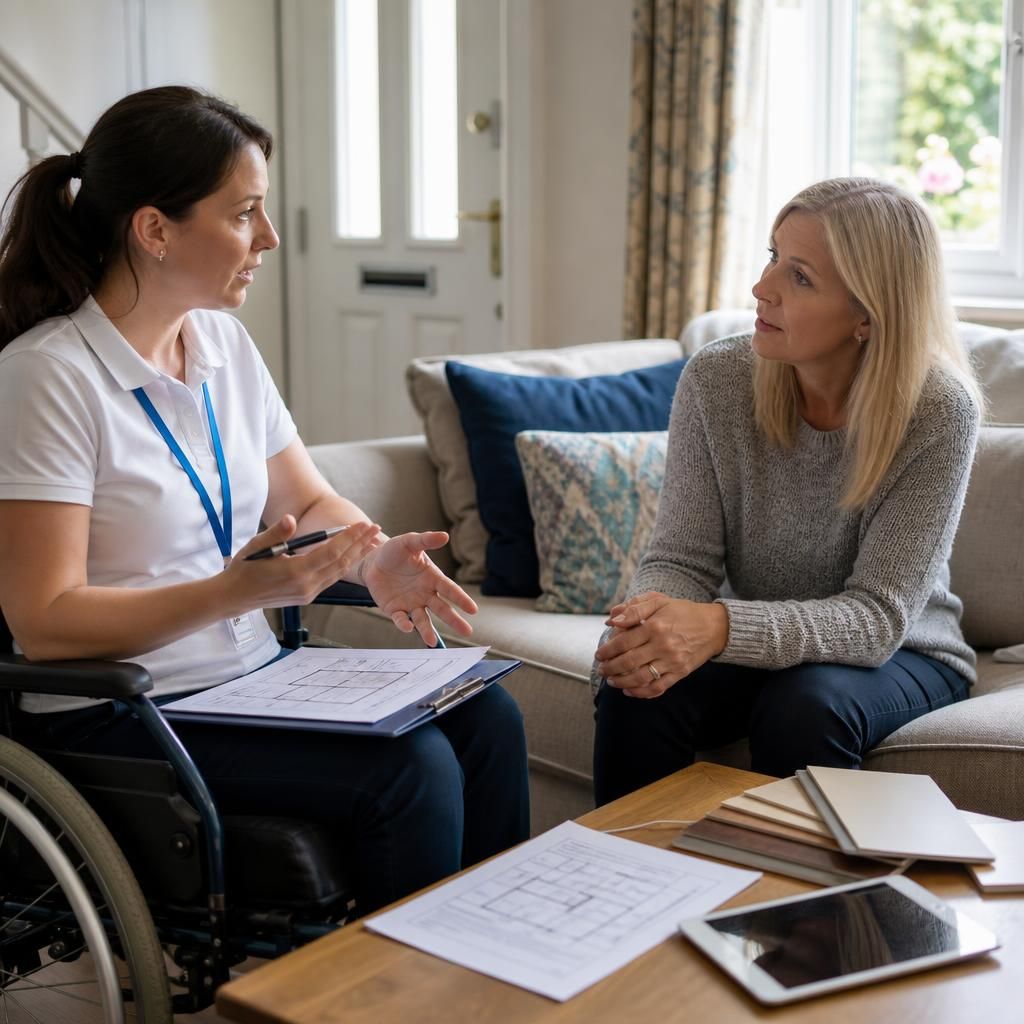
Grant approval does not replace the fostering service’s assessment of whether the adapted home remains suitable for fostering. Before committing to structural work, ask the supervising social worker to review the proposed changes alongside the child’s placement plan.
The finished adaptation should continue to support safe movement, privacy, emergency access and the household’s approved sleeping arrangements. Keep the plans and completion records with the child’s placement documents, as they may help demonstrate how the home meets the child’s needs and remains suitable if arrangements change.
Discuss Essential Adaptation Grants With Our Fostering Team
Speak to our fostering team for guidance on discussing an essential household adaptation with your supervising social worker and local authority. We can help you prepare the key questions and information to take forward.