

Are foster children included in the council tax household count?
Foster children are generally disregarded when a council assesses the household for council tax, so they are not counted as adults in the property. Their placement should not increase the number of liable adults used to calculate the bill, although the council may ask for evidence of the fostering arrangement.
Partnering with an
Ofsted Outstanding Provider
For council tax purposes, a foster child is normally treated as a disregarded person rather than a counted adult. This means the child’s placement should not remove a foster carer’s entitlement to a single-person discount or create an additional adult charge based on the child living in the property.
Council tax is not calculated by charging separately for every person in a home. Instead, the council usually considers how many adults aged 18 or over are counted occupants. Some people are legally disregarded when the council makes this assessment, and foster children fall within the categories that can be disregarded where the placement meets the relevant rules.
This generally means:
- the foster child is not treated as a counted adult for the household assessment;
- a foster placement does not, by itself, end a single-person council tax discount;
- the child’s presence should not increase the council tax bill simply because there is another person living at the address; and
- the foster child is not personally responsible for paying council tax.
The position is separate from the number of people actually living in the home. A foster child may be resident at the property and still be disregarded for council tax. The council’s assessment is therefore not a literal headcount of everyone in the household. It is a calculation based on which residents are legally counted.
The evidence required can vary between councils, but the council may ask for confirmation that the child has been placed with you as part of an approved fostering arrangement. This could include information from the fostering service, the relevant local authority or another organisation involved in making the placement. It is sensible to provide only the information requested and to keep copies of any correspondence.
If you already receive a single-person discount, tell the council about the foster placement if it asks you to confirm who lives at the property. Explain that the additional resident is a foster child and ask the council to record the applicable disregard. If the placement ends, or the child’s status changes, update the council so that its records remain accurate.
Foster children should not be confused with other adults in the household. A partner, lodger or another adult resident may still be counted unless a separate disregard applies to them. The foster child’s disregarded status does not automatically extend to those people, and the council will assess each resident individually.
If the council refuses to apply the disregard, asks for clarification or changes your bill, request a written explanation of the decision. Check that it has understood the placement arrangement and supplied evidence correctly. You can then use the council’s review or appeal process if you believe the household has been assessed incorrectly.
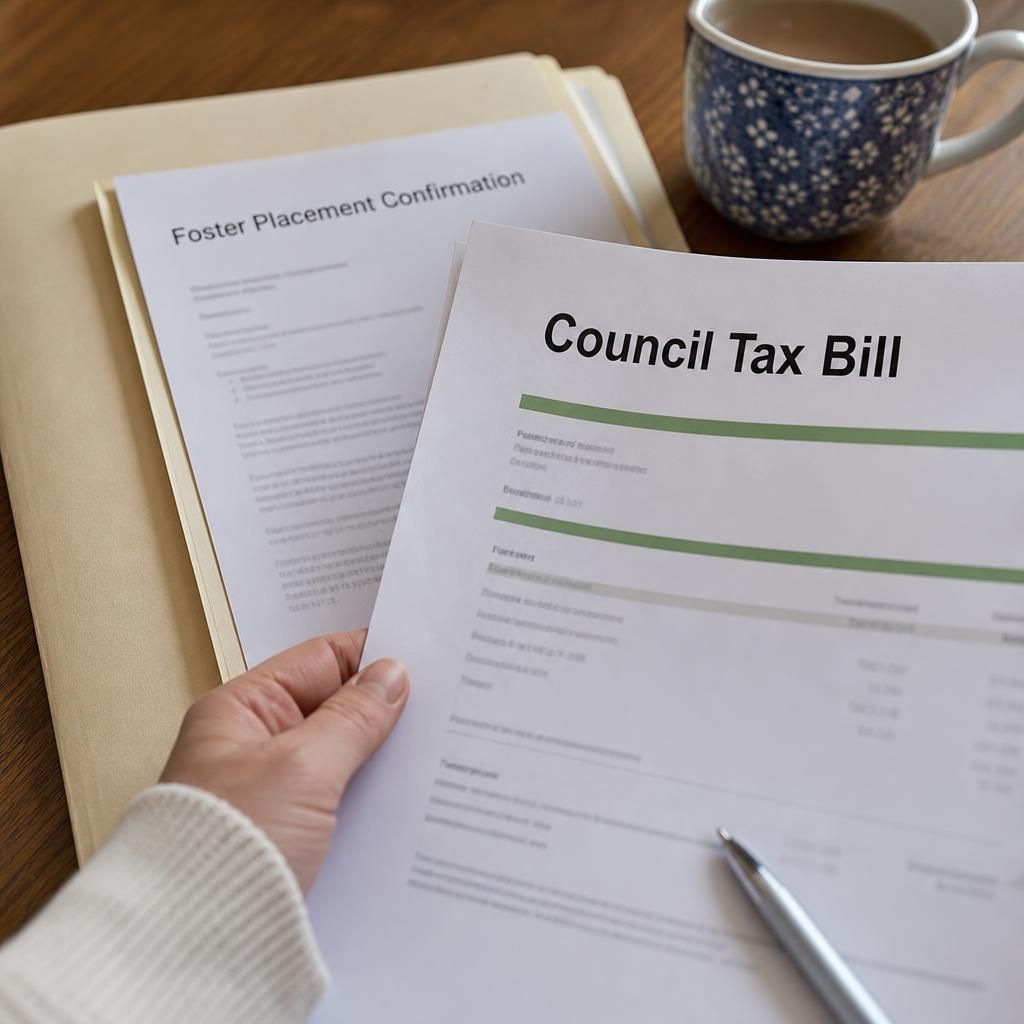
A foster child’s disregard applies to the council tax household assessment, but it is not the same as a full council tax exemption. The council still calculates the charge for the property and considers any other adults who live there. Separate schemes, such as Council Tax Reduction, have their own eligibility rules and may require a separate application.
This distinction matters when checking a bill: the foster child should not be treated as a counted adult, but the disregard does not automatically remove other charges or alter the property’s council tax band.
Speak to our fostering team about council tax
If you need help understanding how your fostering arrangement may be recorded for council tax purposes, speak to our fostering team. We can help you identify the information to discuss with your council and explain the next steps in your fostering journey.