

What records should foster carers keep for pension planning?
Foster carers should keep clear records of fostering allowances received, allowable expenses, tax information and any personal pension contributions. These records can help you understand your self-employed fostering income, check pension affordability and provide useful evidence when reviewing your future pension position.
Partnering with an
Ofsted Outstanding Provider
For pension planning, foster carers should keep a dated record of their fostering-related income, household finances, National Insurance position and all existing pension arrangements. The purpose is to build a reliable picture of what has been paid in, what may be available in retirement and whether future contributions are affordable.
Keep evidence of fostering activity and payments
- Placement start and end dates, including periods between placements.
- Statements or payment records from the fostering agency, local authority or other organisation responsible for payments.
- Details of any changes to payment arrangements, such as a revised fostering agreement or change in the type of placement provided.
- Bank statements or bookkeeping records that allow payments to be matched to the relevant period.
This information can help explain fluctuations in income. Fostering income may not be identical from one year to the next, so a longer record is more useful than relying on a single month or annual figure.
Record your National Insurance position
Keep copies of your National Insurance record and State Pension forecast, and note the dates on which you check them. These documents can show whether there are gaps in your contribution history and help distinguish your State Pension position from any private or workplace pension savings. If information appears to be missing or incorrect, keep copies of correspondence and any evidence submitted to resolve it.
Foster carers should not assume that providing foster care automatically produces the same National Insurance outcome as employment. The position can depend on how the activity is treated and on the individual’s wider circumstances, so specific questions about contributions or gaps should be checked with HM Revenue and Customs or a suitably qualified adviser.
Keep full records for every pension
- Annual statements from personal, workplace and other pension schemes.
- The name of each provider, the type of pension and the date it was opened.
- Contribution dates and amounts, including any periods when payments were increased, reduced or stopped.
- Current fund values, projected benefits and any charges shown on statements.
- Details of pension transfers, provider changes or consolidation decisions.
- Scheme rules relating to access age, benefits and nominated beneficiaries.
Keep the original documents as well as digital copies where possible. Provider statements can change over time, so retaining older statements gives a useful record of how contributions and projected benefits have developed.
Track personal contributions separately
Maintain a simple contribution schedule showing the date, amount and pension receiving each payment. This is particularly helpful where contributions are made irregularly or into more than one arrangement. Keep confirmation of direct debits, standing orders and one-off payments, together with provider receipts or transaction confirmations.
Separating regular payments from occasional contributions makes it easier to review whether the current approach remains manageable when fostering income changes. It also provides an audit trail if a payment is not shown correctly on a pension statement.
Include household and retirement-planning information
Pension decisions should be based on the household’s wider position, not fostering records alone. Keep an up-to-date budget showing regular household commitments, debts, savings and other expected income. It is also useful to record:
- Your intended retirement age or a range of possible retirement dates.
- Any planned changes to fostering, such as reducing placements or stopping altogether.
- Expected state, workplace and personal pension income.
- Major future costs that could affect the amount available for contributions.
- Whether you have made or updated beneficiary nominations.
These records do not predict the final value of a pension, because investment performance, charges, contribution levels and retirement dates can change. They do provide a sound basis for comparing options and identifying questions to raise with a regulated financial adviser.
Organise and review the records
Use one secure paper file or digital folder for fostering payment documents, National Insurance records, pension statements and contribution confirmations. Label each document with the provider, date and type of record. Keep sensitive information protected, particularly pension account numbers and identity documents, and retain records in line with any professional advice about financial and tax documentation.
Review the file at least when a statement arrives, a placement arrangement changes, a contribution is altered or you change fostering agency. A yearly review can also highlight missing statements, outdated beneficiary nominations or a difference between expected and actual payments. If records conflict, contact the relevant provider or public body and keep a note of the response.
Well-organised records cannot guarantee a particular retirement income, but they make pension planning more accurate. They help you understand your current position, identify missing information and discuss realistic choices with a qualified adviser.
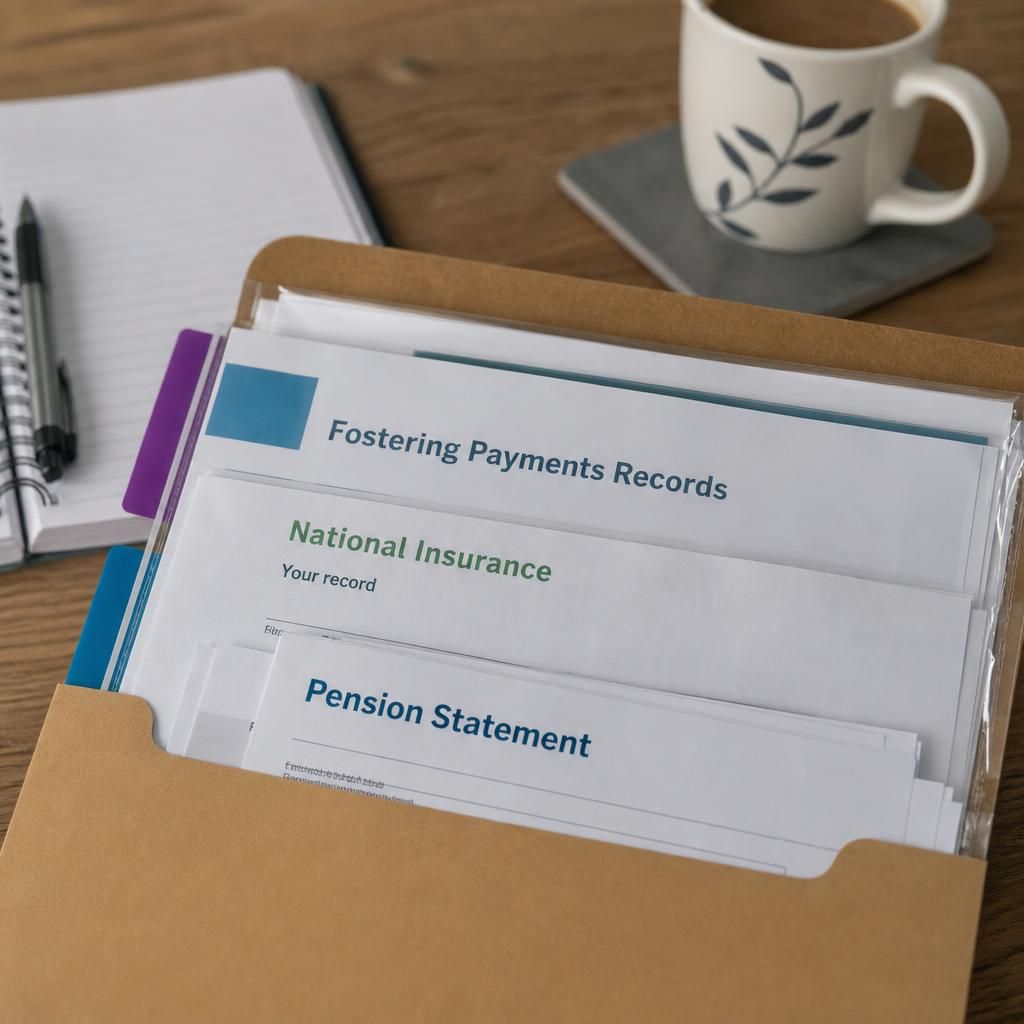
A pension-planning decision log is useful alongside financial statements. It records the reasoning behind each change, so you can review whether your arrangements still reflect your circumstances rather than relying on memory.
- The date and reason for starting, changing or stopping a contribution.
- Questions raised with a pension provider, HM Revenue and Customs or a regulated financial adviser.
- Advice received, including any illustrations, product information or written explanations.
- The options considered and the reasons for the decision made.
- Any assumptions used, such as an intended retirement date or expected change in fostering activity.
Keep notes of follow-up actions and the date they were completed. This creates a clear history of your planning and helps identify when advice or pension information needs to be reviewed.
Explore pension planning guidance for foster carers
If you are considering fostering and want to understand how it may fit alongside your longer-term financial plans, contact Become A Foster Family to discuss your questions. For personal pension recommendations, speak to a regulated financial adviser.