

Can foster carers claim Disability Living Allowance?
Foster carers cannot usually make a new claim for Disability Living Allowance (DLA) for themselves, as DLA is generally for disabled children under 16; disabled adults normally claim Personal Independence Payment instead. A foster child may be eligible for DLA if they meet the relevant disability and care criteria, and receiving it does not automatically prevent them from being fostered.
Partnering with an
Ofsted Outstanding Provider
A foster carer may be able to apply for Disability Living Allowance (DLA) on behalf of a foster child, provided the child’s care or mobility needs meet the relevant rules. DLA is based on the child’s additional needs rather than the fact that they are looked after, and it is not awarded automatically because a child is in foster care.
What DLA is intended to cover
DLA helps with the extra costs of caring for a disabled child. The assessment looks at how much additional help, supervision or care the child needs compared with another child of the same age. Depending on the child’s circumstances, the claim may involve:
- A care component: for substantial additional help with personal care, communication, supervision or staying safe.
- A mobility component: for significant difficulty walking or for severe visual or other mobility-related needs.
The child’s needs must normally have continued for the required qualifying period and be expected to continue. A diagnosis alone does not establish entitlement. The decision-maker considers the practical effect of the condition or disability on the child’s everyday life.
Who should make the claim?
The person who has responsibility for the child’s day-to-day care will usually need to provide the information for the claim. For a foster child, this may require coordination between the foster carer, the fostering service, the child’s social worker and the child’s birth family or person with parental responsibility. The correct arrangement can depend on the court order, the fostering agreement and the local authority’s procedures.
Before submitting a claim, ask the child’s social worker or supervising social worker who is expected to complete it and who will receive correspondence. It is important that the application reflects the child’s actual needs in your household while protecting confidential information and following the agreed care plan.
Information that can support an application
A strong application describes what happens in practice rather than only naming a condition. Useful information may include:
- the help the child needs with washing, dressing, eating, toileting, medication or communication;
- how often supervision is required and what could happen without it;
- night-time support, disrupted sleep or the need for an adult to remain close by;
- support needed when travelling, using public spaces or managing unfamiliar situations;
- mobility difficulties, fatigue, falls or the need for equipment;
- behavioural, sensory or emotional needs where these create substantially more supervision than would usually be expected for the child’s age; and
- reports from health professionals, school staff or other people who understand the child’s needs.
Give examples of difficult days as well as ordinary days, and explain how often the need occurs. Avoid understating the situation because the child manages some tasks independently or has good days.
How a claim may affect fostering arrangements
A DLA claim should be discussed as part of the child’s wider care planning. The information may help the fostering service understand the support, equipment, appointments, transport arrangements or training that could be needed. It can also be relevant when considering whether a proposed placement is suitable and whether the foster carer has the right practical support.
Receiving DLA does not replace the fostering service’s responsibility to assess the placement or provide the agreed fostering allowance and support. DLA is intended to help with disability-related costs and should not be treated as a substitute for payments or services set out in the fostering agreement. How the benefit is administered should be confirmed with the responsible local authority.
Other benefits and changes in circumstances
DLA is not means-tested, but a child’s DLA entitlement can be relevant when checking other support. For example, it may affect whether a carer qualifies for a separate carer-related benefit or additional support under another benefits system. These rules depend on the carer’s circumstances, the child’s award and the arrangement in place, so obtain a benefits check before making assumptions.
Tell the relevant benefits office and the fostering service about changes that could affect the award or the child’s care, such as a change in address, care arrangements, mobility, supervision needs or who looks after the child. Keep copies of the claim, supporting evidence and decision letters, and check any review or renewal date carefully.
If a claim is refused or awarded at a level that does not reflect the child’s needs, read the decision letter and follow the review or appeal process explained there. A foster carer should also speak to the child’s social worker and supervising social worker so that the child’s support plan remains accurate.
For advice specific to a particular placement, discuss the claim with the responsible local authority and the fostering service before applying. They can clarify who has authority to claim, how an award will be managed for the child and what additional practical support may be available.
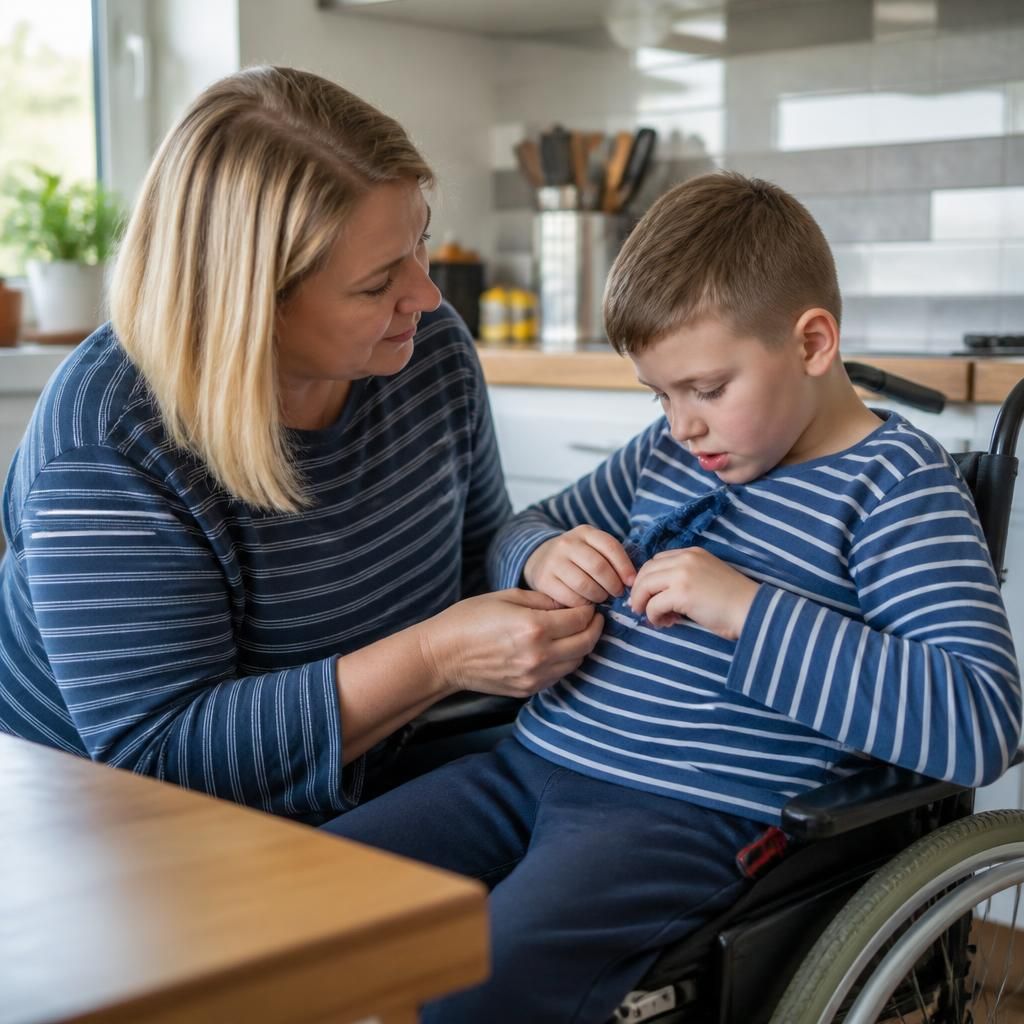
Having a disability does not automatically prevent someone from fostering. If you receive Disability Living Allowance or another disability benefit, the fostering assessment will consider how your condition affects daily activities, mobility, supervision and your ability to meet a child’s needs safely. The focus is on your practical capabilities and the support available, rather than the name of your condition or the fact that you receive a benefit.
Be open about any relevant health needs during the assessment. This allows the fostering service to consider reasonable adjustments, suitable training and whether particular placements would be appropriate. Your own benefit claim and a DLA claim made for a foster child are separate matters, so one does not automatically establish entitlement to the other.
Discuss DLA and fostering with our team
If you need help understanding how DLA may relate to a fostering arrangement, discuss the circumstances with our team before taking the next step. We can help you identify the questions to raise with the responsible local authority and fostering service.