

What training is available for kinship carers?
Training for kinship carers commonly covers safeguarding, children’s needs, trauma and attachment, managing behaviour, legal responsibilities and working with social care. The exact programme depends on the local authority or support organisation, and may include preparation before an arrangement begins alongside further guidance as circumstances develop.
Partnering with an
Ofsted Outstanding Provider
Training for kinship carers is usually provided by the local authority or a specialist kinship support organisation, with content matched to the child’s needs and the legal arrangement in place. It may be offered before the child moves in, during an assessment or approval process, and at later points when circumstances change.
The training available can include:
- Understanding the kinship carer role: what responsibility involves, how it differs from being a parent or family member, and how to work constructively with the child’s parents, social worker, school and other professionals.
- Safer caring and household boundaries: practical guidance on privacy, supervision, visitors, sleeping arrangements, online safety and managing contact between children and adults.
- Supporting identity and relationships: helping children maintain appropriate links with relatives, understand their history and develop a secure sense of identity without placing them in the middle of adult disagreements.
- Health, education and development: recognising unmet needs, communicating with schools and health professionals, attending appointments and advocating for the child.
- Contact arrangements: preparing for visits or other communication with parents and relatives, responding to difficult contact and recording concerns to share with the relevant professional.
- Practical care and emergencies: guidance on first aid, medication, household safety, transport, routines and what to do if the child becomes unwell or there is an immediate safeguarding concern.
- Looking after the carer’s capacity: recognising stress, identifying sources of practical help and planning how other family members will be involved in the arrangement.
Some training is delivered as a group course, while other support may be provided through one-to-one discussions, home visits, online learning, written guidance or meetings with the child’s social worker. A group course can help carers learn from other relatives in similar situations, whereas individual sessions allow questions about the child’s history, behaviour and family circumstances to be considered in more detail.
The legal status of the arrangement affects both the training offered and the responsibilities explained. A kinship foster carer may need preparation linked to fostering approval and the fostering service’s procedures. A special guardian or someone caring for a child under a child arrangements order may receive different guidance, particularly about decision-making, parental responsibility, contact and the support available after the order is made. Informal carers should ask the local authority what advice and safeguarding support they can access, even where no formal order has been made.
Training should not be treated as a one-off requirement. Further guidance may be appropriate when a child’s behaviour changes, contact becomes difficult, a new diagnosis is identified, the child moves school, another child joins the household or the arrangement is reviewed. Ask whether refresher sessions, peer support, a named worker or specialist advice are available after the initial course.
Before attending, it is useful to prepare specific questions about the child’s routines, known triggers, important relationships, education, health needs and plans for contact. Keep copies of training materials and record any agreed actions. If the guidance given is unclear or appears inconsistent with the child’s plan, raise this with the social worker or support service so that responsibilities are confirmed in writing.
Kinship carers in Birmingham, Worcestershire, Staffordshire, Dudley, Sandwell, Herefordshire, Telford, Wolverhampton, Shropshire, Walsall, Warwickshire, Stoke, Solihull, Coventry and Gloucestershire can ask their local authority or regional support provider what training applies to their particular arrangement. The most suitable programme will depend on whether the carer is being assessed, already approved, caring under a court order or providing informal care.
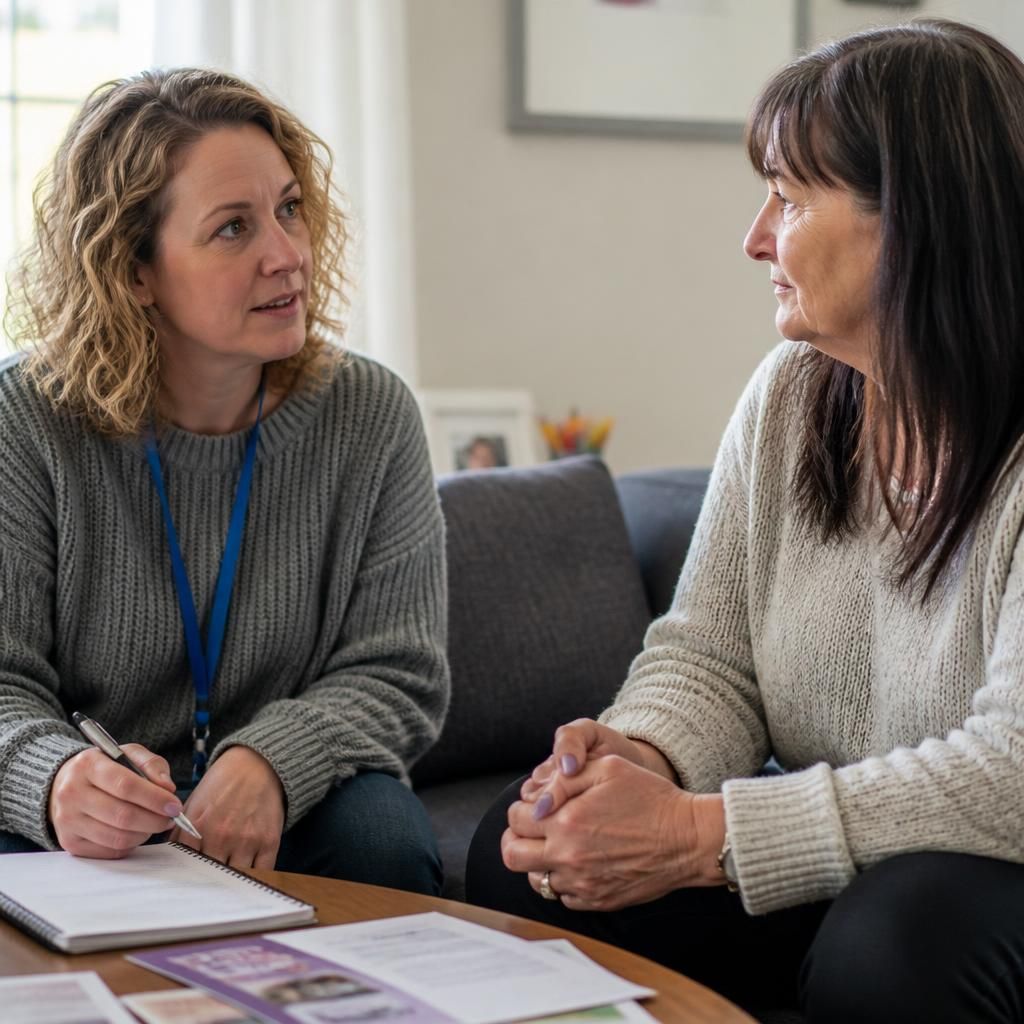
A useful question is whether the training is required, recommended or specialist . Core sessions may explain the responsibilities of caring for a relative, while additional learning could be suggested if the child has particular health, developmental or communication needs. Ask who should attend, whether completion is recorded, and how the learning links to the child’s care plan.
Training should also make clear where a kinship carer’s responsibility ends and when to seek professional help. Carers should not be expected to manage complex health, behavioural or safeguarding concerns without suitable instruction and a clear route to advice. If a session introduces a task that you do not feel able to carry out safely, ask for further explanation or a referral to the appropriate professional before taking it on.
Discuss your kinship carer training options
If you are unsure which training route applies to your kinship care arrangement, speak with our team about your circumstances and the next steps to consider. We can help you prepare questions for your local authority or support provider.