

How is a foster parent plan reviewed during Stage 1?
During Stage 1, your foster parent plan is reviewed with your assessing social worker to check that it is realistic, consistent with the information gathered and suitable for your household. Any missing details or changes are discussed and updated before the assessment progresses to Stage 2.
Partnering with an
Ofsted Outstanding Provider
A foster parent plan is reviewed during Stage 1 as a working record of your suitability, circumstances and preparation for fostering. The review is not simply a check that the document has been completed. Your assessing social worker considers whether the information is clear, consistent and supported by the evidence gathered during the initial assessment.
The review usually takes place through discussions, information checks and the completion of agreed tasks. You may be asked to explain how your household operates, what type of fostering you are considering and how you would manage the practical responsibilities involved. The social worker will also consider whether your expectations match the realities of fostering, including the needs and experiences that children may bring with them.
Areas commonly examined during the review include:
- Reasons for fostering: whether your motivation is clear, considered and focused on providing care for a child or young person.
- Household circumstances: who lives in your home, the relationships within the household and how everyone may be affected by fostering.
- Practical arrangements: sleeping arrangements, work commitments, transport, childcare and the support available to you.
- Health and personal history: information relevant to your ability to care safely and consistently.
- Checks and references: whether required checks and information from referees raise any matters that need clarification.
- Understanding of fostering: your awareness of safeguarding, confidentiality, contact with birth families, behaviour that may challenge and the importance of working with professionals.
The social worker compares your plan with information from your application, conversations, training and checks. If two sources appear different, this does not automatically mean that your assessment cannot continue. You will normally be given an opportunity to explain the difference, correct an error or provide further information. An honest explanation is more useful than trying to present your circumstances in a way that does not reflect everyday life.
You may be asked to revise parts of the plan as your understanding develops. For example, training may lead you to reconsider the age range or type of fostering you initially had in mind. A change in household circumstances may also require practical arrangements to be updated. The document should reflect your current position rather than an earlier version of your plans.
Review discussions can also identify matters that need further assessment. These might include unresolved questions about household support, health, finances, previous experiences, employment arrangements or the impact of fostering on other children in the home. The purpose is to understand the issue properly and consider what evidence or safeguards are needed; it is not to expect every applicant to have an identical household or background.
Keep your own notes of questions, agreed actions and documents still required. Tell the assessing social worker about relevant changes rather than waiting for the next scheduled discussion. Changes may include a new household member, a move of home, a change in employment, a health issue or a change in your availability to foster.
At the end of the review, the information should show whether the Stage 1 requirements have been addressed and whether it is appropriate to move on to Stage 2. Progression is based on the assessment information and the relevant fostering requirements, not on how polished the written plan appears. If more information is needed, your social worker should explain what is outstanding and how it will be considered. Stage 1 therefore provides an opportunity to identify questions early and make sure the later assessment begins with an accurate understanding of your household.
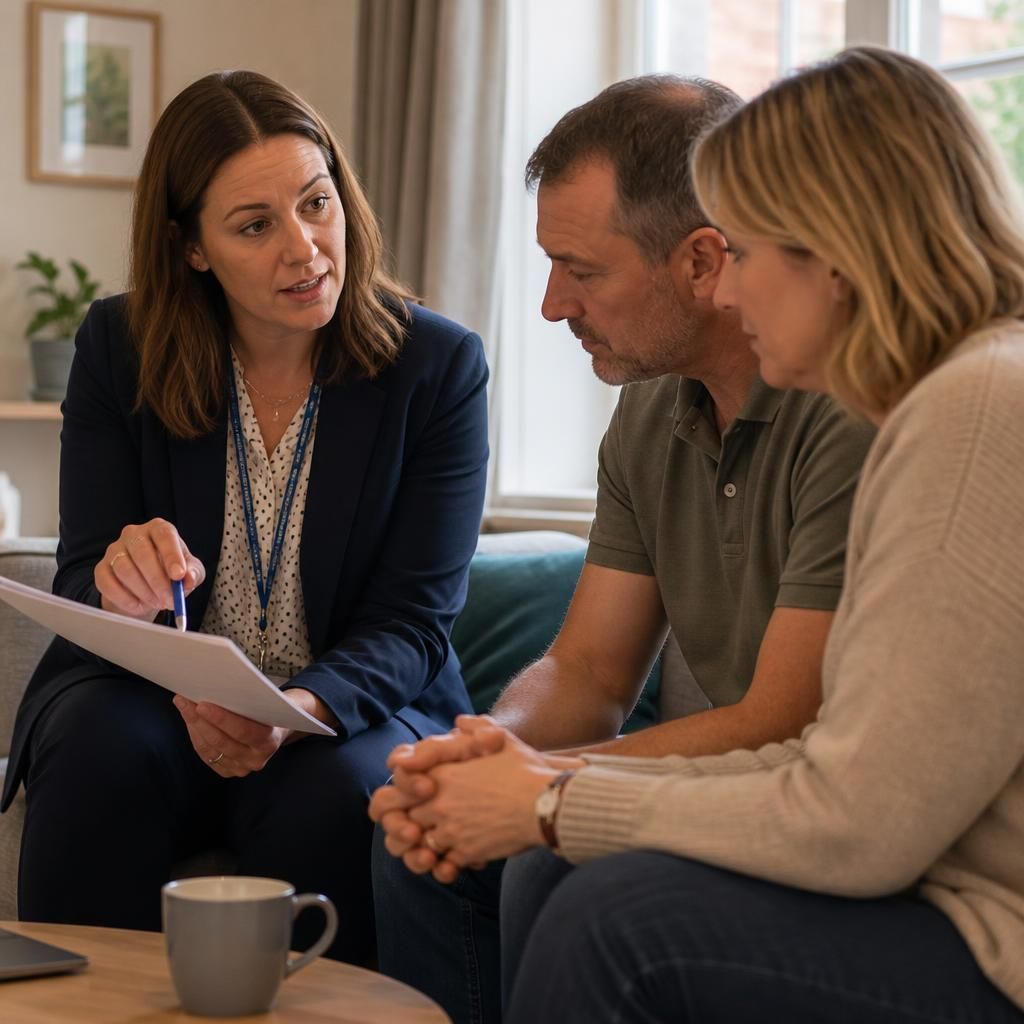
Part of the review may involve discussing practical scenarios rather than asking you to repeat written answers. Your assessing social worker might explore how you would respond if a child became distressed, made an allegation, missed contact with their birth family or displayed behaviour that challenged you. These discussions help show how you apply your understanding of safeguarding, boundaries and professional communication in real situations.
You are not expected to know every answer immediately. The important points are that you recognise when to seek advice, understand your responsibility to share concerns and can explain how you would keep a child safe. Any uncertainty can be identified as a learning need and considered alongside your training and preparation before the assessment moves forward.
Discuss Your Foster Parent Plan Review
If you have questions about reviewing your foster parent plan, speak to our fostering team for guidance on the information and next steps relevant to your assessment.