
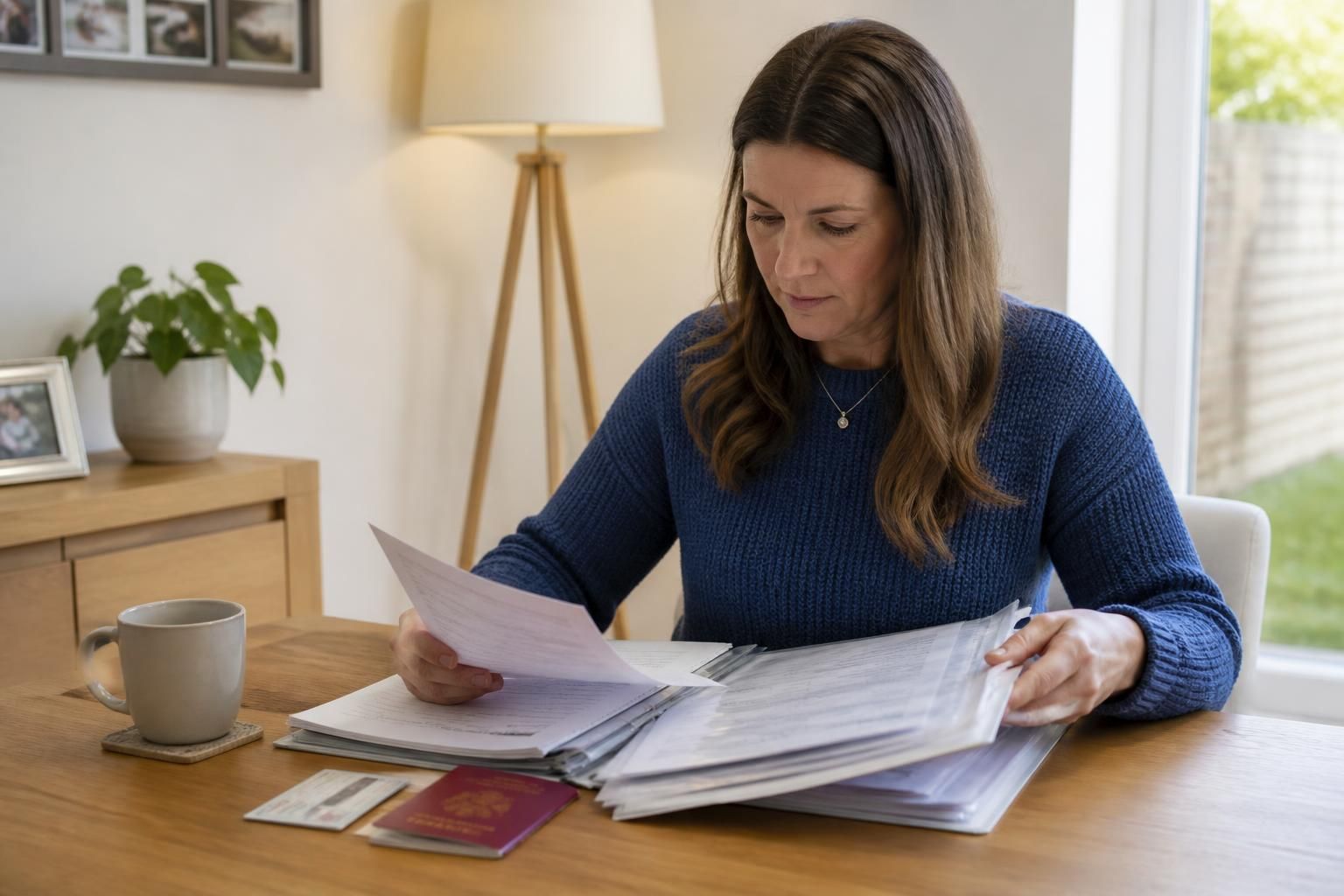
What documents are needed for a foster care assessment?
Documents for a foster care assessment usually include proof of identity, address and household details, along with information needed for background checks, health assessments, finances and personal references. Your assessing social worker will explain exactly what is required and may ask for documents such as passports or birth certificates, proof of address, and relevant medical or legal records.
Partnering with an
Ofsted Outstanding Provider
The documents required for a foster care assessment help the assessing social worker verify your identity, circumstances, health, household, relationships and suitability to foster. The precise list differs according to your situation, the children you hope to care for and the fostering service’s procedures, so you should provide what is requested and ask if you are unsure whether a document is relevant.
Identity and immigration documents
You will normally need suitable evidence for each applicant, such as a current passport, birth certificate or driving licence. Where relevant, the fostering service may also need documents confirming your immigration status or right to live in the UK. Names must be consistent across your paperwork; if your name has changed, you may be asked for a marriage certificate, civil partnership certificate, deed poll or another official record linking the names.
Address and household information
Evidence of your current address may include a council tax statement, utility bill, tenancy agreement, mortgage statement or official correspondence. You may also be asked for details of previous addresses and the people who live in your home. This enables the assessment to consider the household as a whole, including any children, relatives, lodgers or other adults who may have regular contact with a fostered child.
If you rent your property, the fostering service may need confirmation that fostering is permitted under your tenancy agreement. Home ownership or renting does not automatically determine whether you can foster, but the home must be suitable for the type of placement being considered. The assessing social worker will usually discuss bedroom arrangements, safety and available space as part of the assessment.
Information for statutory checks
You will be asked for information that allows the required safeguarding checks to be completed. This can include your full name, previous names, date and place of birth, National Insurance details, address history and details of household members. You may need to complete consent forms before checks can be requested.
Where you have lived outside the UK, additional information may be needed to support checks relating to your time abroad. If you have a criminal record, caution or other relevant history, provide accurate information rather than assuming that it will prevent you from fostering. The assessing social worker will consider the circumstances, relevance and age of the information as part of the overall assessment.
Health assessment paperwork
A medical assessment is normally arranged so that your health can be considered in relation to fostering. You may be asked to complete a health questionnaire and give consent for your GP or another medical professional to provide relevant information. The purpose is not to require perfect health; it is to understand whether any condition, treatment or support need could affect your ability to care safely and consistently for a child.
Tell the assessing social worker about ongoing conditions, medication, mental health support, disabilities and significant past illnesses. Providing accurate information helps the fostering service consider reasonable support and whether any additional medical advice is needed. Do not stop medication or treatment because of the assessment.
Employment and financial information
Fostering services usually ask for a clear picture of your employment, income, regular expenditure and financial commitments. This may involve payslips, benefit statements, tax documents, bank information or other evidence appropriate to your circumstances. If you are self-employed, the service may request accounts or tax records.
This information is used to establish that your household can manage financially and that fostering payments will not be relied upon to resolve serious existing financial difficulties. You do not usually need to be wealthy to foster, but you should be able to meet ordinary household costs and provide for a child without financial pressure affecting their care.
References and personal history
You will normally be asked to nominate people who know you well and can comment meaningfully on your character, relationships, responsibilities and ability to care for children. References may be requested from employers, former employers, relatives or friends, depending on your circumstances and the fostering service’s requirements. Referees should understand that they may be contacted directly and could be invited to speak with the assessing social worker.
The assessment may also ask for information about your childhood, education, relationships, previous caring responsibilities and significant life events. This is not always provided as a single document; it is often discussed during interviews and recorded in the assessment report. Be open about changes in relationships, bereavements, periods of ill health, previous involvement with social care or other matters that may be relevant.
Documents relating to children and other adults
Other adults in the household will generally need to provide information and consent for relevant checks. The fostering service may also need to understand how fostering could affect children already living at home. Their views are considered in an age-appropriate way, and the social worker may ask about school arrangements, routines, privacy and support.
If another adult regularly provides childcare, lives nearby and has frequent unsupervised contact, or is closely involved in the household, the fostering service may ask for further information or checks. The requirement depends on the proposed arrangements and the level of contact with a fostered child.
Additional records in particular circumstances
Further documents may be relevant if you have previously fostered, adopted or cared for children through another service; worked with children; lived overseas; served in the armed forces; been involved in court proceedings; or experienced a significant change in your household. You may also be asked for information about pets, vehicles, insurance or other practical matters where these affect placement planning and safety.
Not every applicant will need to provide every type of document. A single applicant, a couple, a homeowner, a tenant and someone who is self-employed may all receive different requests. The age and needs of the children you are being assessed to care for can also affect what information is relevant.
How to prepare your documents
- Make a list of addresses, jobs and significant dates before completing forms.
- Check that names and dates match across your records.
- Keep copies of anything you submit and record any outstanding items.
- Tell your assessing social worker if a document is unavailable, damaged or held overseas.
- Do not conceal previous names, addresses, convictions, health information or household changes.
- Ask whether an electronic copy, certified copy or original is required before sending anything.
Documents are only one part of the assessment. The assessing social worker will combine the paperwork with interviews, home visits, references, statutory checks, training and observations of your understanding of fostering. If your circumstances change after you submit documents—for example, you move home, change employment, begin a new relationship or experience a significant health change—inform the fostering service so that the assessment remains accurate.
Your information should be handled in line with data protection requirements, and the fostering service should explain how it will be stored and used. If you are unsure why a document has been requested, ask the assessing social worker to explain its purpose and whether an alternative form of evidence is acceptable.

Documents issued outside the UK may require additional verification before they can be used in the assessment. This could include a certified English translation, confirmation of authenticity or further evidence covering periods when you lived overseas. Requirements vary according to the document and the fostering service’s procedures, so do not arrange a translation or certification until your assessing social worker confirms what is needed. Provide the original wording alongside any translation where requested, as this allows the information to be checked accurately.
Get guidance on your fostering assessment documents
If you are unsure which information applies to your circumstances, speak to Become A Foster Family for clear guidance on the next step in your fostering assessment.