
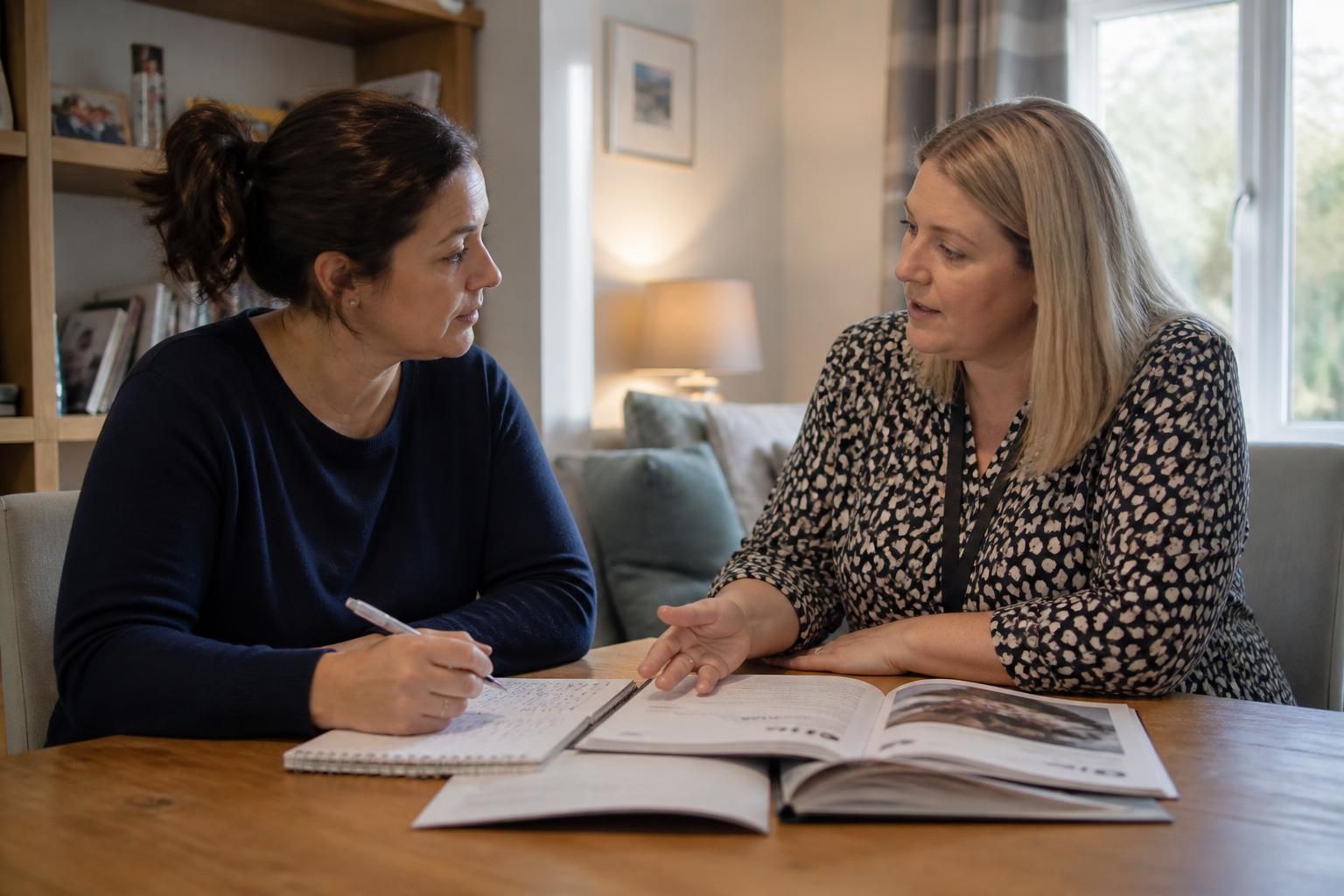
What happens if a foster carer needs extra training hours?
If a foster carer needs extra training hours, their learning needs can be reviewed and additional training or guidance arranged to address them. This may form part of their ongoing development, helping them build the knowledge and confidence required for their fostering role.
Partnering with an
Ofsted Outstanding Provider
Extra training hours are usually agreed when a foster carer’s learning needs go beyond the standard training plan. The supervising social worker or fostering team will discuss what is needed, why it is relevant to the carer’s role, and how it can be completed. The additional learning is normally treated as part of professional development rather than as a sign that the carer is unsuitable.
Additional training may be identified through several routes, including:
- supervision discussions with the supervising social worker;
- reviews of a carer’s development or annual training plan;
- changes in a child’s needs or circumstances;
- new safeguarding, health or care requirements;
- reflection on an incident, concern or placement experience; or
- the carer’s own request for more knowledge or practical guidance.
The subject will depend on the individual circumstances. For example, a carer may need further learning about supporting a child with additional needs, managing behaviour, understanding trauma, promoting identity and relationships, administering medication safely, or responding to safeguarding concerns. The purpose is to make the learning relevant to the children in the household and the responsibilities the carer is undertaking.
The supervising social worker should agree a practical plan with the carer. This may include the training topic, the reason it is required, the preferred format, and any timescale for completion. A carer may be asked to attend a further course, complete an online module, take part in a discussion or workshop, read relevant material, or use supervision to apply the learning to their fostering practice. The most suitable approach will depend on the subject and the carer’s circumstances.
Extra training does not necessarily mean that a carer must repeat every element of their previous preparation. The team can identify the specific gap in knowledge or skill and focus learning on that area. In some cases, additional guidance, observation or reflective discussion may be useful alongside a formal course.
Completion should be discussed with the fostering team and recorded in the carer’s training and development information. This gives the carer and supervising social worker a shared record of what has been completed and what still needs attention. It also provides an opportunity to consider how the learning has been used in day-to-day care.
If a foster carer cannot complete the extra training by the agreed date, they should raise this with their supervising social worker rather than allowing it to remain unresolved. The team can review the reason, consider whether the plan needs adjusting, and identify any interim support or further action. Where training relates to an important safeguarding or care requirement, completion may be treated as a priority before certain responsibilities are undertaken.
Needing extra learning is a normal part of fostering. Children and young people have different histories, needs and risks, so a carer’s development continues after approval. Asking for further training is also appropriate when a carer feels unsure about a situation; it allows concerns to be addressed through planned support rather than leaving the carer to manage alone.
If you are considering fostering, ask the fostering service how it identifies additional learning needs, how training is recorded, and what support is available when a carer needs more than the standard programme. Become A Foster Family supports prospective and approved carers across the West Midlands, including Birmingham, Worcestershire, Staffordshire, Dudley, Sandwell, Herefordshire, Telford, Wolverhampton, Shropshire, Walsall, Warwickshire, Stoke, Solihull, Coventry and Gloucestershire.

There is no universal number of extra training hours that applies to every foster carer. The amount depends on the learning need, the subject and how the training is delivered. For example, a short update may address a specific knowledge gap, while a more involved subject may require a combination of guided learning, reading and discussion.
“Extra hours” should therefore be understood as additional learning time, not necessarily more classroom attendance. A fostering service may count relevant preparation, online study, workshops or supervised reflection as part of the agreed learning activity. The important point is that the training is suitable for the carer’s responsibilities and gives them a clear opportunity to understand and apply the information in practice.
Discuss Your Extra Training Needs
Discuss your extra training needs with Become A Foster Family to understand what learning may be appropriate for your fostering role and how it can be arranged.