

What happens when a foster placement ends?
When a foster placement ends, the child moves to their next agreed arrangement, which may involve returning to their family, moving to another foster home, or transitioning to a permanent placement. The child’s social worker and fostering team should plan the move, share information, and support both the child and foster carers through the transition.
Partnering with an
Ofsted Outstanding Provider
The end of a foster placement is a managed transition, with decisions guided by the child’s care plan, legal status, welfare and relationships. It may be planned as part of the child’s longer-term arrangements, or it may happen sooner if circumstances change and the placement can no longer continue safely or appropriately.
What is considered before the placement ends?
The child’s social worker, fostering service and other relevant professionals should review the reasons for the move and agree what needs to happen next. Depending on the circumstances, this may involve considering:
- the child’s wishes and feelings, taking account of their age and understanding;
- their safety, health, education and emotional wellbeing;
- the stability of their relationships with foster carers, family members, siblings and other important people;
- how much preparation the child needs for the change;
- where meetings, visits or introductions should take place; and
- what information and practical items need to accompany the child.
A planned ending should be discussed with the foster carer as early as possible. The timing and arrangements will depend on the child’s care plan and the legal and professional decisions applying to their circumstances. A foster carer should not end a placement independently without speaking to the child’s social worker or fostering service, except where there is an immediate safety concern requiring urgent action.
How is the child prepared?
Children can experience mixed feelings when a placement ends. They may feel worried about an unfamiliar home, sad about leaving, relieved that uncertainty is ending, or unsure how to respond to adults making decisions about them. Preparation should therefore be appropriate to their age, communication needs and understanding.
Practical preparation can include visits to the next home or placement, introductions to carers and other household members, photographs or written information about the new setting, and clear explanations of what will happen on the day. The child should have opportunities to ask questions and express concerns. Adults should use consistent explanations so the child is not left to make sense of conflicting information.
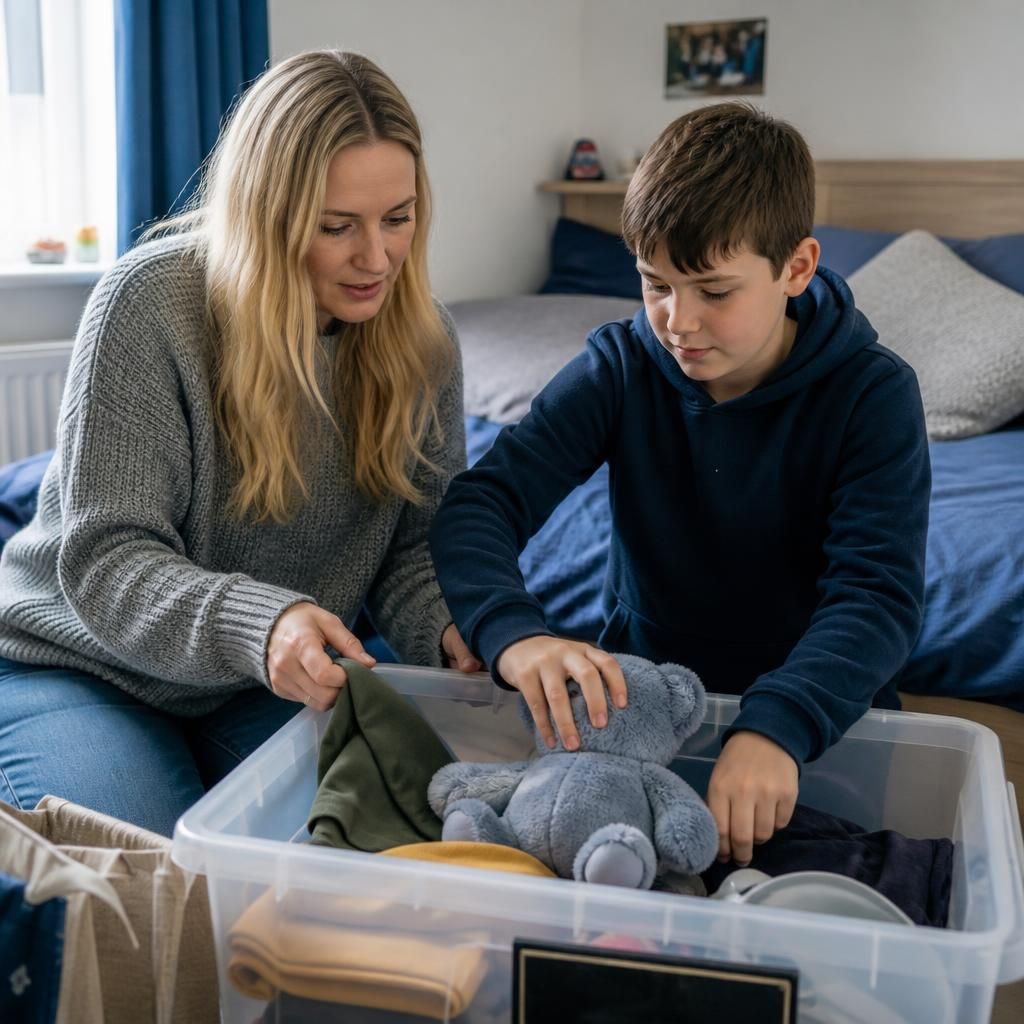
Where appropriate, the child may help choose or pack personal belongings. Familiar items can provide continuity, so clothing, toys, school materials, photographs, medication and important personal documents should be identified and transferred carefully. Information about routines, communication, health needs, education and things that help the child feel settled should also be passed on securely.
What should foster carers do?
Foster carers are usually involved in practical preparation and should follow the agreed transition plan. Useful steps may include:
- talking about the move in a calm and age-appropriate way;
- helping the child organise belongings and personal records;
- sharing relevant routines, preferences, triggers, achievements and support needs with the next carers or professionals;
- supporting agreed introductions, visits and contact arrangements;
- checking that medication, school equipment and essential items are transferred safely; and
- recording significant events, conversations and decisions in line with fostering service requirements.
Foster carers should avoid making promises about future arrangements unless these have been agreed by the responsible professionals. They should also avoid presenting the move as the child’s fault. Clear, neutral language can help the child understand that adults are responsible for the decision.
What happens on the day?
The practical arrangements should be agreed in advance, including who will transport the child, when they will leave, who will accompany them and what information will be shared. The handover should protect the child’s privacy and dignity. It may be helpful to provide a written summary of day-to-day routines, comfort strategies, dietary needs, appointments and school arrangements, alongside the child’s belongings.
The child’s important relationships should be considered separately from the move itself. Any future contact with foster carers, birth family members, siblings or other significant people must be agreed through the appropriate professionals and recorded in the relevant plan. Ongoing contact is not automatic, and foster carers should not arrange it privately where this conflicts with professional decisions or safeguarding requirements.
What support is available after the move?
Foster carers should be offered an opportunity to discuss the ending with their supervising social worker or fostering team. This may include a review or debrief about what went well, what was difficult, the child’s progress and any learning that could help with future placements. The circumstances should be considered carefully if the ending was unexpected, followed a serious incident, or involved concerns about safety or allegations.
Carers may need time to adjust after a child leaves, particularly where the placement has lasted for a significant period or ended abruptly. They should raise any concerns about their own wellbeing, outstanding records, belongings, contact arrangements or household impact with their fostering service. The service can explain what support and follow-up apply to their circumstances.
What happens to records and financial arrangements?
Foster carers must complete and retain records in accordance with their fostering service’s policies. This may include daily notes, incident reports, medication records, school information and details of significant events. Records should be factual, dated and stored securely. The fostering service can explain which documents it needs and how confidential information should be returned or retained.
Payments and allowances are dealt with under the fostering service’s current terms and the circumstances of the placement. The date the child leaves, any agreed notice arrangements and whether further approved tasks are required can affect the position. Foster carers should ask their supervising social worker or finance contact for a clear explanation rather than assuming that payments continue or stop in the same way for every placement.
Can a placement end unexpectedly?
Sometimes a placement ends because of an urgent safeguarding concern, a serious breakdown in relationships, a change in the child’s needs, or circumstances affecting the foster household. The priority in these situations is immediate safety. The responsible professionals should explain the decision, identify where the child will stay next and provide information about any follow-up actions.
An unplanned ending can be particularly difficult for the child and foster carers. It remains important to use respectful language, preserve the child’s belongings and records, and give everyone an opportunity to understand what happened. If a foster carer believes a proposed ending is unsafe or has not been properly explained, they should contact their supervising social worker, the child’s social worker or the relevant manager promptly.
Careful preparation cannot remove all uncertainty from the end of a placement, but it can reduce avoidable disruption. The key aims are to protect the child, keep information accurate and confidential, maintain important relationships where this is agreed, and ensure that both the child and foster carers receive appropriate follow-up.
When a foster placement ends, the foster carer’s approval does not automatically end with it. The carer will usually discuss the placement with their supervising social worker and consider whether they are ready to care for another child, need time before a new placement, or want to review the types of placements that may be suitable.
This discussion can consider the effect of the ending on the household, the carer’s experience, training needs and any changes in circumstances. A further placement should only be considered when the fostering service is satisfied that the household is ready and that a proposed match is appropriate for the child’s needs.
Ask us about your next steps in fostering
If you are considering fostering and want to understand how placement endings may affect your household, speak to our team about your questions and the next steps in the fostering process.