
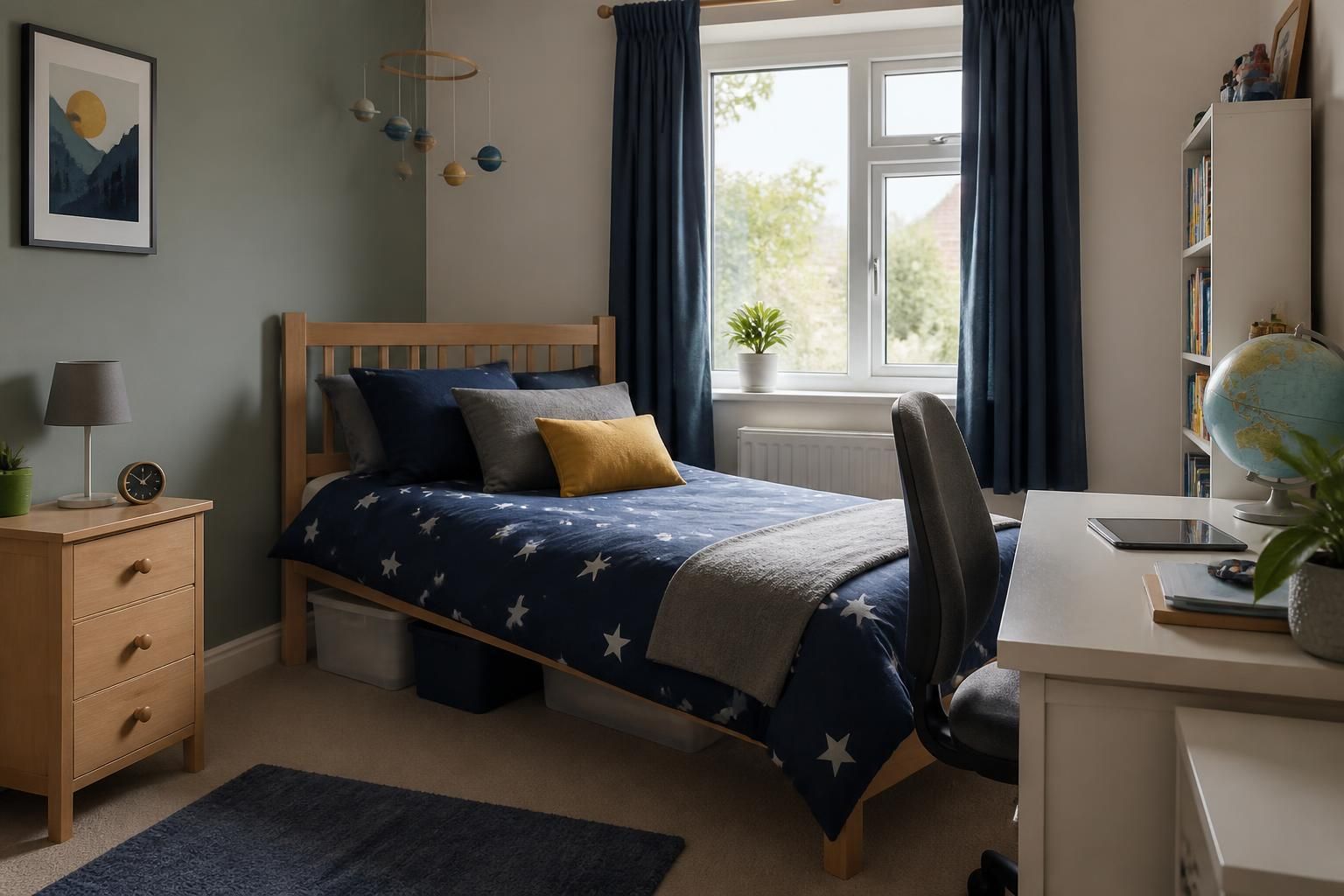
Do I need a spare bedroom to foster?
Usually, yes: a foster child should have their own suitable bedroom, although some sibling or same-sex placements may be able to share, depending on their ages, relationship and individual needs. Your fostering assessment will consider your home and whether the available sleeping arrangements are appropriate for a particular placement.
Partnering with an
Ofsted Outstanding Provider
A home is assessed on whether it can provide safe, private and appropriate sleeping accommodation, rather than simply on whether it contains an unused room. In most applications, a bedroom needs to be available for a foster child, although the suitability of any sharing arrangement is considered individually as part of the assessment and matching process.
The room does not need to be luxurious or specially decorated. It should be a proper, permanent sleeping space that gives the child privacy and somewhere to keep personal belongings. The assessment will usually consider:
- whether the room is large enough for its intended use and is not overcrowded;
- safe access, windows, heating, lighting and ventilation;
- a suitable bed, bedding and furniture for the child’s age and needs;
- space for clothing, school items and other possessions;
- fire safety and the wider safety of the home;
- whether the room is genuinely available to the child, rather than being used as a regular guest room, office or storage area; and
- how the sleeping arrangements affect everyone else in the household.
A child should not be expected to sleep in a living room or another shared family space as a normal arrangement. Temporary arrangements may be discussed in particular circumstances, but the agency must be satisfied that the accommodation is suitable for the proposed placement and meets the child’s needs.
Bedroom sharing is not automatically excluded, but it is never assumed to be appropriate. The child’s age, sex, relationship with another child, history, behaviour, routines, emotional needs and any risk factors may all be relevant. Siblings may sometimes share, for example, but keeping them together still has to be compatible with their welfare. A proposed arrangement can be unsuitable even when two children know each other, so the decision is made on the information available about that specific placement.
Your own children and other household members are included in the assessment. Their views, privacy and safety matter, as does the effect that fostering could have on family life. The agency will consider the number of people living in the property, which rooms are available, whether anyone has additional needs and whether the household could manage a child’s arrival without creating unsafe or impractical conditions.
You can still make an initial enquiry if your accommodation is changing or your current room arrangement is not yet final. For example, you may be moving home, converting a suitable room or waiting for another household member to move out. Be open about the position at the start. The assessment can then establish what would need to change before approval and which types of placement might be realistic.
If you rent your home, check your tenancy agreement and speak to your landlord where permission is needed. Housing rules, licensing conditions or occupancy limits may affect whether a child can be accommodated. If you own your home, the agency will still assess the property’s condition and layout. A room being legally available does not, by itself, make it suitable for fostering.
The home assessment is only one part of the fostering process. Alongside accommodation, the agency considers your motivation, health, household circumstances, safeguarding understanding, references, criminal record checks and ability to work with professionals. You will also complete preparation training and take part in a detailed assessment before a decision is made about approval.
Approval is linked to the kind of fostering you can safely provide, so the bedroom arrangement may affect the age range, number of children or type of placement considered. It is important not to assume that having an empty room means every placement will be suitable, or that not having a completely empty room means fostering is impossible. A local fostering team can discuss your layout confidentially, explain what would need to be in place and help you understand the practical requirements before you apply.
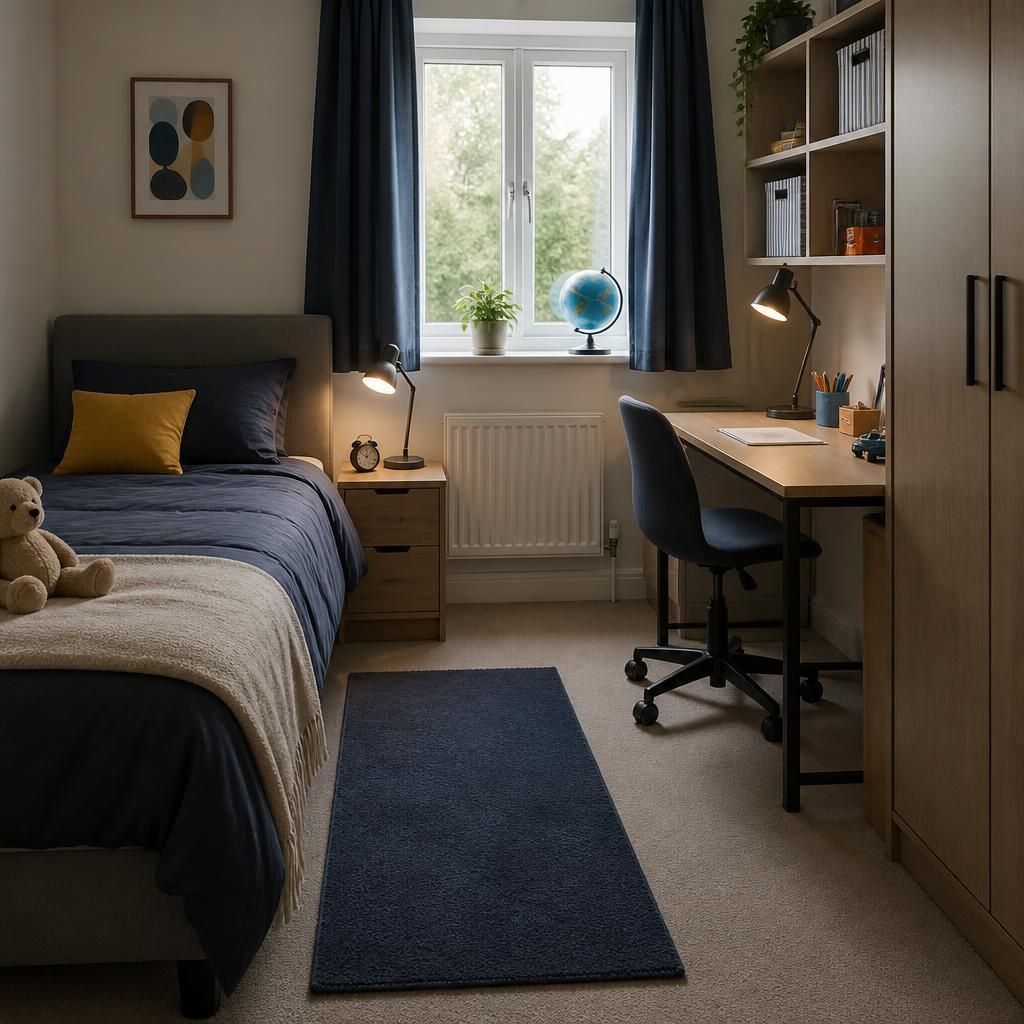
A bedroom arrangement that is suitable for one foster placement may not be suitable for the next. Matching decisions are reviewed for each child, so a layout accepted for a particular sibling group or age range does not automatically mean that the same arrangement will work for every future placement.
This is why foster carers should keep the agency informed if household circumstances change, such as a child moving into or out of the home, a change in room use, or a significant alteration to the property. The available sleeping arrangements can then be considered again alongside the needs of any proposed placement.
Discuss Your Bedroom Requirements
If you are unsure whether your current accommodation is suitable, speak to our fostering team about your bedroom arrangements and the next steps for making an initial enquiry.