
What bedroom requirements apply to foster carers in Coventry and Solihull?
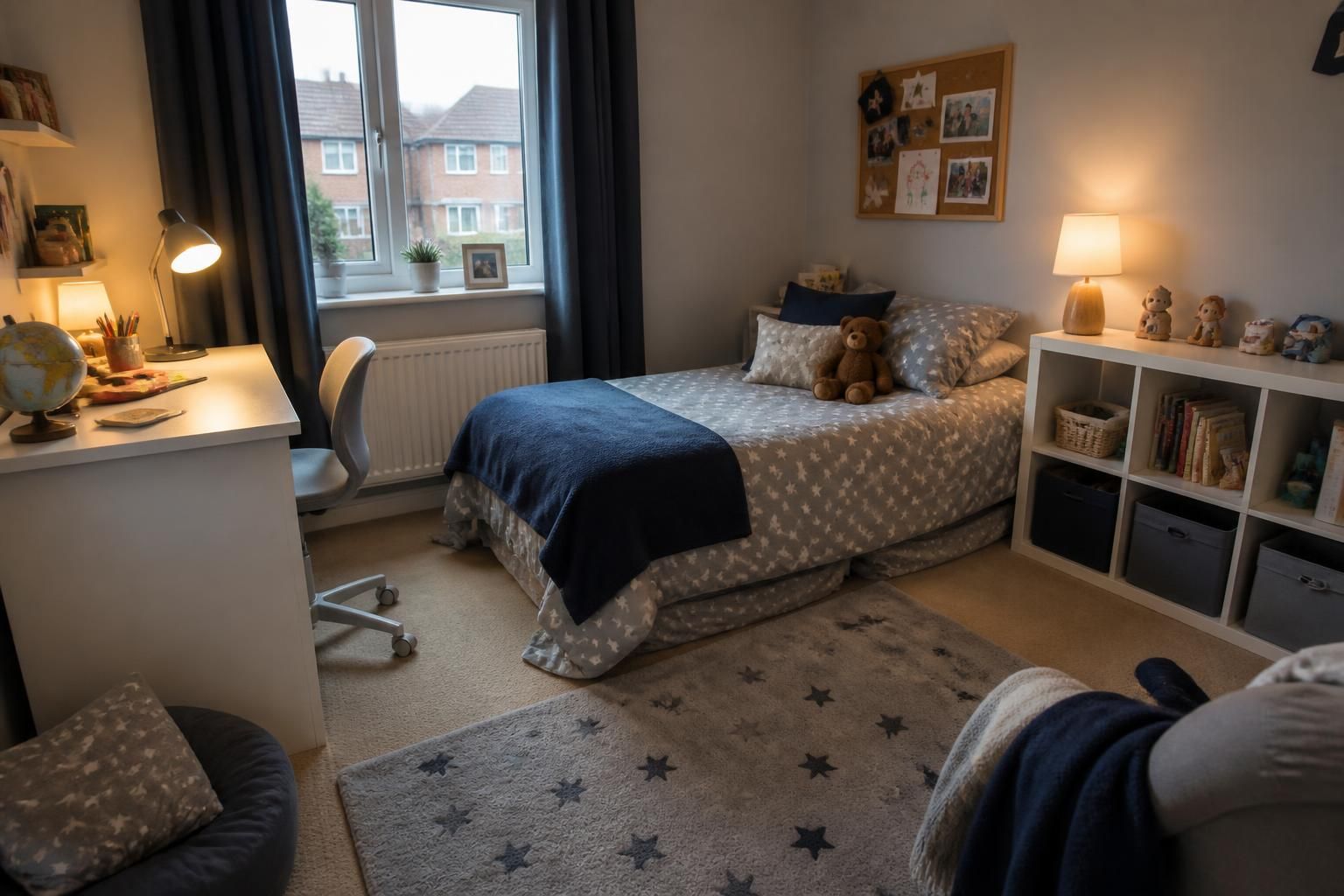
Foster children will usually need their own bedroom, with sufficient space, privacy and suitable furnishings for their age and needs. The room must be safe, clean and suitable for sleeping, studying and storing belongings, and the fostering assessment will consider who else lives in the home and whether any proposed sharing arrangement is appropriate.
Partnering with an
Ofsted Outstanding Provider
Foster carers will generally need to provide a separate bedroom for each foster child. The room must be suitable for the child’s age, development and individual circumstances, and the fostering assessment will consider whether the proposed arrangement meets safety, privacy and care-planning requirements.
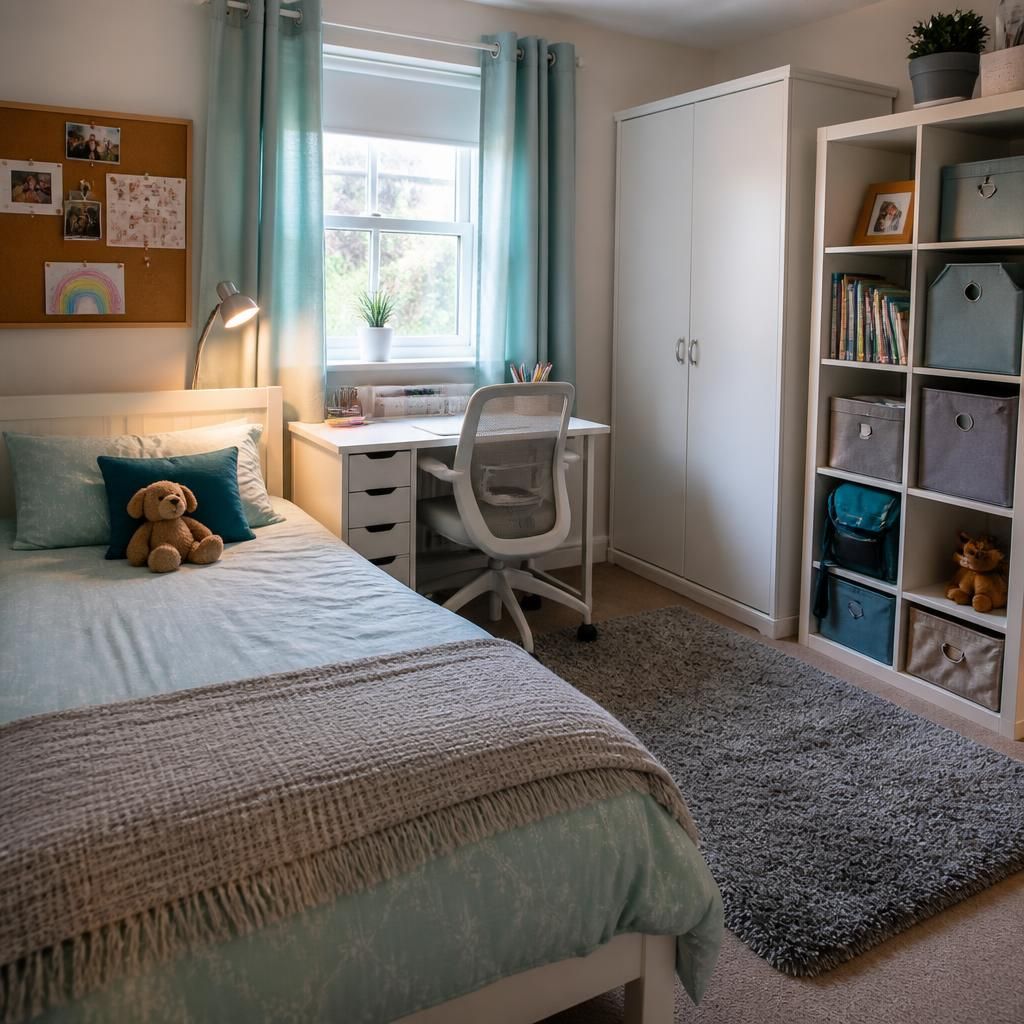
The bedroom does not need to be large or specially designed, but it should be a permanent, usable room rather than a temporary sleeping space. Assessors will usually consider:
- whether the room has enough floor space for the child to sleep, dress and move around safely;
- whether there is appropriate furniture, including a suitable bed and space for clothing and personal belongings;
- whether the child can have reasonable privacy and a sense that the room is their own;
- whether the room is adequately heated, ventilated and naturally lit;
- whether windows, doors, stairs and other features are safe; and
- whether the room is suitable for the child’s age, mobility, health and any additional needs.
A spare room may be used for fostering, but it must be available for the foster child’s use and not routinely double as an office, storage area or another person’s bedroom. Some flexibility may be possible where furniture or equipment needs to be adapted for a particular child, but this would be discussed as part of the assessment and placement planning.
Bedroom sharing is considered carefully rather than assumed to be acceptable. Foster children would not normally share a bedroom with the foster carer’s own children. Sharing between foster children, particularly siblings, may sometimes be considered if it is appropriate for their ages, relationships, wishes and needs. The fostering service will also consider whether either child has experienced abuse, trauma, disrupted sleep or other circumstances that make sharing unsuitable.
Any proposed sharing arrangement must protect each child’s privacy and safety. Factors may include the children’s gender, age, behaviour, communication needs, personal history and ability to understand boundaries. An arrangement that appears suitable initially may need to change if the children’s needs or circumstances change.
It is important to tell the assessing social worker about everyone who uses the home and how each bedroom is currently used. This includes children who stay regularly, adult household members, lodgers and relatives who may visit for extended periods. The assessment is concerned with the practical reality of the home, not simply the number of bedrooms shown on its plans.
Fire safety is also part of the home assessment. This can include checking escape routes, smoke detection, heating appliances, electrical safety and the position of beds and furniture. A bedroom may need changes if it creates a difficulty in evacuating safely or if the child’s age or mobility means they need additional precautions. The exact recommendations will depend on the property and the child being considered.
Children should usually be involved, in an age-appropriate way, in decisions about their room and personal space. Their views may be relevant when deciding on decoration, storage, sleeping arrangements and whether a proposed room share feels acceptable. Foster carers should be prepared to make reasonable changes so that a child can settle into the home and use the room safely.
If you do not currently have an empty bedroom, this does not always end the conversation, but it may limit the types of fostering placement that can be considered. The fostering service will explain whether an arrangement involving a younger child, siblings or another approved exception could be assessed. You should not make assumptions about this before discussing the household’s circumstances with the assessing team.
Before approval, the fostering assessment will look at the bedroom alongside the wider household, property and safeguarding arrangements. If improvements are needed, these should be identified before a child is placed. Keeping the assessing social worker informed about any later house move, room change or change in household membership is also important, because the suitability of the bedroom may need to be reviewed.
If you rent your home, the bedroom may also need to meet the terms of your tenancy. Check whether your landlord’s permission is required before proceeding with fostering, particularly if the agreement restricts who can live in the property or how rooms are used. The assessing social worker can explain what evidence may be needed and whether any proposed changes to the room require approval.
It is best to raise this early rather than making alterations or buying furniture before the assessment has considered the property and the type of placement being proposed. Any room used for fostering should be available on a stable basis, so temporary accommodation or a tenancy that may end shortly could affect how its suitability is considered.
Find out whether your bedroom meets fostering requirements
Want to understand how your home may be assessed? Speak to our fostering team about your household and bedroom arrangements, and find out what the next step involves.