
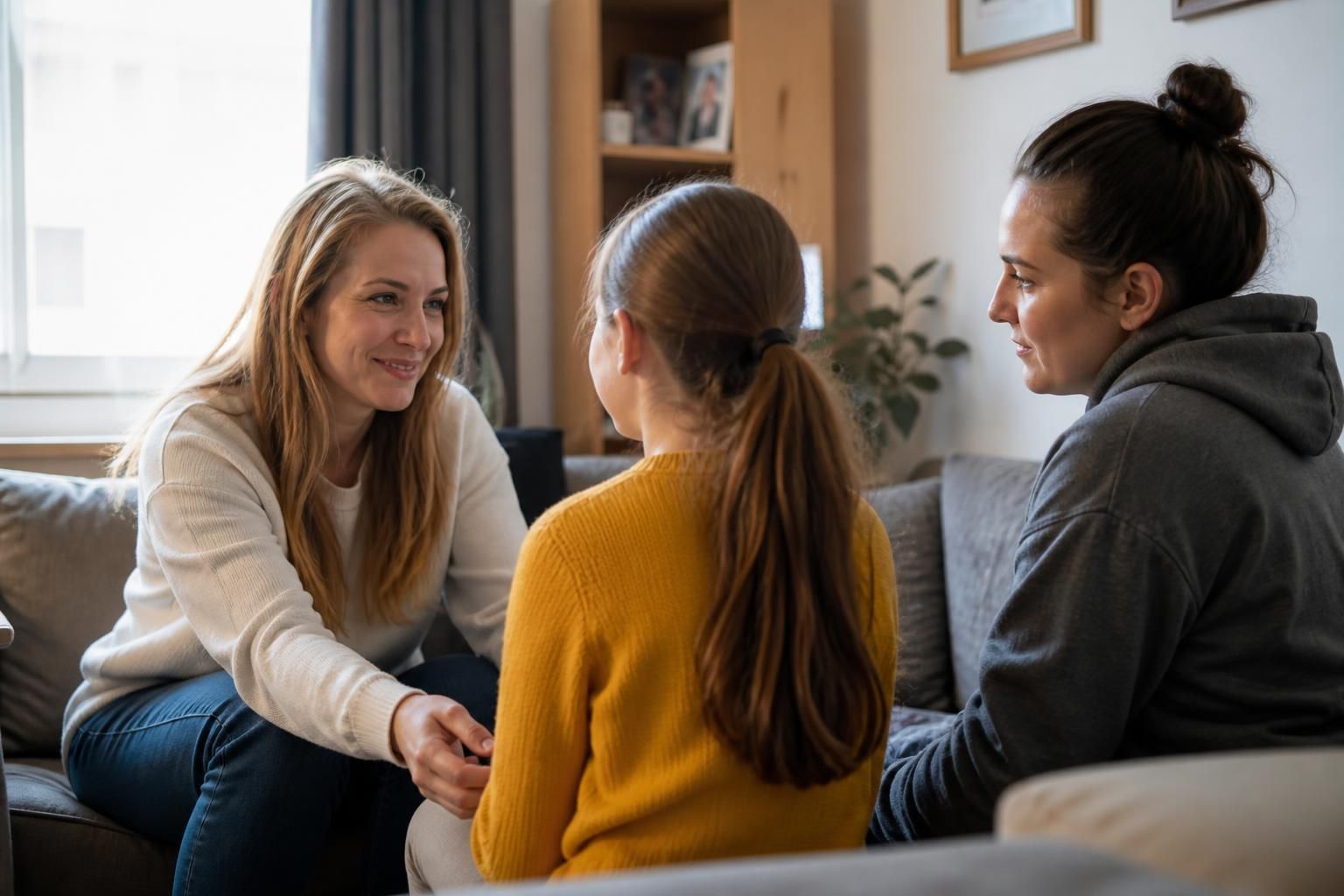
How does a Bedworth fostering agency support contact with a child’s birth family?
A Bedworth fostering agency supports contact with a child’s birth family by helping plan safe, child-centred arrangements, guiding foster carers before and after contact, and reviewing how the arrangements are working. It works with the child’s social worker, birth family and other professionals to ensure contact reflects the child’s needs, wishes and legal care plan.
Partnering with an
Ofsted Outstanding Provider
A Bedworth fostering agency supports birth family contact by helping foster carers follow the child’s agreed care plan, understand their responsibilities and respond appropriately to what happens before, during and after family time. The arrangement may involve parents, siblings, grandparents or other important relatives, and must balance the child’s relationships and identity with their safety, welfare and emotional needs.
The local authority remains responsible for the child’s care plan. Contact arrangements may also be influenced by a court order, the child’s legal status, safeguarding information and the views of those with parental responsibility. Foster carers should therefore not agree to permanent changes, additional visits or private communication independently. The fostering agency can help carers understand what has been authorised and make sure any concerns are passed to the child’s social worker.
Before contact begins, the agency may help the foster carer understand:
- who the child is expected to see and the purpose of the contact;
- where contact will take place and who will supervise it;
- how the child will travel to and from the venue;
- what information can be shared with family members;
- how gifts, photographs, phone calls, letters or online messages should be managed;
- what to do if a family member does not attend, arrives unexpectedly or behaves in a way that concerns the carer; and
- which professional should be contacted if the child becomes distressed or the arrangement no longer appears suitable.
Contact can take different forms. It may be face-to-face, supervised, indirect, by telephone or through written communication, depending on the child’s circumstances. Supervision is not intended to make ordinary family interaction feel formal; it provides a way to observe the contact and manage identified risks. The agency should ensure that foster carers know the practical boundaries, including whether they are expected to remain present and what information the supervising adult must record.
Foster carers have an important role in preparing the child. They can explain what is going to happen in language suited to the child’s age and understanding, help them take a familiar comfort item where appropriate, and avoid making promises about what a birth family member may say or do. Children may feel excited, worried, angry or unsettled about contact, sometimes showing this through changes in behaviour rather than words. A carer should listen without interrogating the child, avoid criticising family members and pass relevant observations to the social worker or supervising professional.
After contact, the agency can help the carer distinguish between a normal emotional reaction and a safeguarding concern. Useful information may include whether the child appeared comfortable, whether the agreed arrangements were followed, what the child said spontaneously and whether there were changes in sleep, mood or behaviour afterwards. Records should be factual, dated and free from assumptions. A carer should record the child’s own words accurately where these are important, while avoiding leading questions.
Any immediate safeguarding concern should be reported through the agreed procedure rather than dealt with informally. Examples include an unauthorised adult attending, an attempt to remove the child, threats, pressure on the child to keep secrets, inappropriate gifts or messages, discussion of confidential information, or a child disclosing harm. The foster carer should follow the instructions in the safer caring and placement plans and contact the relevant social worker or emergency safeguarding route identified for the placement.
The child’s views should inform decisions about contact. Their wishes are considered alongside their age, understanding, development, safety and wider care plan. A child does not carry responsibility for deciding whether contact is safe, but their experience can show that an arrangement needs further assessment. For example, repeated distress before visits, unexplained reluctance to attend or significant difficulties afterwards should be shared with professionals rather than dismissed or treated as proof of one particular cause.
The agency may also help manage communication between the foster carer and birth family. This can include explaining appropriate boundaries, protecting the carer’s personal information, agreeing how updates about the child are shared and supporting respectful communication when views differ. Foster carers should not discuss confidential details about other children, the placement address or professional decisions unless they have been authorised to do so.
Contact arrangements are not necessarily fixed for the entire placement. They can be reviewed when the child’s needs, risk assessment, legal circumstances or relationships change. Foster carers should provide balanced feedback: contact may be positive even when a child needs reassurance afterwards, and a difficult session may require investigation without automatically ending the relationship. The agency’s role is to help ensure concerns, progress and the child’s voice are communicated clearly so that the responsible professionals can make informed decisions.
For someone considering fostering in Bedworth, the key point is that you would not be expected to manage complex birth family contact without guidance. Training, placement-specific information and support should explain the agreed process, your boundaries and how to raise concerns. Before accepting a placement, ask who will supervise contact, how travel is arranged, what records are required and which professional you should contact if the plan becomes unsuitable.

Birth family contact can include brothers and sisters who live elsewhere. A fostering agency can help the foster carer understand how sibling relationships fit into the child’s care plan and what practical arrangements have been agreed. This may involve sharing relevant information with the child’s social worker, preparing the child for differences between sibling visits and parental contact, and recording how the child experiences those relationships.
Sibling contact may be particularly important when brothers and sisters are living in different placements. The agency can support carers to keep arrangements focused on the children’s needs rather than on disagreements between adults. If a child’s circumstances change, or contact becomes difficult to manage, the carer should provide clear observations so the responsible professionals can review the plan and decide whether adjustments are needed.
Ask About Birth Family Contact in Fostering
If you are considering fostering in Bedworth, speak to our fostering team about how birth family contact is planned and what support foster carers receive.