
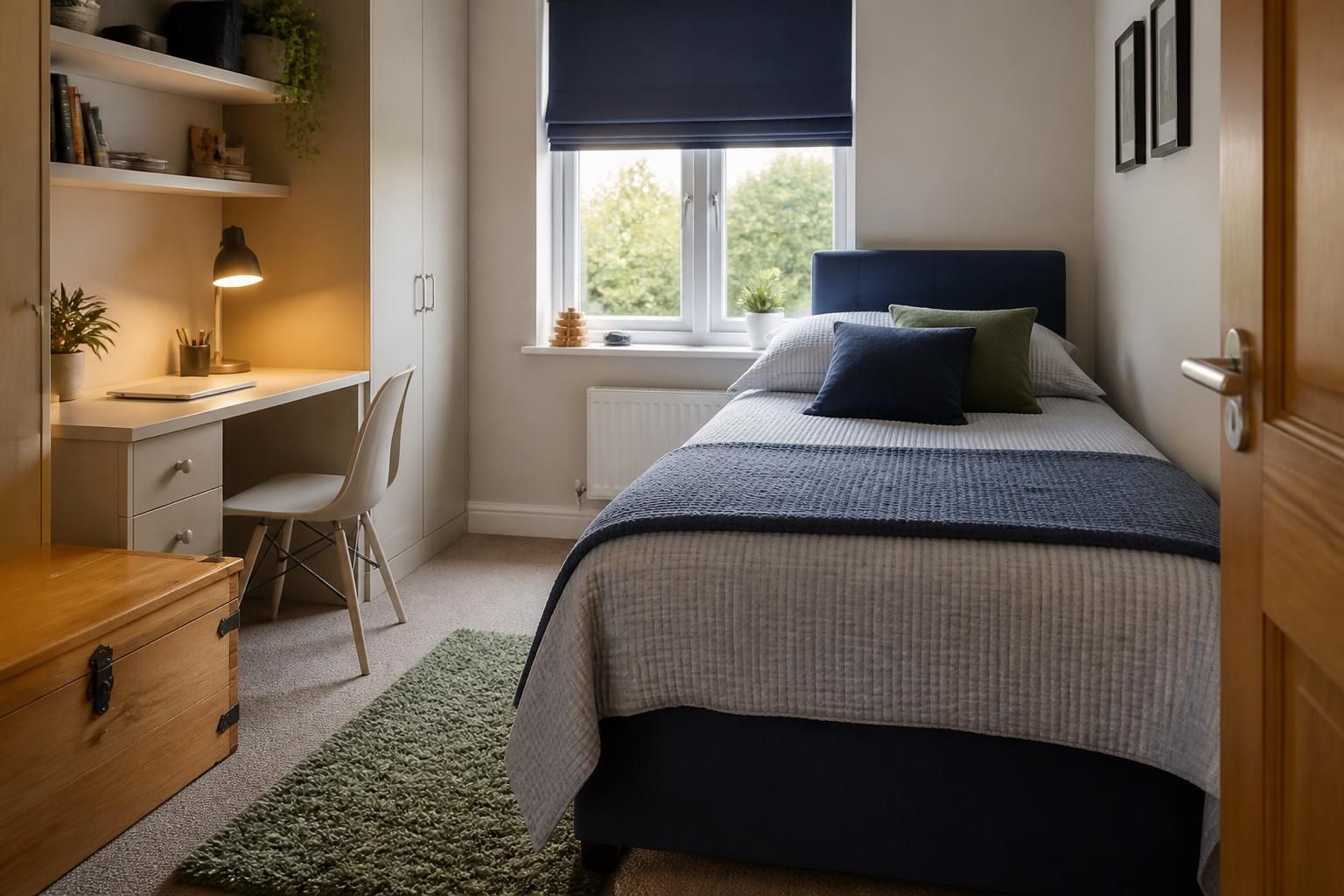
What bedroom requirements apply to foster carers in Birmingham?
In Birmingham, a foster child will generally need their own bedroom with enough space for sleeping, storing belongings and having privacy. The room must be safe and suitable, and the fostering agency will assess your home and discuss any exceptions, such as approved arrangements for siblings or babies, according to the child’s needs.
Partnering with an
Ofsted Outstanding Provider
A foster carer in Birmingham must be able to provide a bedroom that gives a child suitable privacy, personal space and secure storage. The room should be used as the child’s bedroom rather than as a shared living, dining or passage area, and it must be appropriate for the age, sex, development and individual needs of the child placed there.
What the bedroom should provide
- A proper bed and a suitable mattress, appropriate to the child’s age and needs.
- Enough clear floor and living space for the child to move around safely and use the room comfortably.
- Storage for clothing, shoes, school items, toys and personal possessions.
- Suitable lighting, heating and ventilation.
- Privacy, including a door that can be closed safely and window coverings where appropriate.
- Furniture and fittings that are stable, well maintained and free from avoidable hazards.
The room does not need to be lavishly decorated or furnished. Assessors are primarily looking at whether it is clean, safe, functional and welcoming, and whether it can be adapted to meet the needs of a particular child. A child’s age, emotional development, mobility, medical needs and history may all affect what is suitable.
Can a foster child share a bedroom?
Bedroom-sharing is considered carefully rather than treated as an automatic arrangement. Children over the relevant age will generally be expected to have their own bedroom, while limited exceptions may apply for young children or siblings where this is assessed as safe and appropriate. Siblings may sometimes share, particularly when they are of a similar age and the arrangement supports their welfare. The decision must take account of their relationship, privacy, sleep patterns and any safeguarding concerns.
A foster child should not be expected to share with an adult foster carer. Sharing with another child in the household would only be considered following an assessment of the individual circumstances and the needs of everyone involved. You should not assume that a room currently used by your own child, a lodger or another foster child will automatically be accepted for a new placement.
Safety points assessors consider
- Whether the room has a safe route in and out and is not being used as a point of access to another room.
- The condition of windows, doors, stairs and electrical fittings.
- Whether smoke alarms, heating systems and other household safety measures are suitable.
- How medicines, cleaning products, alcohol, weapons, tools and other potentially dangerous items are stored elsewhere in the home.
- Whether the child could use the room safely at night, including where they have mobility, sensory or health needs.
- Whether the room offers an appropriate level of privacy without creating safeguarding risks.
Safety is assessed across the whole home, not just inside the bedroom. The fostering assessment can therefore include checks on communal areas, garden access, bathrooms, fire precautions and the general condition of the property. Any pets, ponds, balconies, security systems or other features may also need to be considered in relation to the child’s age and vulnerabilities.
Does the bedroom need to be ready before applying?
Not necessarily. You can discuss your proposed bedroom during the initial enquiry and assessment, including whether it is currently used as an office, guest room or storage space. Before approval, you will need to show how it will be prepared for a child. This may involve removing clutter, improving storage, replacing unsuitable furniture or making safety changes.
An assessor will normally visit your home and discuss how the available space would work for different types of placement. You should be open about the rooms in your property, who uses them and any limitations. The aim is to identify which placements could be suitable rather than to approve a room in isolation. If you are approved for a specific type of fostering, the bedroom arrangement may still be reviewed before an individual child is placed.
Preparing the room
It is sensible to create a neutral, age-appropriate room that can be personalised by the child. Avoid buying specialist equipment or making major alterations until you know what a child’s needs are. A lockable place for important personal items may be useful, but any lock or privacy arrangement should be agreed with the agency and must not prevent necessary supervision or create a fire-safety problem.
Ask the fostering agency to explain how it interprets bedroom standards, which exceptions may apply and what changes would be needed in your home. The agency will consider your household circumstances alongside the bedroom, so a room that appears suitable for one child may not be suitable for every placement.
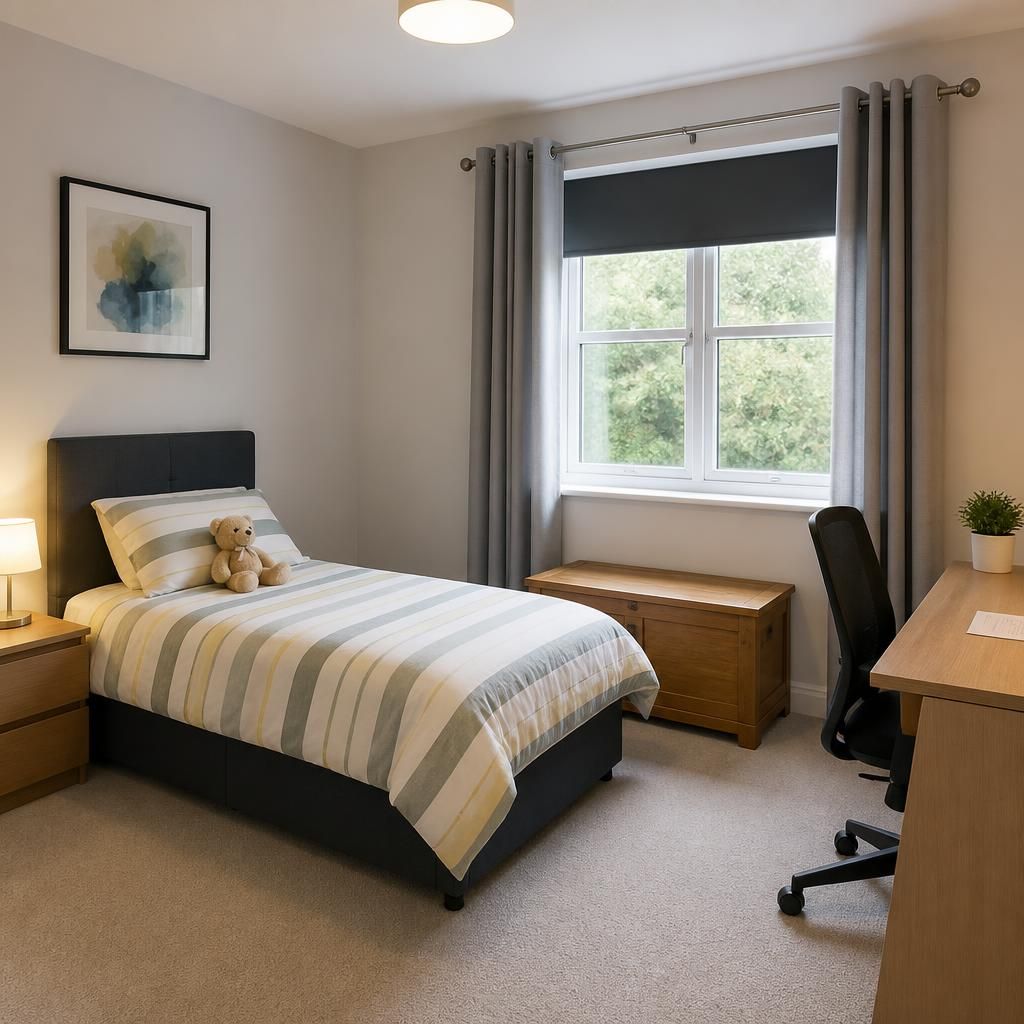
There is no single bedroom layout that suits every foster placement. A room may be appropriate for one child but need changes before another child arrives, particularly if the child has mobility, sensory, medical or emotional needs. The assessment therefore considers how the room functions in your home and whether it can support the type of placement you are seeking.
When preparing the room, focus on usable space and flexibility rather than expensive decoration. Keep enough room for any agreed equipment, personal belongings and safe movement, while allowing the child to add familiar items or personalise the space. Discuss proposed changes with your fostering agency before buying specialist furniture or installing locks, as these decisions must fit the child’s needs and the home’s wider safety arrangements.
Discuss bedroom requirements for foster carers in Birmingham
Discuss your bedroom arrangements with our fostering team to understand how your household layout could support the type of placement you are considering. They can explain the assessment process and answer questions about preparing your home before you apply.