
How much space is needed to foster in Dudley?
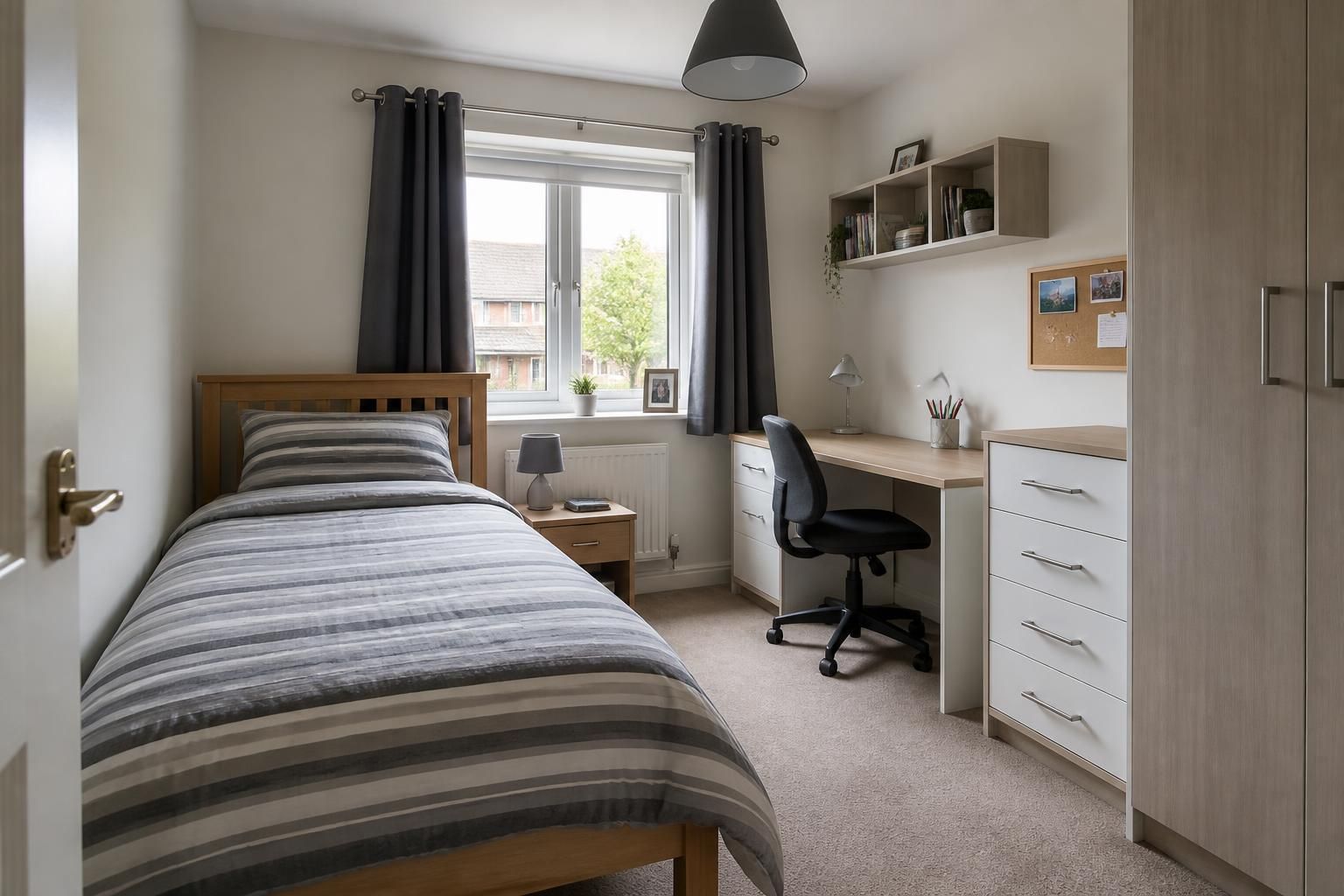
To foster in Dudley, you will generally need a spare bedroom where the foster child or young person can have their own private sleeping space; it must not be shared with foster carers or other children. The exact arrangement depends on the child’s age, needs and the fostering plan, and your agency will assess whether the bedroom and wider home are safe and suitable.
Partnering with an
Ofsted Outstanding Provider
There is no single bedroom size that automatically qualifies a home for fostering in Dudley. The important requirement is that the home provides a safe, suitable and private sleeping space, with enough room for the child’s belongings and age-appropriate furniture. The fostering agency will assess the bedroom and the rest of the household during the assessment process before recommending approval.
What the bedroom should provide
A suitable bedroom should normally be a permanent room within the home rather than a temporary sleeping arrangement. It should have enough usable floor space for a bed, storage and any additional furniture the child may need, without making the room difficult to move around in. The assessor will consider factors such as:
- the room’s layout, ventilation, heating and natural light;
- the condition and safety of windows, doors, flooring and electrical fittings;
- space for clothes, personal possessions, books and school equipment;
- whether the child can have reasonable privacy;
- the location of the bedroom in relation to the household and emergency exits; and
- whether the room is appropriate for the age and needs of the child likely to be placed.
The room does not need to look like a specially designed children’s bedroom. It should be clean, well maintained and suitable for a child or young person to regard as their own space. Personal preferences can be discussed as part of preparing for a placement, provided the essential safety and suitability requirements are met.
How the household is considered
Bedroom availability is assessed alongside the people already living in the home. The agency will consider the ages and needs of birth children, other foster children, adults and anyone else who regularly stays there. It will also look at how a placement could affect privacy, routines, supervision and relationships within the household.
This means that having a spare bedroom is important, but it does not by itself determine which placements you could accept. A home may be suitable for some children but not others, depending on factors such as the child’s age, behaviour, personal history, medical needs and relationship with other children in the household. Sibling placements can also require particular planning because the agency must consider both the children’s need to stay together and the suitability of the available space.
Shared facilities and the wider home
The assessment is not limited to the bedroom. Bathrooms, kitchens, living rooms, gardens, stairs, entrances and outdoor areas may all be considered. The home should allow the foster child to take part in ordinary family life while also having appropriate personal space.
Safety checks may include fire precautions, smoke alarms, escape routes, the storage of medicines and hazardous substances, and the security of windows or external areas. Pets, ponds, swimming pools, wood-burning stoves and other features may need a specific risk assessment. These matters do not necessarily prevent fostering, but they may require safeguards or changes before a child moves in.
If your home is small
A smaller home is not automatically ruled out. The relevant issue is whether the proposed arrangement gives the child adequate privacy, safety and usable space, while allowing the household to function properly. Be open with the assessing social worker about the rooms available, who uses them, and whether there are planned changes to the household.
Converted rooms, loft rooms, annexes and other non-standard spaces may need additional checks. Their suitability can depend on planning or building requirements, access, heating, ventilation, fire safety and whether the child can reach the rest of the household safely. Do not assume that a room is suitable simply because it is currently used as a bedroom.
What happens during the assessment
- You describe your home, household and the type of fostering you are considering.
- The agency arranges a home assessment and discusses the available bedroom and shared areas.
- Safety issues or practical improvements are identified and, where necessary, addressed.
- The assessing social worker considers what types of placements could be appropriate.
- Your approval recommendation records the household’s circumstances and any placement considerations.
It is sensible to leave the room reasonably clear before the home visit and to think about where the child’s clothes, belongings and school items would be stored. You do not need to buy specialist furniture or redecorate before receiving practical guidance. The agency can explain what is required for your circumstances and whether any proposed changes need to be completed before approval or before a particular placement is considered.
Become A Foster Family supports applicants across Dudley and the wider West Midlands, with local staff able to discuss the space available in your home and how it may affect your fostering options. The most accurate answer will come from an individual home assessment, because bedroom suitability depends on the property, household and type of placement rather than on floor area alone.
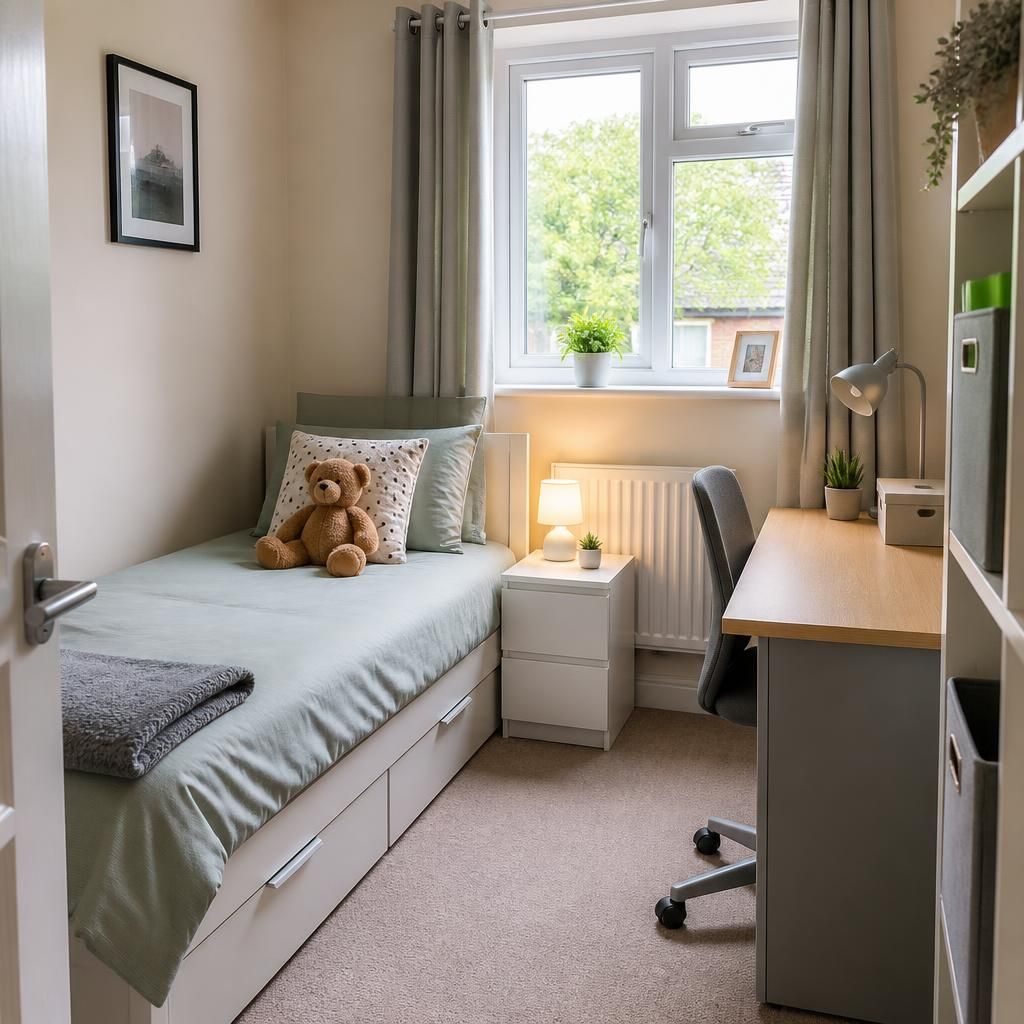
A bedroom used for fostering should be available to the child for the duration of the placement, rather than being reclaimed for guests, storage or home working. If the room currently has another purpose, explain how it would be cleared and prepared before a child arrives. Keeping the arrangement consistent helps the child understand that the space is theirs and avoids unnecessary disruption.
It is also useful to consider how the room would work in everyday life. Think about where personal items would be kept, whether furniture could be adjusted as the child’s needs change, and how the household would respect the child’s privacy. These practical details can help the assessing social worker understand how the available space would support a stable placement.
Discuss your home’s space for fostering in Dudley
If you are considering fostering, discuss your household and home arrangements with Become A Foster Family. A conversation with the team can help you understand the next steps and prepare for an individual home assessment.