
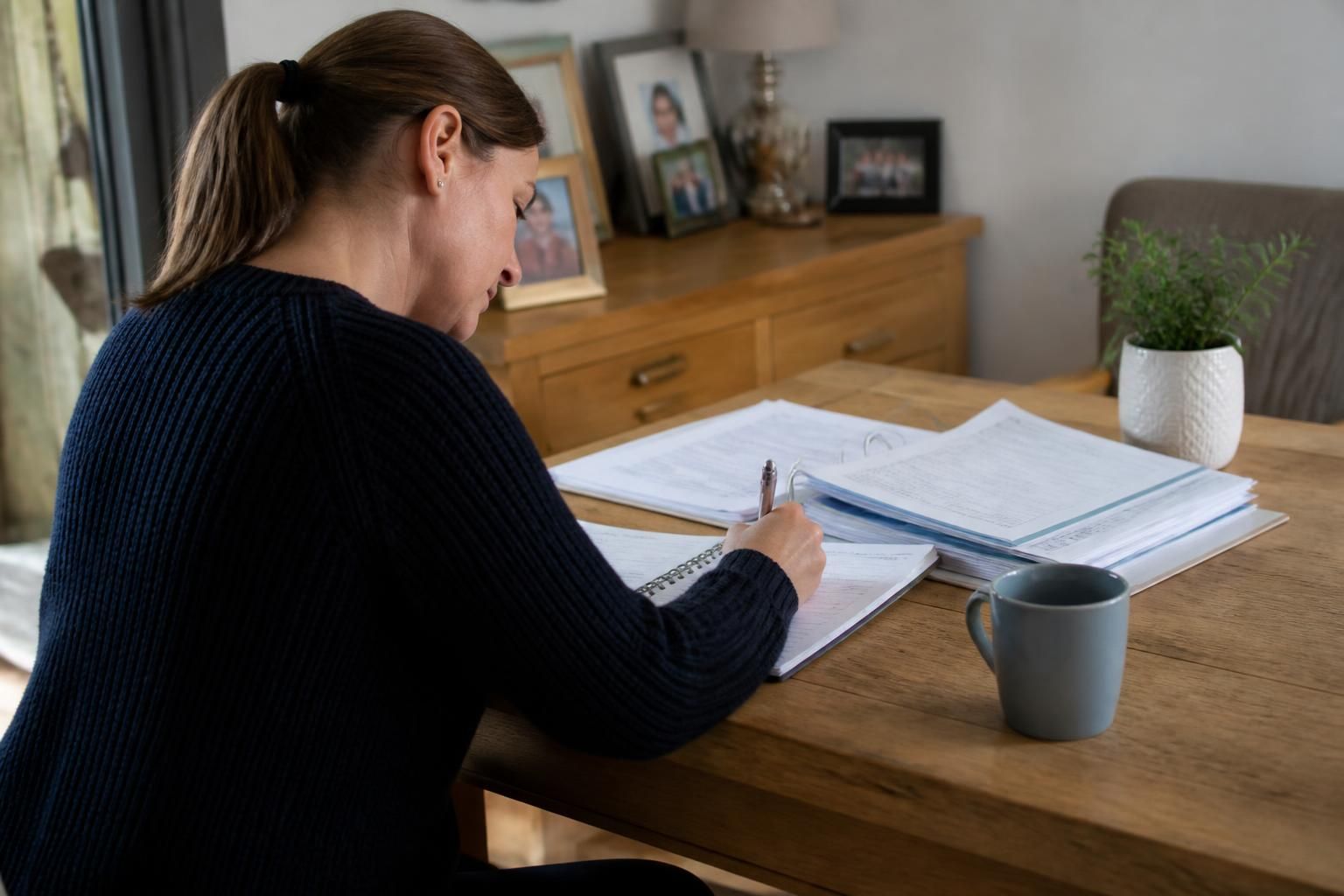
What records will I need to keep as a foster carer in Worcestershire?
As a foster carer in Worcestershire, you will generally need to keep clear, factual records of each child’s daily care, health, education, contact arrangements, significant events, appointments, medication and any incidents or concerns. Your fostering agency will explain which recording system to use, what must be reported separately, and how to store records securely and confidentially.
Partnering with an
Ofsted Outstanding Provider
The key requirement is an accurate, contemporaneous audit trail of the child’s care. Records should show what happened, when it happened, who was involved, what the child said or did, and what action was taken. They must be factual, respectful, objective and written so that another professional can understand the situation without needing additional explanation.
Records commonly include:
- Daily care notes: A concise account of important events, routines, presentation and behaviour. Record significant changes rather than producing an unnecessary running commentary on every part of the day.
- Observations and the child’s views: Note the child’s wishes, feelings, progress and any changes in their behaviour or wellbeing. Distinguish clearly between the child’s own words, what you observed and your interpretation.
- Appointments and professional involvement: Keep details of relevant health, dental, therapeutic, education and social care appointments, including attendance, advice received and any agreed follow-up.
- Education information: Record matters such as attendance concerns, meetings, achievements, exclusions, homework support and communication with the school. Keep copies of important plans or correspondence where your agency or the local authority requires this.
- Family contact: Record when contact took place, who attended, how the child responded and any practical or safeguarding issues. Do not add personal opinions about family members.
- Incidents and safeguarding concerns: Write a clear chronology of what you saw, heard or were told, including the exact words used where these are important. Note who was informed and when. A record does not replace the requirement to report a concern through the correct procedure.
- Money and property: Where required by the child’s care plan or agency policy, keep a record of pocket money, larger purchases, savings, allowances or items belonging to the child. Retain receipts for agreed expenditure.
- Handover information: If another approved carer looks after the child, provide relevant information and record any important changes or events so that care remains consistent.
How to write effective records
Make entries as soon as reasonably possible after the event, while the details are fresh. Include the date, time, location and people involved. Use plain language and avoid labels such as “attention-seeking”, “difficult” or “uncooperative” unless you explain the specific behaviour behind the description. For example, record that a child left the room, shouted and refused to speak for ten minutes, rather than simply writing that they were challenging.
Keep observations separate from conclusions. A useful entry might state: “At 18:30, Sam became quiet after a telephone call and said, ‘I don’t want to go tomorrow.’ I asked whether they wanted to talk and they said no. I informed the supervising social worker in line with the agreed plan.” This is more useful than an entry saying that Sam was upset for no clear reason.
Correct mistakes transparently. Do not delete, conceal or rewrite an original entry. Follow the instructions for amendments in the recording system used by your agency. If you remember something later, add a dated supplementary note explaining when the additional information became known.
Confidentiality and storage
Fostering records contain sensitive personal information. Store paper records in a secure place and protect digital records with the security measures required by your agency. Do not leave files visible, discuss the child in public or share information with people who are not authorised to receive it. Take particular care with photographs, messages, email and notes kept on personal devices.
Only record information that is relevant to the child’s care, and follow your fostering agency’s instructions on retention, access and disposal. The child, their parents and professionals may have rights to access information under applicable procedures, so entries should always be written on the assumption that they may later be read by the child or another professional.
Records that need separate reporting
Some events must be passed to your supervising social worker, the child’s social worker or another named professional without waiting for the next routine review. These can include safeguarding concerns, missing episodes, serious injuries, allegations, significant changes in behaviour, unexpected changes to contact or a serious incident in the household. Follow the local safeguarding and agency procedures, record the time and method of the notification, and note any instructions you receive.
You should not carry out your own investigation into an allegation or try to question a child repeatedly about a concern. Preserve the child’s words as accurately as possible, make a factual note and report it through the agreed route.
What happens during reviews
Your supervising social worker will normally use your records to understand how the placement is progressing and to identify support or changes that may be needed. Records may also contribute to reviews, care planning, meetings with education or health professionals, and reports prepared by the fostering agency or local authority.
Before submitting an entry, check that it is dated, understandable, proportionate and free from speculation. Your fostering agency will explain which records it expects, whether entries are made online or on paper, how long they should be kept and who should be contacted about specific events. If you are unsure whether something should be recorded or reported, ask your supervising social worker rather than leaving it out.

Foster care records should also capture decisions made about the child’s care, not only events that have already happened. After a meeting, review or discussion with a professional, note the agreed action, who is responsible for it, any deadline and when it should be reviewed. This creates a clear link between the child’s needs, the plan agreed by professionals and what happens in day-to-day care.
Where a decision affects the child, record how they were included and any explanation given to them. If a plan changes, add the date, the reason for the change and the person who confirmed it. This helps prevent misunderstandings between the fostering household, social workers, school and other professionals, while providing useful evidence when the child’s care plan is reviewed.
Need guidance on keeping foster care records?
If you are considering fostering in Worcestershire, speak to our team for guidance on the recording requirements and the next steps in your fostering journey.