
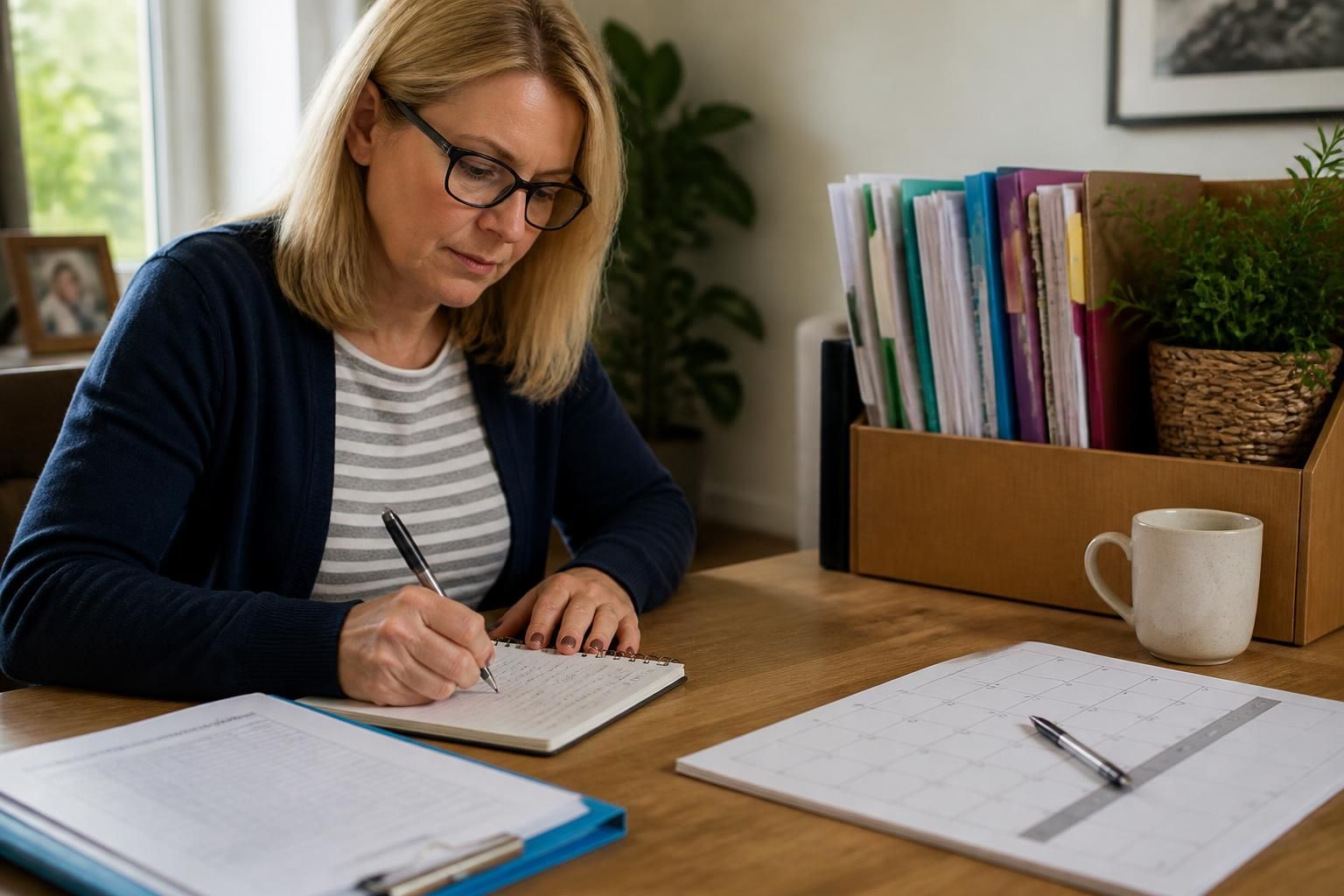
What records must local foster carers keep during a placement?
During a placement, local foster carers must keep accurate, up-to-date records of the child’s daily care, health, education, contact arrangements, incidents and significant events. Records should be factual, dated, securely stored and completed in line with the fostering agency’s and local authority’s requirements.
Partnering with an
Ofsted Outstanding Provider
Foster carers are expected to maintain a clear, contemporaneous record of the child’s care and any matter that affects their welfare. These records form part of the information used by the fostering agency, social worker and other professionals to understand how the placement is progressing, identify concerns and make informed decisions about support and safeguarding.
The precise forms and recording system will be set by the fostering agency and, in some cases, the child’s local authority. Carers should follow those instructions rather than creating a separate system that may leave out required information. Ask the supervising social worker what must be recorded, where it should be stored, who may see it and when it must be submitted.
Daily care records
A daily log should give a concise, factual account of significant aspects of the child’s day. Depending on the child’s age and circumstances, this may include:
- the child’s presentation, mood and general wellbeing;
- sleep, meals, personal care and routines where these are relevant;
- attendance at school, college, appointments or activities;
- behaviour that is unusual, concerning or relevant to the care plan;
- what support or reassurance was offered and how the child responded; and
- any change to the agreed routine or arrangements.
A daily record is not intended to describe every ordinary conversation or activity. It should contain enough relevant detail to show what happened, what action was taken and whether further follow-up is needed.
Placement and care-plan information
Keep the current documents supplied by the agency or local authority in an organised file or approved electronic system. These may include the placement plan, care plan, delegated-authority arrangements, safer-care guidance, risk assessments, household agreements and important contact details. When an arrangement changes, retain the previous version if instructed and clearly identify which document is current. Do not rely on memory or informal messages for changes to important responsibilities.
Records should also show practical decisions made during the placement, such as agreed travel, overnight stays, school arrangements, activities or contact changes. If permission is required from the social worker, local authority or another person with parental responsibility, record the request, the decision and any conditions attached to it.
Health and medication records
Record health appointments, advice received, treatment and any relevant change in the child’s health. Medication records should normally show the medicine, dose, time given, person administering it and any missed or refused dose, using the agency’s approved medication record. Keep prescriptions, instructions and consent information in the required place, and report errors, adverse reactions or concerns without delay through the agency’s procedure.
Health information is particularly sensitive. It should not be discussed with people who do not need it for their role, and paper or electronic records should be protected from unauthorised access.
Education and contact records
Make a note of significant education information, including meetings, concerns raised by school, attendance issues, exclusions, achievements that affect planning and agreed support. Routine school communication may be recorded more briefly, while a safeguarding concern or major change should be reported and documented in greater detail.
Contact with parents, relatives and other people important to the child should be recorded in line with the contact plan. Include whether contact took place, any changes or cancellations, relevant observations and concerns expressed by the child or others. Avoid presenting personal opinions as fact. If contact becomes distressed, unsafe or inconsistent with the plan, follow the agency’s reporting process as well as making a record.
Incidents, allegations and safeguarding concerns
Any incident involving injury, missing-from-care concerns, serious behaviour, damage, restraint, a complaint, an allegation or a possible safeguarding issue should be dealt with under the agency’s procedure. A daily diary entry is not a substitute for a formal incident or safeguarding report. Contact the supervising social worker, duty service or other named professional specified by the agency, and complete the required form within the stated timescale.
Write down the child’s words as accurately as possible if they disclose something important. Distinguish clearly between:
- what you directly saw or heard;
- what the child or another person said;
- what you did in response; and
- what remains unknown or requires follow-up.
Do not investigate, interrogate or suggest answers. Do not promise secrecy. Record the concern and pass it to the appropriate professional, following the safeguarding guidance provided by the agency.
How to make entries useful
- Enter information as soon as reasonably practicable while the details are fresh.
- Use dates, times, names or roles and specific observations where relevant.
- Use neutral language rather than labels such as “difficult”, “manipulative” or “attention-seeking”. Describe the behaviour instead.
- Include the child’s views and feelings, using their own words where appropriate.
- Record the action taken and who was informed.
- Sign or identify each entry in the way the agency requires.
- Correct mistakes according to the approved process; do not erase, overwrite or delete an original entry without an audit trail.
For example, “Jamie was rude and aggressive” gives little useful information. A stronger entry would explain what was said or done, when it happened, what appeared to trigger the situation, how adults responded and how Jamie was afterwards. The record should remain professional and respectful because the child may eventually be entitled to access information about their childhood.
Confidentiality, storage and sharing
Store records in the secure location required by the agency. Paper files should not be left where visitors or other household members can read them, and electronic records should use approved accounts, devices and passwords. Do not photograph records on a personal phone or send sensitive information through an unapproved messaging service.
Information should be shared only with people who have a legitimate role in caring for or safeguarding the child, and only to the extent necessary. The agency can explain how to respond if a school, family member or professional asks for information. Foster carers should also report lost documents, accidental disclosure or unauthorised access immediately.
Retention and handover
Do not destroy, remove or keep placement records after the placement ends unless the agency has expressly told you to do so. The agency or local authority will normally explain how records are collected, retained and transferred. Keep entries organised so another authorised professional can follow the chronology, understand outstanding actions and continue the child’s care safely.
Good record keeping does not mean producing lengthy notes. It means creating an accurate, respectful and secure account of important events, decisions and the child’s experience. If you are unsure whether something should be recorded, record the relevant facts and ask your supervising social worker how the matter should be handled.

Placement records should help professionals review how the arrangement is working, not simply document isolated events. Keep entries organised in date order so patterns, changes in behaviour, unanswered questions and outstanding actions can be identified during supervision meetings, placement reviews or discussions with the child’s social worker.
Before a meeting, check that recent significant events have been recorded and note any points that need clarification. Bring records only through the secure process agreed with the fostering agency. The supervising social worker can explain which documents should be reviewed together and how the child’s views should be reflected in planning.
Get guidance on foster carer record keeping
If you are considering fostering, speak with our team to understand the record-keeping requirements and how local support can help you manage them confidently. Ask any questions you have before deciding whether to begin the fostering assessment process.