
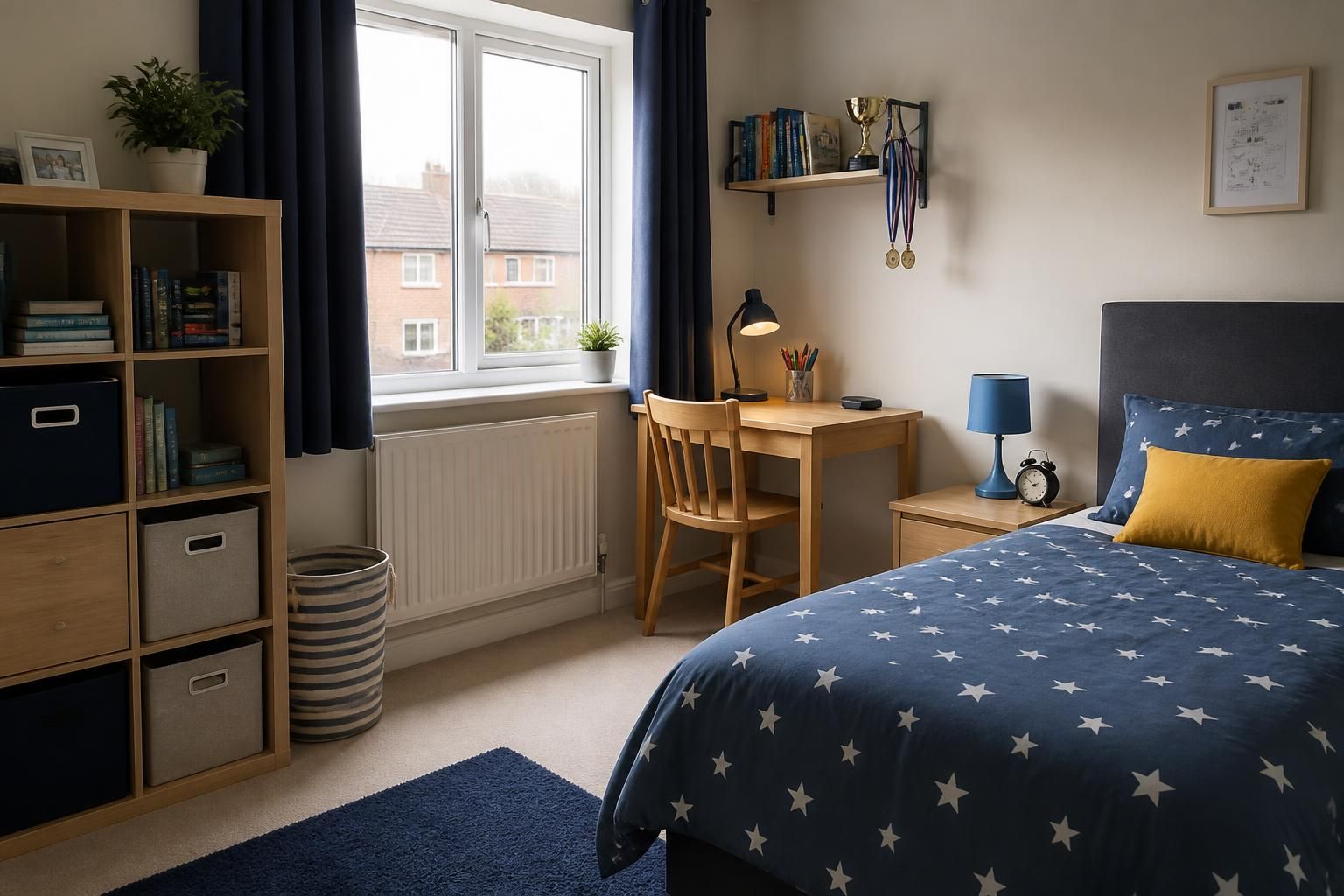
What bedroom requirements apply when fostering in Droitwich Spa?
When fostering in Droitwich Spa, you will generally need to provide a suitable bedroom with enough space, privacy and storage for a child or young person, separate from the foster carers’ room and safe for their needs. Your fostering assessment will consider the room, household arrangements and whether any bedroom-sharing proposal is appropriate under the relevant standards.
Partnering with an
Ofsted Outstanding Provider
The bedroom offered to a foster child must be appropriate for their age, development, privacy and individual needs. During the fostering assessment, your assessing social worker will consider the room itself, who else lives in the household, how the space is used and whether it can provide a stable personal area for the child.
Separate sleeping arrangements
As a general rule, a foster child aged over three should have their own bedroom. The usual exception is where siblings are placed together and sharing is considered suitable for both children. A foster child should not normally share a bedroom with another child in the fostering household who is not their sibling. Decisions also take account of age, gender, relationships, behaviours and any risks identified during the assessment.
Babies and very young children may have different arrangements, particularly during the early stages of a placement. These arrangements must still be safe, suitable and consistent with the child’s care plan. You should discuss any proposed bedroom-sharing arrangement with your fostering service before making changes or accepting a placement.
Space, privacy and storage
The room should be large enough for the child to sleep, dress and keep personal belongings without feeling overcrowded. There is not one universal room size that applies to every fostering situation, because suitability depends on the child’s age, needs and the layout of the home. A very small room, a room used mainly for storage or a space that cannot provide reasonable privacy may not be accepted.
- Provide a suitable bed and a comfortable mattress in good condition.
- Include enough storage for clothing, shoes, school items and personal possessions.
- Make sure the child can use the room as their own space rather than as a passageway, office or general storage area.
- Provide suitable curtains or blinds and consider how the child’s privacy will be protected.
- Keep the room warm, well ventilated, adequately lit and free from avoidable hazards.
Foster children may have very few possessions when they arrive, but this does not mean they need less storage. Having somewhere to keep belongings can help establish privacy and personal ownership. The room should also be suitable for the child’s likely length of stay, rather than being treated as a temporary spare room.
Safety checks
Your home will be assessed for general safety as well as bedroom suitability. This can include checking windows, heating, electrical equipment, furniture, trip hazards and access to the rest of the home. Fire safety arrangements are particularly important. Smoke alarms, escape routes and any other precautions required for the property must be considered in relation to the child’s age, mobility and understanding.
Medicines, cleaning products, alcohol, weapons and other hazardous items must be stored securely where necessary. The bedroom should not contain unsafe furniture or decorations, and any equipment supplied for a child with additional needs should be appropriate and correctly installed. The assessment may also consider whether the child could open a window, leave the room safely in an emergency or reach items that should be out of their control.
Matching the room to the child
A bedroom that is suitable for one placement may not be suitable for another. For example, a younger child may need space for a cot or specialist equipment, while an older child may need room for study, therapeutic resources or personal belongings. Children with disabilities, sensory needs, medical requirements or a history of disrupted sleep may need further adaptations.
Foster carers should not assume that accepting approval means every available bedroom arrangement will suit every child. Placement decisions involve matching the child’s needs with the household, the available space and the carers’ skills. You can raise questions about the room and request relevant information before agreeing to a placement.
What happens during the assessment
The assessing social worker will usually view the proposed bedroom and discuss how it will be used. They may ask who currently uses the room, whether any changes are needed and how you would help a child settle into it. They will also consider the views and needs of everyone already living in the household.
You do not necessarily need to have a fully decorated or specially furnished room before beginning the assessment. However, the essential arrangements must be in place before a child moves in, and any recommendations identified during assessment or checks must be addressed. If your circumstances change, such as a household member moving in or the room becoming unavailable, tell your fostering service because this could affect approval or placement options.
If you are unsure whether a room meets the required standard, discuss it with Become a Foster Family during your assessment. The team can explain what is expected in your circumstances and identify any practical changes needed before approval.
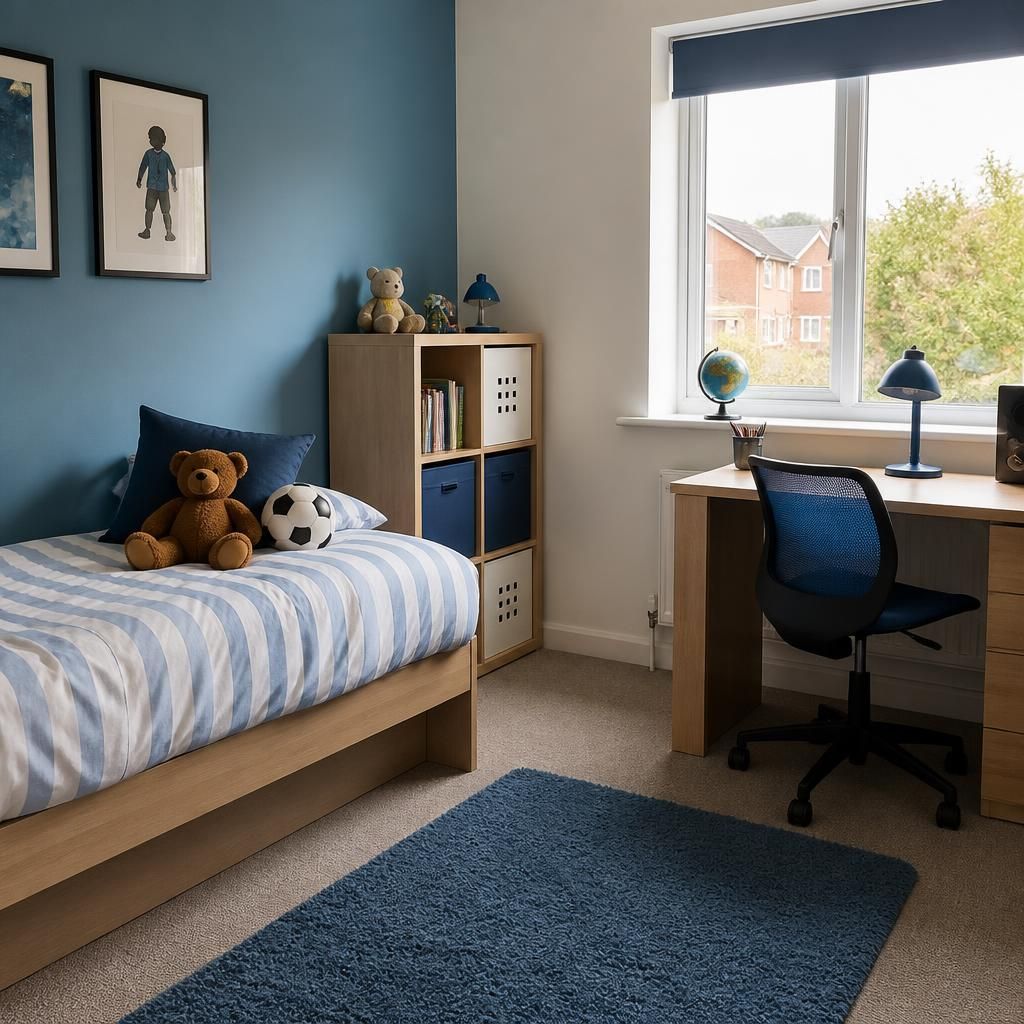
Bedroom requirements also include respecting the child’s privacy once they move in. Foster carers should agree clear household boundaries, such as knocking before entering, keeping personal belongings private and explaining when adults may need to access the room for care or safety reasons. Younger children or children with additional needs may need closer supervision, but this should be handled sensitively and in line with their care plan. A consistent approach helps the bedroom feel like the child’s personal space while allowing carers to meet their safeguarding responsibilities.
Discuss your bedroom arrangements for fostering in Droitwich Spa
Discuss your bedroom arrangements with Become a Foster Family to understand how your home may be assessed and whether any practical changes could be needed before you apply.