

Can I foster in Gloucestershire if I rent my home?
Yes, you can usually foster in Gloucestershire if you rent your home, provided you have your landlord’s written permission and the property offers a safe, suitable and stable environment for a child. Your fostering assessment will consider the accommodation, including bedroom arrangements, space and safety, as well as your tenancy terms.
Partnering with an
Ofsted Outstanding Provider
Renting a home does not automatically prevent you from fostering in Gloucestershire. The key issues are whether your tenancy allows fostering, whether your landlord agrees, and whether your accommodation can meet the needs of a child or young person.
Your fostering assessment will look at the practical arrangements in your home rather than whether you own it. This commonly includes:
- the number and layout of bedrooms
- whether a foster child can have an appropriate bedroom and personal space
- space for belongings, studying, relaxing and taking part in family life
- safe access to the property, including stairs, windows, gardens and other potential hazards
- the stability and suitability of your current accommodation
- whether the property is close enough to school, services and other important support
Most foster children need their own bedroom. There can be different arrangements for siblings or in specific circumstances, so the required setup will depend on the child’s age, needs and the fostering placement being considered. Your fostering assessor can explain how the bedroom arrangements would apply to your household.
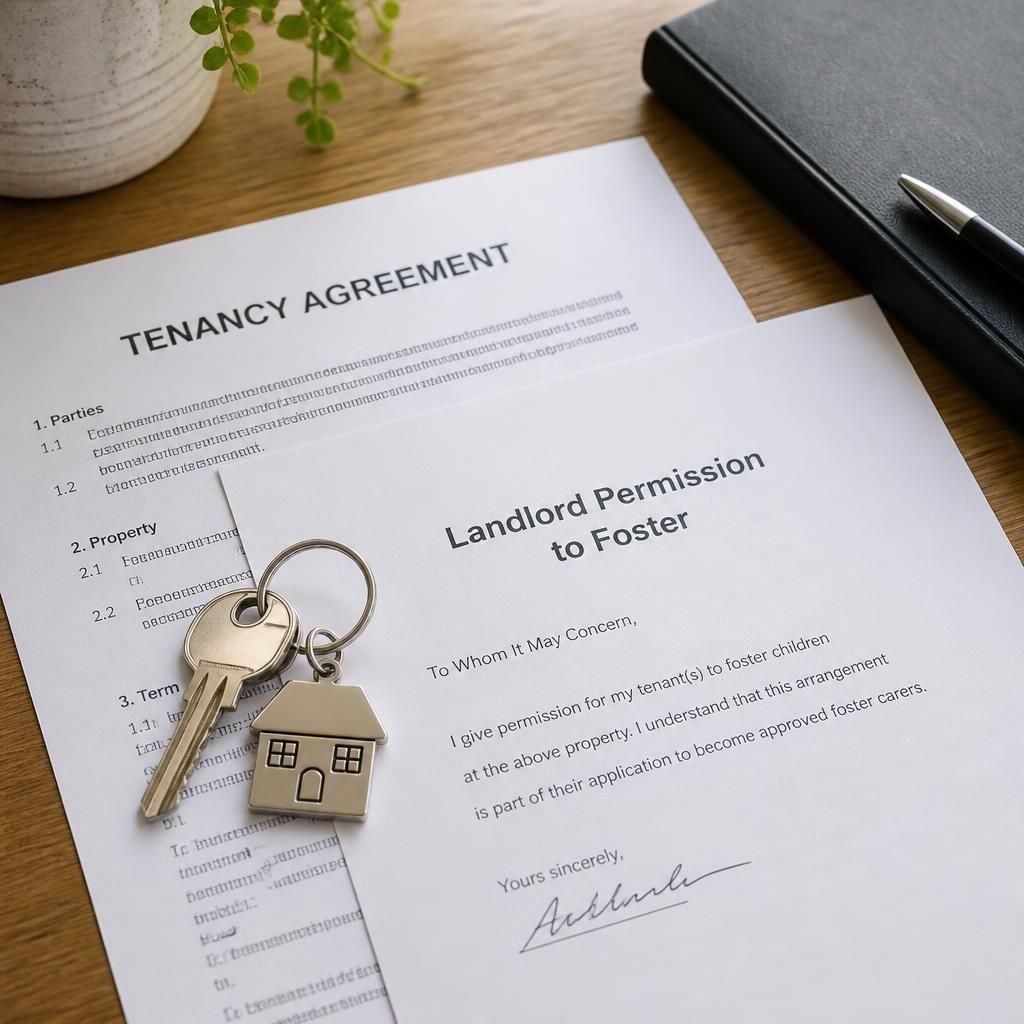
Check your tenancy agreement at the beginning of the process. Look for clauses covering occupants, the use of the property, alterations, pets and subletting. Fostering is not the same as taking in a lodger, but your agreement may still require consent for a child to live in the property. If the wording is unclear, ask your landlord or housing provider to confirm its position in writing.
Written permission is important because it demonstrates that your landlord understands the proposed arrangement and has no objection to it. A verbal conversation may not be enough for your assessment. Your landlord might ask for information about the fostering arrangement, the length of placements or any changes that could be needed in the home. Keep a copy of the permission and provide it as part of your fostering application.
If you rent from a local authority or housing association, contact the relevant housing team rather than assuming that ordinary tenancy rules cover fostering. They may have their own permission process. You should also check whether you need consent before making changes such as installing safety equipment, adapting a bedroom or altering a garden.
Private renters should consider how their tenancy could affect longer-term fostering plans. A short tenancy, a pending notice to leave or uncertainty about renewal may be discussed during the assessment. This does not necessarily rule out fostering, but you may need to show how a child’s home environment would remain consistent if your circumstances changed.
It is also sensible to tell your insurer that a foster child will be living in the property and to check whether your contents or buildings cover has any relevant conditions. The buildings policy will normally be the landlord’s responsibility, while your own contents and liability arrangements may be your responsibility. The fostering team can advise you on what information to check, but you should obtain confirmation from your insurer and landlord.
Permission to foster is only one part of the approval process. You will still need to complete the required checks, references, health assessment, household discussions and preparation training. Everyone living in the home will need to understand how fostering could affect family routines, privacy and use of shared space. The assessment will consider whether your household can provide consistent care within the accommodation available.
If your landlord refuses permission, discuss the decision with your fostering team before assuming that your application has ended. They can clarify whether the issue can be resolved, whether further information would help, or whether you would need to consider different accommodation. You should not proceed with a placement without the necessary consent.
A useful first step is to gather your tenancy agreement, confirm who manages the property, and ask what written permission is required. Raising the question early allows any accommodation or tenancy issues to be considered openly during your assessment.
If your rented accommodation changes during the fostering process or after approval, tell your fostering team before moving. A new property will need to be considered to confirm that it remains suitable for the child in your care.
- Share details of the proposed address and tenancy arrangements.
- Allow time for the new home to be visited and assessed.
- Check that the new landlord or housing provider is aware of and agrees to the fostering arrangement.
- Discuss how the move could affect school, contact arrangements, transport and local support.
Do not make a planned move without discussing it first, particularly if a child is already placed with you. Careful planning helps prevent disruption and ensures the new accommodation continues to meet the child’s needs.
Discuss Fostering in a Rented Home in Gloucestershire
Discuss your rented home with our fostering team in Gloucestershire to clarify the next steps for your application and assessment.