
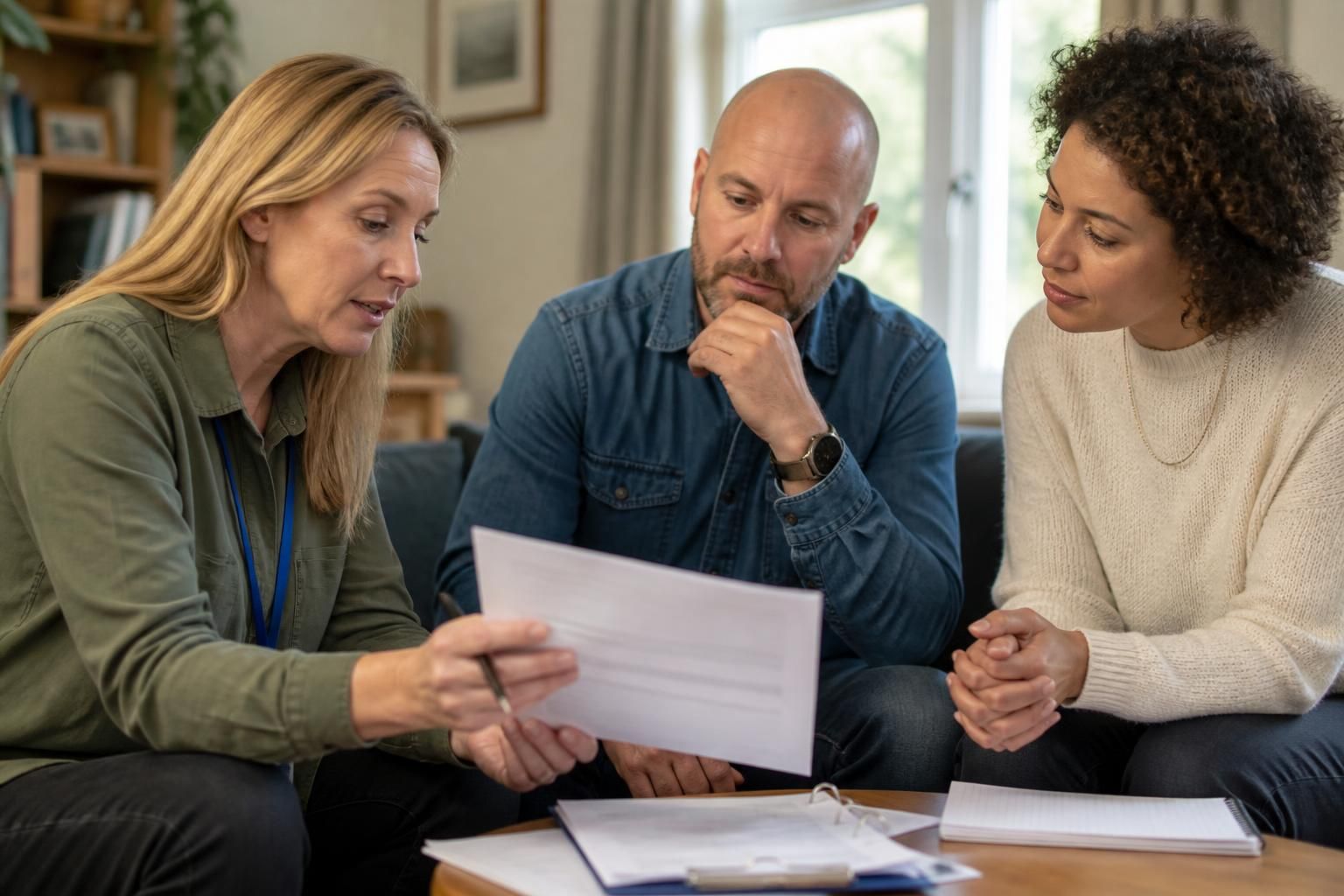
What happens when a potential foster family is identified?
When a potential foster family is identified, the child’s needs are compared with the family’s approval, experience, household circumstances and available support. Professionals then share relevant information with the foster carers, discuss whether the placement is suitable and agree the next steps before a child moves in.
Partnering with an
Ofsted Outstanding Provider
Identifying a potential foster family is the start of a formal decision-making process, not confirmation that a placement will go ahead. The child’s social worker and the fostering professionals involved gather the information needed to decide whether the proposed arrangement is safe, suitable and workable for everyone.
Further information is checked. The professionals will consider the child’s day-to-day needs, risks, routines, relationships and legal circumstances alongside the practical details of the proposed household. This may include:
- the child’s age, personality, communication style and emotional needs;
- health, medication, education and transport requirements;
- contact with parents, siblings or other important people;
- behaviours that may require particular supervision or boundaries;
- other children or adults living in the household;
- pets, home arrangements and any factors affecting safety; and
- the foster carers’ commitments, skills and capacity at that point in time.
Information should be shared openly enough for the foster carers to make an informed decision. This includes relevant details about the child’s history, needs, known risks and the support that may be required. Information must still be handled appropriately, with the child’s privacy and safeguarding considered throughout.
The proposed placement is discussed with the foster carers. They should have an opportunity to ask questions and explain any concerns before agreeing to proceed. A carer can ask for clarification about a child’s routines, education, contact arrangements, health, behaviour and likely impact on the household. If important information is missing, the professionals may need to make further enquiries before a decision is reached.
The child’s views are also relevant. The way these are gathered depends on the child’s age, understanding and circumstances. A child may be helped to understand who the foster carers are, what their home is like and what may happen next. Their wishes and feelings should inform the decision, while adults remain responsible for assessing safety and making the final arrangements.
A placement planning discussion then takes place. The professionals agree how the placement will begin and what everyone needs to know. The plan may cover:
- where the child will sleep and how daily routines will be managed;
- school or nursery arrangements and transport;
- health appointments, medication and consent arrangements;
- family contact, including who will supervise it and how travel will be organised;
- house rules, privacy, use of technology and personal belongings;
- delegated authority, explaining which everyday decisions foster carers can make; and
- who to contact if a concern or safeguarding issue arises.
The level of planning depends on the circumstances. A planned move may allow time for meetings, visits and gradual introductions. An emergency placement may need to be arranged more quickly, with additional information and planning completed after the child has arrived. In either situation, the placement should be reviewed as more is learned about how the arrangement is working.
The decision is recorded and the placement is formally arranged. The responsible local authority confirms whether the proposed placement meets the child’s assessed needs and whether the necessary approvals and arrangements are in place. Foster carers should receive the information and documents relevant to caring for the child, including the placement plan and details of support. The child’s social worker and the fostering service remain involved rather than leaving the family to manage the transition alone.
After the move, professionals monitor the placement through visits, conversations with the child and foster carers, and contact with other relevant people. Early concerns should be raised promptly, even if they appear minor. The support plan may be adjusted when the child’s needs become clearer, circumstances change or the original arrangements are not working as intended.
A proposed placement can be stopped at any stage if the information indicates that it would not be safe or appropriate. Foster carers are not expected to accept every referral. Saying that a placement is unsuitable, or asking for more information before agreeing, is part of responsible fostering decision-making. The priority is to find an arrangement that can meet the child’s needs safely and consistently.

When a potential foster family is identified, information about the child must be shared responsibly. Foster carers need enough detail to understand the proposed arrangement, but the child’s personal information remains confidential and should only be discussed with people who are directly involved in their care.
Before agreeing to the placement, foster carers should:
- keep written information secure and avoid leaving documents where others can see them;
- not discuss the child’s history, identity or circumstances on social media or with people outside the professional network;
- ask the fostering team to explain unfamiliar terms, risks or care requirements;
- check who can be told about the placement, including what information may be shared with schools, clubs or other adults; and
- raise any uncertainty if the information provided appears incomplete or inconsistent.
Confidentiality protects the child and helps preserve trust between the child, foster family and professionals. If new information emerges before or after the move, the foster carers should discuss it with the child’s social worker or supervising social worker rather than making assumptions or taking significant action independently.
Have questions about becoming a foster family?
If you are considering becoming a foster family, speak to our fostering team about your circumstances, eligibility and the next steps in the application process.