

How are family relationships assessed before whole family fostering?
Before whole family fostering, the assessment explores how family members relate to one another, communicate, manage disagreements and respond to change. Conversations with the household consider each person’s views, support needs and ability to contribute to a safe, stable home for a fostered child.
Partnering with an
Ofsted Outstanding Provider
A family relationship assessment looks at whether the household can work together to provide a safe, consistent and supportive home for a fostered child. It considers the quality of relationships, how household members respond to pressure, and whether everyone understands how fostering may affect family life. The assessment is not about finding a perfect family or expecting everyone to think alike.
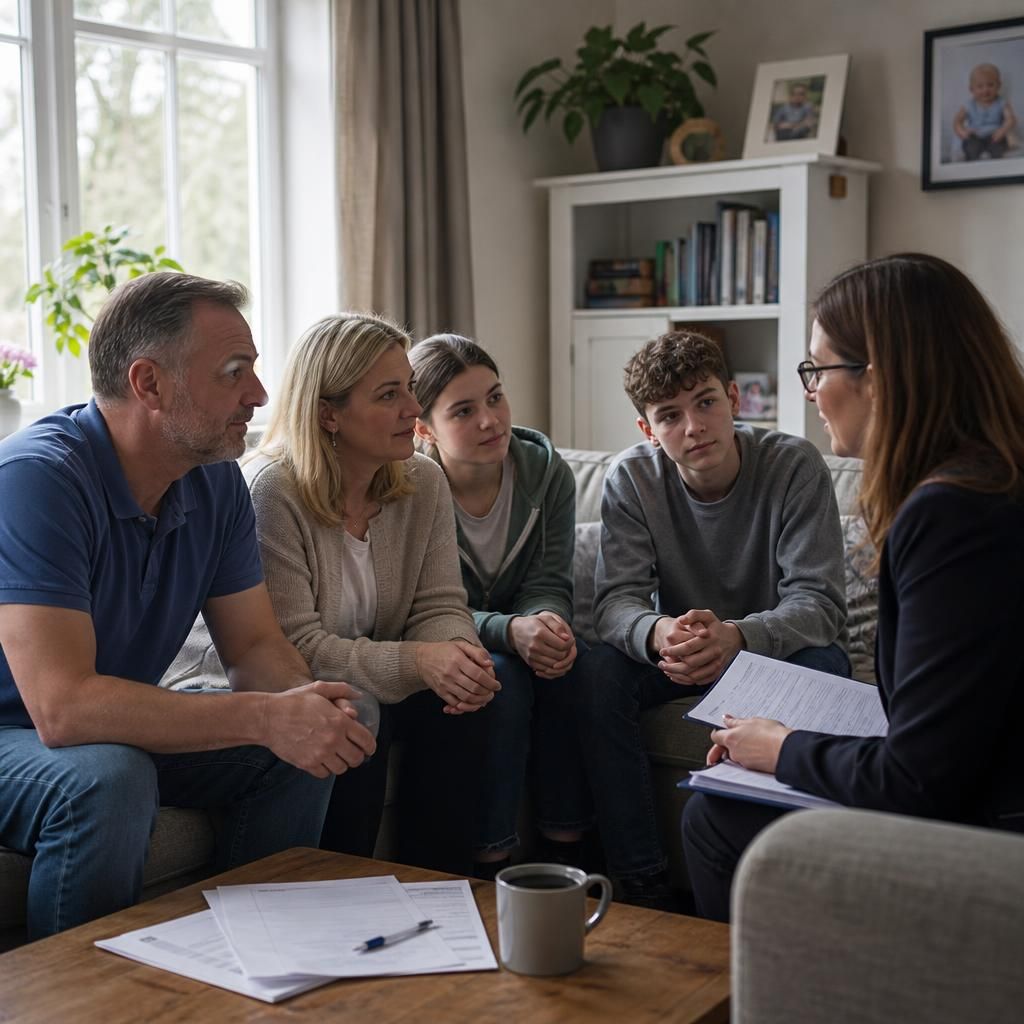
A fostering social worker will usually build this understanding through a combination of discussions, home visits and information gathered during the assessment. The exact process can vary according to the household, the fostering service and the ages of the people involved, but it commonly includes:
- Whole-household discussions: Family members are invited to talk about their usual routines, responsibilities, boundaries and expectations. The social worker considers whether fostering has been discussed openly and whether the household has a realistic understanding of the changes it may bring.
- Individual conversations: Adults and children may be spoken to separately so that each person can give an honest view without feeling influenced by another household member. Younger children are included in an age-appropriate way, using language and methods they can understand.
- Observation of family life: Home visits can help the social worker understand how people interact naturally, make decisions and respond to one another. This is considered alongside what family members say, rather than treated as a formal test.
- Discussion of pressure and boundaries: The assessment explores how the family might manage challenging behaviour, changes to routines, confidentiality, personal space and contact arrangements. It also considers how household members will seek help if a situation becomes difficult.
The social worker will look for relationships that are sufficiently secure and respectful to cope with the additional demands of fostering. Important areas include:
- whether adults can agree on key household rules and provide consistent care;
- whether disagreements can be managed without intimidation, hostility or behaviour that could make a child feel unsafe;
- whether family members can listen to different views and adapt when circumstances change;
- whether existing children feel able to raise concerns and have their needs taken seriously;
- whether the household can maintain appropriate boundaries between fostering responsibilities and family life; and
- whether there is enough practical and emotional support around the family to reduce avoidable pressure.
Disagreement by itself does not necessarily prevent approval. Families make decisions differently, and people may have questions or reservations at the beginning. What matters is how concerns are discussed, whether they can be resolved safely, and whether any remaining uncertainty could affect a fostered child. A household member who feels unable to accept fostering may need more time, further discussion or a clear decision about whether the application should continue.
The assessment also considers the family’s ability to respect a fostered child’s history and relationships. This may include discussing how household members would respond to information about trauma, loss, identity or contact with birth family. Everyone who is involved in daily life needs to understand that a fostered child may require privacy, predictable responses and protection from judgement, even when their behaviour is difficult to understand.
Where the household includes birth children, their views and welfare are considered carefully. The social worker may explore how they feel about sharing attention, belongings and family activities, as well as what support and private time they would need. Their views do not have to be identical to those of the adults, but they should be listened to and taken into account.
Family members do not need to demonstrate specialist knowledge before assessment. They do need to be open about strengths, worries and areas where they may need guidance. Being able to identify possible difficulties and ask for help is generally more useful than presenting the household as having no problems. The social worker may suggest further preparation, additional conversations or support where this would help the family make an informed decision.
Information from the relationship assessment contributes to the wider fostering assessment and the recommendation about approval. It is considered with other matters such as the applicants’ background, health, home environment, safer-care arrangements and capacity to meet the needs of a child. The assessment should explain both strengths and risks, together with any support or safeguards that may be needed.
Family relationships can continue to be discussed after approval. Fostering services normally expect carers to review how arrangements are working, share concerns with their supervising social worker and use available training and support. This matters because a household’s circumstances can change, and a relationship assessment is intended to establish a safe foundation rather than predict every future situation.
The scope of a family relationship assessment is based on the fostered child’s likely experience of the household. It may therefore include people who regularly stay in the home, provide childcare or have a significant influence on family life, not only the person making the fostering application. The social worker will clarify who should be involved and how their role could affect the child’s safety, routines and sense of belonging.
This helps the assessment reflect the household as it really operates. For example, a relative who provides frequent care or an adult child who visits regularly may need to understand the expectations around confidentiality, safeguarding and respectful behaviour. The aim is to identify any practical arrangements that need agreeing before approval, rather than applying a fixed definition of what a family should look like.
Discuss your family’s readiness for whole family fostering
If you are considering whole family fostering, contact Become a Foster Family to discuss your household’s readiness and the next step in your fostering journey.