
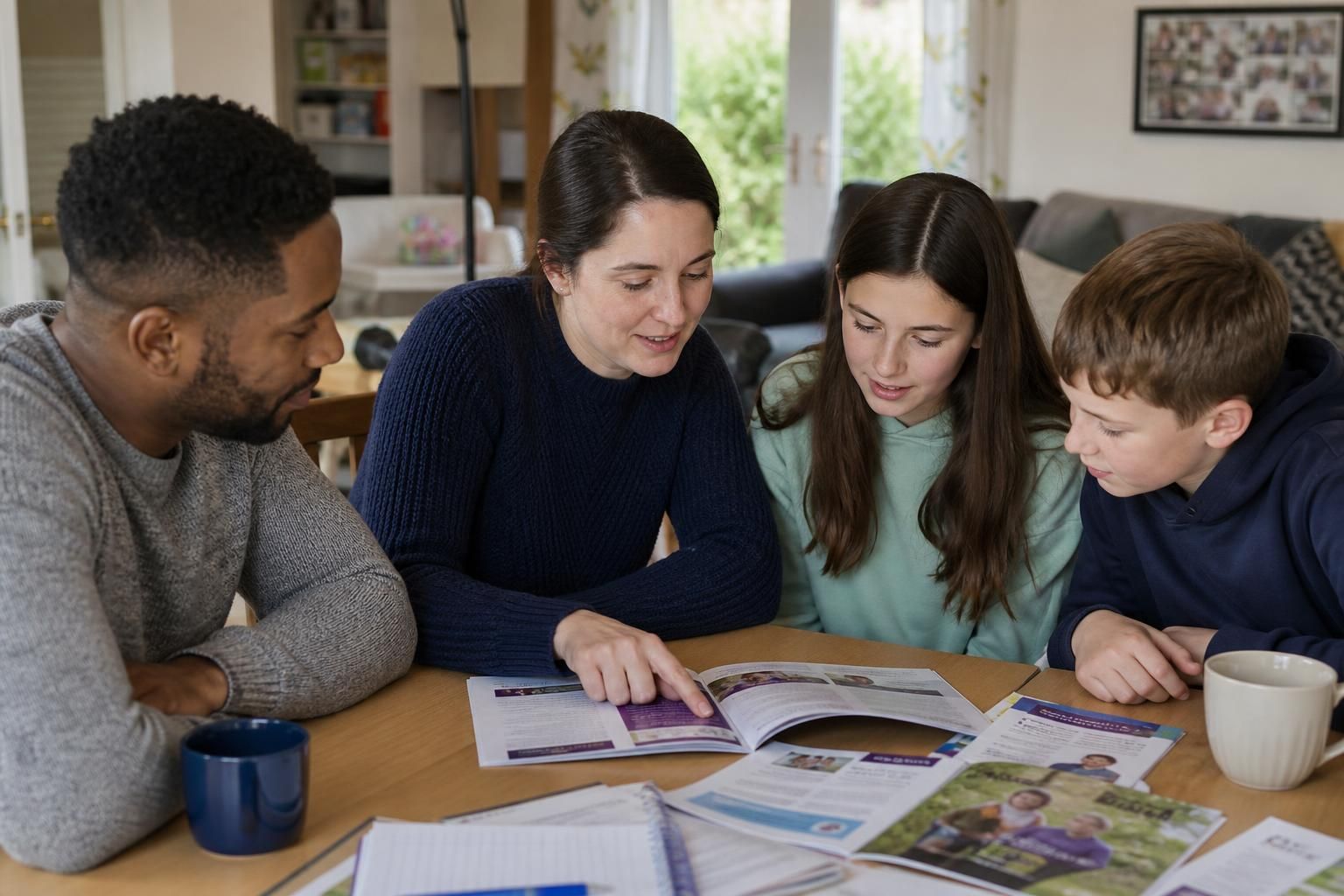
What training does a whole family need before fostering?
Before fostering, prospective carers complete preparation training covering the fostering role, safeguarding, safer caring, attachment, trauma and the impact of fostering on family life. Other household members should receive age-appropriate guidance and take part in discussions, so everyone understands how fostering may affect routines, relationships, privacy and responsibilities.
Partnering with an
Ofsted Outstanding Provider
Training before fostering is usually completed by the people applying to foster, while other household members receive information and take part in discussions appropriate to their age and role. The aim is to make sure the whole household understands the practical, emotional and safeguarding responsibilities involved before an approval decision is made.
What prospective foster carers learn
The main applicants complete formal preparation training arranged by their fostering service. This normally combines teaching, discussion, case examples and opportunities to consider how the role may affect their own circumstances. Topics commonly include:
- the responsibilities and boundaries of a foster carer;
- children’s individual needs, behaviour and communication;
- the importance of identity, culture, family connections and contact arrangements;
- how to work with social workers, schools, health professionals and a child’s birth family;
- confidentiality, information sharing, recording and professional conduct;
- household safety, online safety, transport and managing visitors;
- how to respond to concerns, complaints or allegations; and
- the importance of reflection, supervision and asking for help.
Training is not intended to test whether someone already knows how to foster. It gives applicants a structured opportunity to learn, ask questions and think honestly about how they would respond to realistic situations. It also helps the fostering service identify areas where further preparation or support may be useful.
How other household members are included
Adult members of the household who are not applying may be invited to training sessions, meetings or individual discussions. They need to understand the expectations placed on the household, how confidentiality works and what they should do if they are worried about a child’s welfare. Their views can also help identify practical issues that applicants may not have considered.
Children and young people living in the home are not expected to complete the same training as adults. Instead, they should receive clear, age-appropriate explanations and have the chance to ask questions privately as well as together with the family. Discussion may cover changes to bedrooms and routines, sharing belongings, personal boundaries, privacy, visitors, contact with relatives and where they can go for help. Their feelings should be taken seriously throughout the assessment.
Family members who do not live in the household may also need information if they provide regular childcare, visit frequently or are likely to have a significant role in family life. Whether they attend formal training depends on their involvement and the fostering service’s assessment arrangements.
Learning through the assessment process
Preparation does not happen only in a classroom. During assessment, applicants discuss their experiences, relationships, routines, support networks and reasons for fostering with the assessing social worker. These conversations allow the family to apply what they have learned to their own home.
Applicants may be asked to consider practical examples, such as how they would manage a child who is distressed, respond to a disagreement, protect everyone’s privacy or balance a foster child’s needs with existing family commitments. The purpose is not to expect perfect answers. It is to assess openness, judgement, willingness to learn and the family’s ability to work safely with professionals.
What happens after approval?
Preparation continues after approval. Foster carers take part in ongoing learning linked to the needs of the children they care for and to their own development. This may include additional guidance before a particular placement, refresher learning, supervision discussions or training on a child’s health, communication or behaviour.
Other household members may also need updates when circumstances change. For example, further discussion may be appropriate when a child has specific needs, when household routines change or when a previously uninvolved relative begins providing support. Training is therefore not a one-off event; it is part of the wider support and review process throughout fostering.
How to prepare as a family
- Set aside time for every household member to raise questions without judgement.
- Be honest about routines, commitments, space and any concerns before applying.
- Agree how private information will be handled and who can be told about the placement.
- Discuss how family members will seek support if fostering affects them.
- Keep communication open rather than assuming that one training course answers every question.
The exact programme depends on the fostering service and the applicant’s circumstances, but the principle is consistent: applicants need formal preparation, while the wider household needs clear information, involvement and an opportunity to understand what fostering will mean in everyday family life.

Completing preparation training does not, by itself, lead to approval. The fostering service considers what applicants have learned alongside their experience, circumstances, relationships, practical arrangements and ability to provide safe care. Training gives the family a shared foundation, while the assessment explores how that learning applies to their particular household.
For other household members, taking part does not usually make them foster carers or mean they must complete the applicants’ full course. Their understanding, questions and views help the assessing social worker identify whether everyone knows what fostering involves and whether any further preparation is needed before a recommendation is made.
Discuss your family’s fostering training needs
Speak with our fostering team about your family’s training needs and how preparation can be tailored to your household’s circumstances. You can ask questions before deciding whether to begin the application process.