
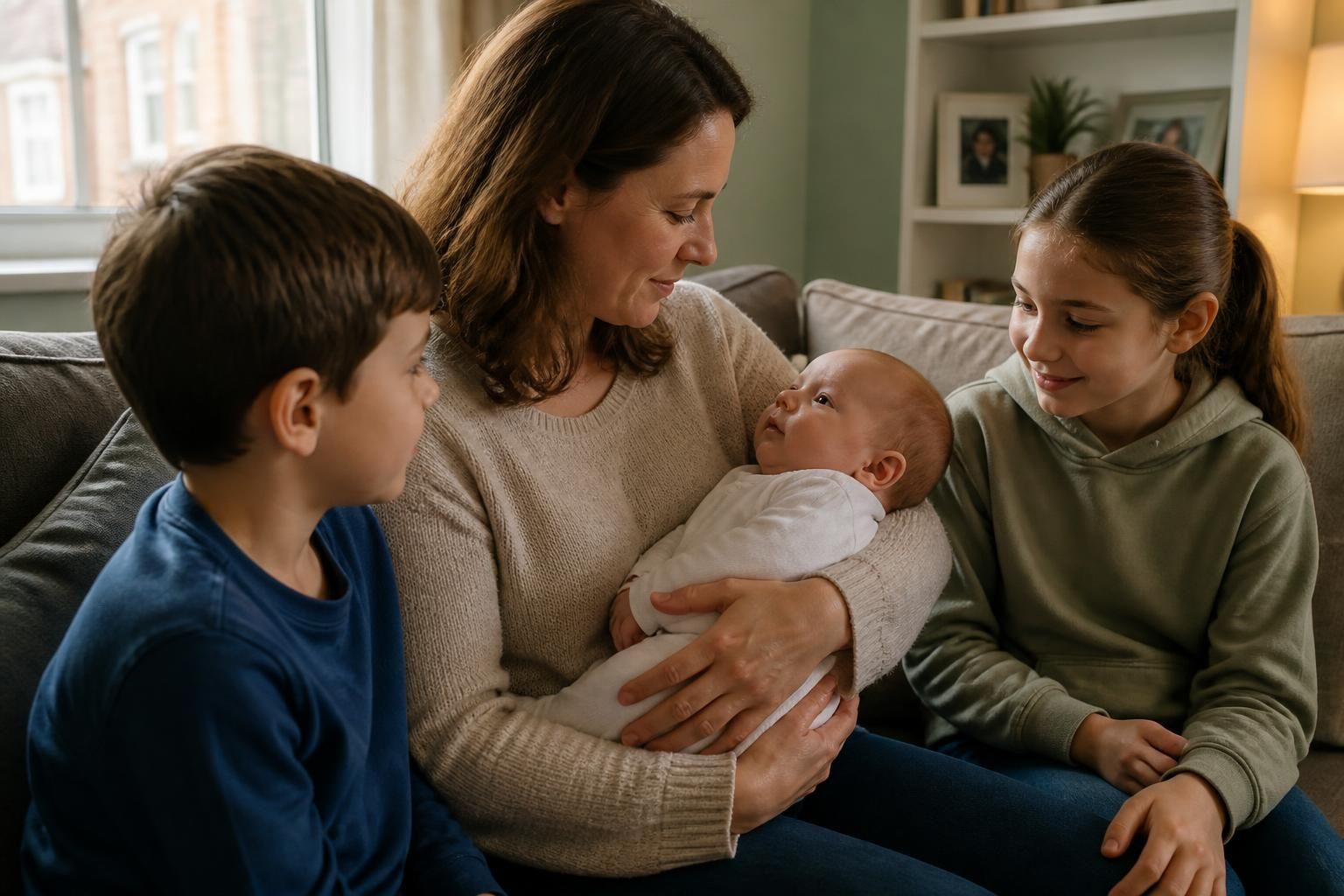
Can I provide emergency infant foster care if I have children of my own?
Yes. Having children of your own does not automatically prevent you from providing emergency infant foster care, but the assessment will consider your children’s ages, needs and views, the available space, household routines and how an infant placement could affect everyone in the family.
Partnering with an
Ofsted Outstanding Provider
Children in your household do not, by themselves, rule out emergency infant fostering. The key question is whether your family can provide safe, consistent care for a baby at short notice without compromising the welfare of your own children. This is considered individually during the fostering assessment and approval process.
Your children’s welfare comes first. The assessing team will want to understand how an emergency placement might affect each child, including their emotional needs, school life, activities, sleep and relationships within the household. Your children may be invited to share their views in an age-appropriate way. They should understand what fostering may involve and have opportunities to ask questions, but they are not responsible for making the final decision or caring for the baby.
The assessment may look at practical matters such as:
- Whether your household can manage the additional demands of caring for an infant, including feeding, settling, nappy changes and appointments.
- How an infant’s needs would fit around school runs, work, activities and existing family commitments.
- Whether you have suitable sleeping arrangements and enough room for safe storage of equipment and personal records.
- How you would maintain appropriate privacy, boundaries and supervision between the baby and other children.
- How you would respond if the infant arrived with limited information or needed additional medical or developmental support.
- What practical help is available from your partner, relatives or other people involved in your support network.
Emergency placements can be less predictable than planned fostering. A baby may arrive with limited notice, and the information available at the start may develop as professionals learn more about the child’s circumstances. Your household therefore needs enough flexibility to manage new information, changing arrangements and professional appointments while maintaining familiar routines for your own children.
Existing children should not be expected to take on a caring role. They may choose to be involved in ordinary family life, but the foster carer remains responsible for the baby’s care. Clear household rules can help everyone understand what is private, what information can be shared and when an adult must be told about a concern. This is particularly important where children are young or share parts of the home.
If you are considering applying, be open about your family circumstances from the beginning. Explain your children’s personalities, needs, relationships and likely reactions to a baby joining the household. It is better to identify possible difficulties during assessment than to assume that every placement will fit automatically. The fostering team can then consider whether emergency infant fostering is suitable for your family and what safeguards or preparation may be needed.
Before approval, prospective foster carers complete assessment checks and preparation training. Training normally covers subjects such as safeguarding, safe care of babies, child development, working with birth families and the impact of fostering on the wider household. You should also discuss what equipment may be needed, how family members will be supported and how to protect time and attention for your own children.
Once approved, you should have ongoing guidance from your fostering service when considering a placement. Support can include advice from fostering professionals, further training and financial allowances intended to contribute towards the costs of caring for a child. The precise arrangements depend on the fostering service and the child’s needs, so ask for a clear explanation before accepting an emergency placement.
A useful next step is to talk through a realistic example with the fostering team: how your family would manage a baby arriving with short notice, what would happen during school or work commitments, and who could help if plans changed. This discussion will help establish whether emergency infant foster care can work safely and sustainably alongside caring for your own children.

When you have children of your own, your family will need to understand the importance of confidentiality. Your children can be given honest, age-appropriate information about why the baby is staying with you, but they should not be expected to know or share private details about the infant or their birth family.
Before a placement, agree simple household rules about conversations, photographs, social media and visitors. Your children should know who they can speak to if they feel worried or confused, while understanding that information about the baby must not be discussed with friends or shared online. These arrangements help protect the infant’s privacy and give your own children clear boundaries without making them feel excluded from family life.
Find out whether emergency infant fostering could suit your family
Speak to our fostering team to discuss your family’s circumstances and find out whether emergency infant foster care could be suitable for you. You can ask questions about the assessment process before deciding whether to apply.