

What information should carers record during a foster to adopt placement?
During a foster to adopt placement, carers should keep clear, dated records of the child’s health, development, routines, behaviour, emotional presentation, family contact and significant events. Notes should be factual and objective, including concerns, actions taken, professional advice and important milestones, so reviews and decisions are based on an accurate record.
Partnering with an
Ofsted Outstanding Provider
Carers should keep a secure, chronological record that shows what happened, what was observed, what was communicated and what action followed. In a foster to adopt placement, these records help the professionals involved understand the child’s needs, monitor safeguarding and development, and make properly informed decisions about the child’s care and permanence.
Use a consistent recording format
- Write the date, time and location for each entry.
- Record who was present, including the child, carers, family members and professionals.
- Use clear, plain language and write entries as soon as practical after an event.
- Distinguish between what you directly saw or heard, what someone told you and your own interpretation.
- Correct mistakes transparently in line with the agency’s recording procedure; do not delete or conceal an original entry.
- Sign or identify each entry if the recording system requires this.
Record the child’s presentation and responses
Describe how the child appeared and responded rather than assigning labels. For example, record whether the child settled after a particular routine, became distressed during a change of activity, responded to soothing or needed support to sleep. Note patterns as well as individual incidents, including changes in appetite, sleep, comfort-seeking, play, communication, mobility and interaction with familiar adults.
It is useful to record new skills and emerging preferences, but avoid treating normal variation as a concern. A factual entry might explain what the child did, how long the behaviour lasted, what preceded it, how the carer responded and what happened afterwards. This gives a fuller picture than words such as “difficult”, “attention-seeking” or “fine” on their own.
Keep a clear health and care record
Record appointments, symptoms reported or observed, medication given, missed doses, accidents, injuries, changes advised by health professionals and any follow-up required. Include the date and purpose of appointments, the professional seen and the advice provided. Keep copies of relevant documents where the agency asks you to do so, and tell the supervising social worker or other designated professional about health concerns in accordance with the placement plan.
Routine information can also be significant. Note changes to feeding, allergies, toileting, sleep, skin, physical comfort and responses to prescribed treatment. If an injury or illness occurs, describe the facts without guessing how it happened or assigning blame.
Document contact and important relationships
For each planned contact session, record whether it took place, who attended, the length and setting, any changes or cancellations, and how the child appeared before and after it. Note factual observations about the child’s response and any concerns raised by a parent, relative or professional. If contact arrangements change, record who provided the instruction and when.
Do not use the record to criticise family members or speculate about their motives. Keep observations separate from opinions, and report any safeguarding concern through the agreed route rather than relying on a routine diary entry to bring it to attention.
Record significant decisions and professional communication
Keep a note of discussions with the child’s social worker, supervising social worker, health visitor, solicitor, reviewing officer and other professionals involved in the placement. Include:
- the date and method of contact;
- the main points discussed;
- advice or instructions given;
- any decision made and who made it;
- actions for the carer or another professional; and
- the date by which a follow-up is expected, if one is agreed.
Record questions you have raised and any information you are still waiting for. If advice is given verbally and it affects the child’s care, confirm your understanding with the relevant professional and make a contemporaneous note.
Include milestones and changes in the placement
Note meaningful changes such as a new routine, introduction to a new caregiver, changes in sleeping arrangements, nursery or school developments, health assessments, contact changes and preparation for reviews. Explain how the child responded and whether further support was recommended. This creates a reliable timeline and can help distinguish a short-term reaction from a continuing pattern.
Where the child is very young or cannot express their views fully, carers should still record attempts to understand and respond to their communication. This may include gestures, sounds, facial expressions, behaviour and responses to familiar people or surroundings. Keep the description specific and avoid presenting an interpretation as the child’s exact view.
Protect confidentiality
Store records securely and follow the fostering service’s instructions for electronic and paper information. Do not discuss the child’s circumstances on social media or share photographs, documents or identifying details with people who are not authorised to receive them. Take particular care with messages and email, as informal communication can still contain confidential information.
Records should be available to the professionals who have a legitimate role in the child’s care, but access should not be wider than necessary. Ask the supervising social worker how daily notes, photographs, medical information and documents should be retained and submitted. If a record is lost, accessed incorrectly or sent to the wrong person, report it promptly rather than attempting to resolve it privately.
Raise concerns promptly
A written record is not a substitute for immediate reporting. Contact the appropriate social worker, supervising social worker or emergency safeguarding contact without delay if there is a concern about abuse, neglect, an unexplained injury, a serious change in behaviour, a health emergency or a significant risk to the child. Make a note of what was reported, to whom, when and what instruction was received.
Before the placement begins, ask for the agency’s recording templates, safeguarding procedure, confidentiality guidance and expectations for sharing daily notes. Good records should be accurate, respectful and proportionate: they should help professionals understand the child’s experience without turning every ordinary event into a formal concern.
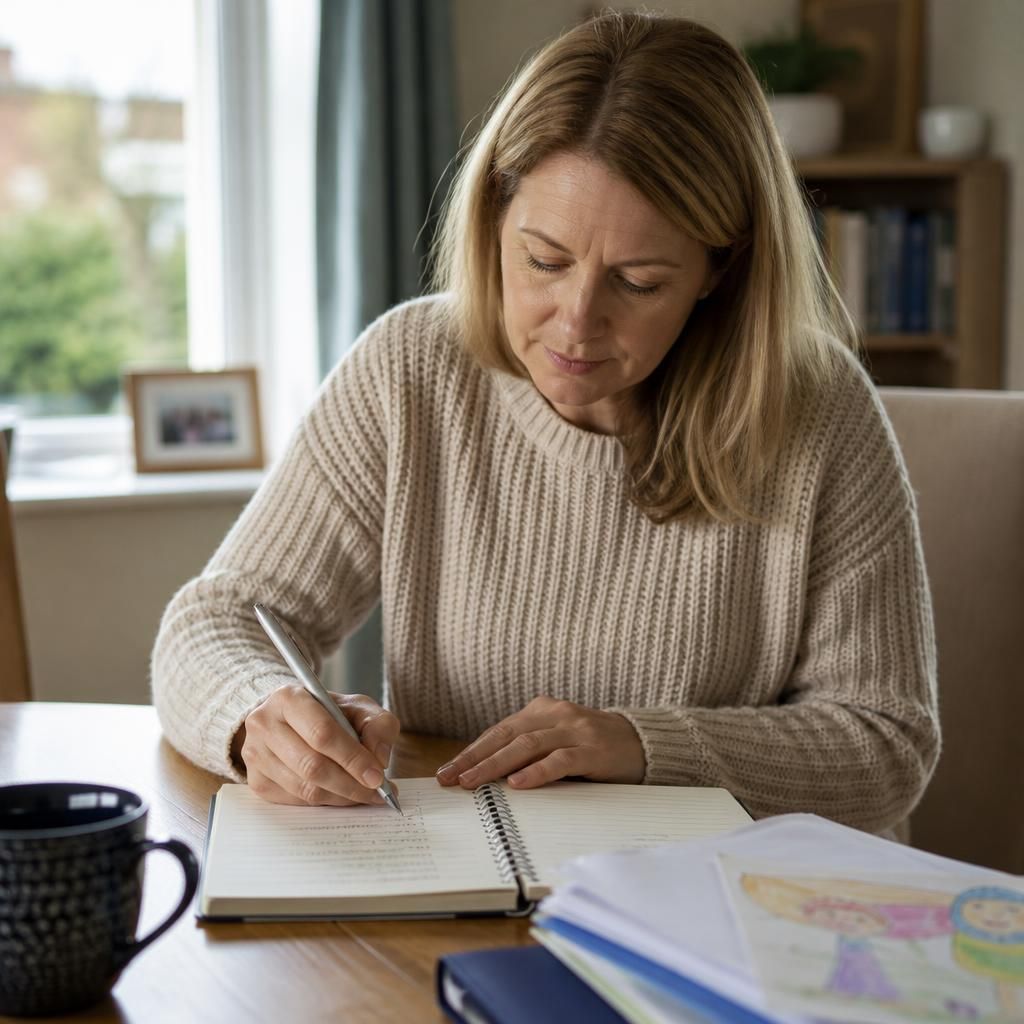
Keep the record balanced, not incident-focused. Alongside concerns or changes, record ordinary experiences that show the child’s development and relationships over time. This might include a new way of communicating, enjoyment during play, comfort from a familiar routine or progress with eating, sleeping or personal care.
Balanced entries help professionals understand the child as a whole person rather than as a list of difficulties. Use specific examples and note what helped the child to feel settled or engaged. This can also support planning for future care by showing which routines, activities and approaches have been useful during the placement.
Learn more about foster to adopt placements
If you are considering a foster to adopt placement, speak to our team to discuss the process, your recording responsibilities and the support available throughout the placement.