
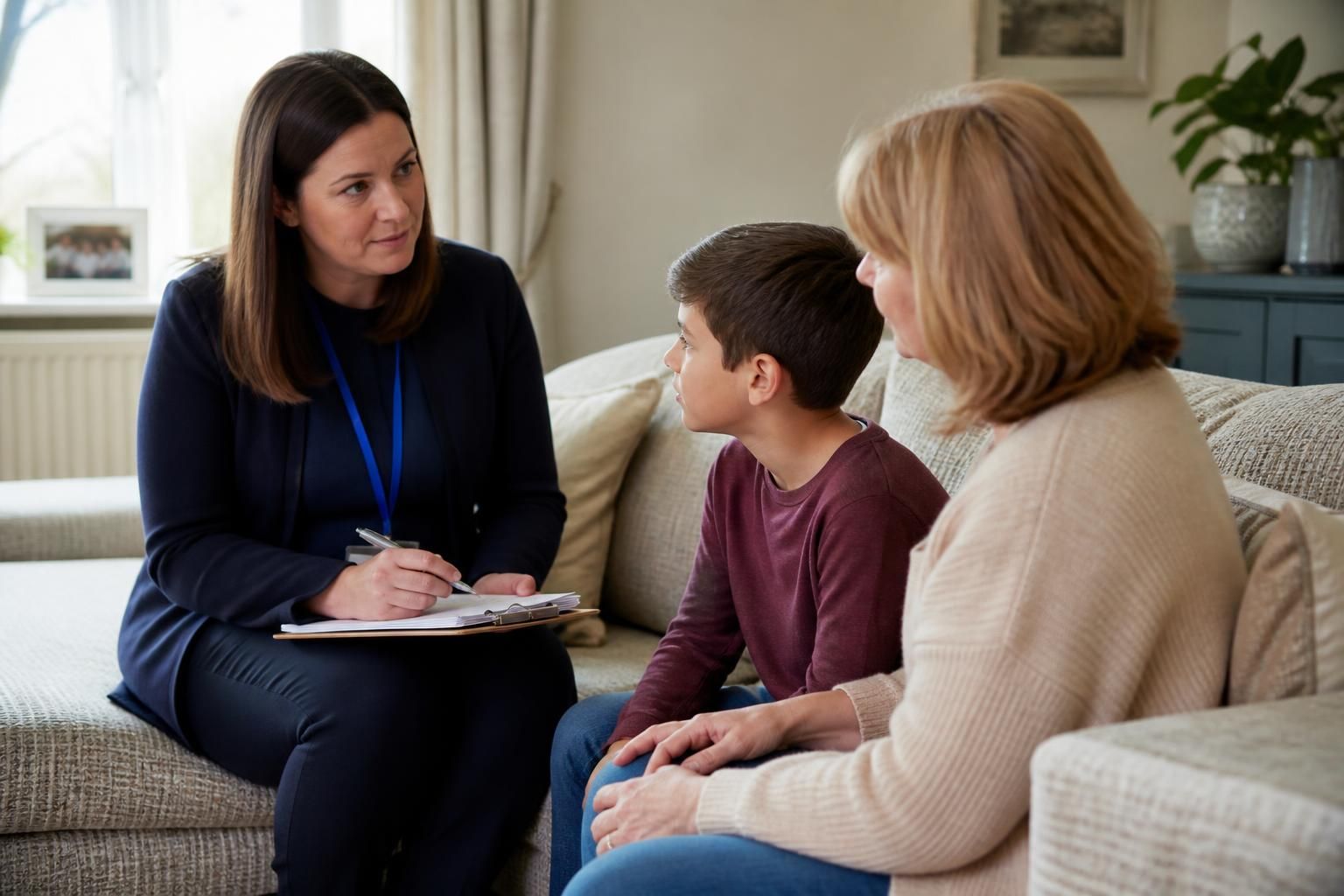
What happens during a kinship carer assessment?
A kinship carer assessment involves a social worker checking whether you can provide safe, stable and suitable care for the child, including your relationship with them, household circumstances, health, home environment and wider support network. It usually includes background checks, references, interviews and written evidence, followed by a recommendation about whether you should be approved as a kinship carer.
Partnering with an
Ofsted Outstanding Provider
A kinship carer assessment is a structured social work assessment used to decide whether you can safely and consistently care for a child who is related to you or already known to you. The process looks at your ability to meet the child’s individual needs, work with the child’s parents and professionals, and provide care that is stable over time. The exact assessment depends on the legal arrangement being considered, such as kinship fostering or a Special Guardianship Order (SGO).
1. Initial viability assessment
Where a child may need to live with a relative or another connected person, the local authority may begin with a viability assessment. This is an early review of whether you appear suitable to be considered in more detail. A social worker will usually discuss:
- your relationship with the child and their parents;
- why you want to care for the child;
- your understanding of the child’s circumstances and needs;
- who lives in your household;
- any immediate concerns about safety, health or accommodation; and
- the support available to you.
This stage does not usually provide a final decision. It helps the local authority identify whether a full assessment should take place and whether any urgent arrangements are needed for the child.
2. Detailed interviews with a social worker
A full assessment involves detailed conversations with you and, where relevant, your partner. These may take place separately as well as together, so that each person can speak openly. The social worker will explore your childhood, relationships, previous caring experience, daily routines, strengths and difficulties. They may also discuss how you respond to stress, conflict and challenging behaviour.
Particular attention is given to the impact of the child’s experiences. Children needing kinship care may have experienced neglect, abuse, loss, disrupted attachments or uncertainty about where they will live. You will be expected to show that you understand how these experiences might affect behaviour and development, and that you can respond in a calm, consistent and appropriate way.
3. Considering family relationships and contact
Kinship care can involve complicated family relationships. The assessment will consider whether you can put the child’s needs first while maintaining appropriate links with parents and other relatives. You may be asked how you would manage disagreements, contact arrangements, information sharing and boundaries within the wider family.
The social worker will also consider whether your expectations are realistic. Kinship care may not remove the child’s difficulties, and the arrangement may change as the child’s needs develop. Being able to accept professional advice and cooperate with the local authority is an important part of the assessment.
4. Checks, references and evidence
The assessment includes checks designed to identify information that may affect the child’s safety or your ability to care for them. These commonly include criminal record checks for relevant household members, local authority checks and a health assessment. References may be requested from people who know you well, such as employers, professionals or personal referees.
You should be open about previous relationships, convictions, involvement with social services, health conditions and significant personal events. Information does not automatically prevent approval, but failing to disclose something can undermine confidence in your assessment. The social worker will consider the circumstances, how long ago an event occurred, what has changed and any relevance to caring for the child.
5. Home and household assessment
A social worker will visit your home to consider whether it is suitable for the child. This includes the child’s sleeping arrangements, privacy, general safety and the practical space available for their belongings and routines. The assessment may also cover pets, smoking, household visitors and the needs of other children or adults living there.
You may need to make changes before the arrangement begins. These might include improving safety measures, reorganising sleeping arrangements or agreeing clear boundaries for visitors and family members. The home does not need to be perfect, but it must provide a safe and appropriate environment for the child.
6. Training and preparation
You may be asked to complete preparation or training before approval. This helps you understand safeguarding, attachment, trauma, behaviour, safer caring, confidentiality, recording information and working with professionals. It is also an opportunity to consider the practical and emotional demands of kinship care before making a long-term commitment.
7. The assessment report and decision
At the end of the process, the social worker writes a report bringing together the information gathered. It will describe your circumstances, the child’s needs, any risks, the support required and the social worker’s recommendation. You should normally have an opportunity to check factual information and raise any important inaccuracies.
If the proposed arrangement is kinship fostering, the report may be considered by a fostering panel before a final decision is made by the local authority’s decision-maker. If the proposed arrangement is an SGO, the assessment is prepared for the court as part of the application process, and the court decides whether the order should be made. Other legal routes have their own procedures, so the social worker should explain which process applies to your situation.
How to prepare for the assessment
- Think honestly about how caring for the child would affect work, finances, relationships and existing responsibilities.
- Consider what the child may need now and as they grow older.
- Identify relatives, friends and professionals who could provide practical or emotional support.
- Gather information about your home, household members and relevant personal history.
- Write down questions about contact, education, health care, financial support and the proposed legal arrangement.
- Tell the social worker promptly about any change in your circumstances.
The assessment is not intended to look for a perfect family. It is intended to establish whether the proposed arrangement is safe, realistic and in the child’s best interests, and what support or safeguards may be needed for it to work.

A kinship carer assessment is child-specific. It does not ask whether you would be a suitable carer in general; it considers whether you can meet this particular child’s needs, both now and as they develop. The social worker will weigh your strengths, circumstances and any areas where additional support or safeguards may be needed.
This means that identifying a difficulty does not necessarily end the assessment. The important question is whether the issue can be managed safely and realistically, with an appropriate plan in place. The final recommendation should explain how the proposed arrangement would work for the child and what support may be required.
Get guidance on your kinship carer assessment
If you are considering becoming a kinship carer, speak to Become a Foster Family for guidance tailored to your family’s circumstances and the legal arrangement being considered.